The diagnosis itself takes about thirty seconds. Someone across a desk says the words. Autism spectrum disorder. Or ADHD. Or both. Maybe you knew it was coming. Maybe you did not. Either way, you nod. You ask a question or two. You sign some papers. You walk to your car.
And then you sit there.
Because nobody prepares you for the silence that follows. The diagnosis has a name, a label, a clinical code. But the life you wake up to the next morning does not come with instructions. There is no binder. No onboarding packet. No "here is exactly what to do at 6 AM tomorrow when your child wakes up screaming and you do not know if it is sensory overload, hunger, a nightmare, or all three."
The diagnosis is not the hard part. The day after is.
What Nobody Tells You
Nobody tells you that the grief and the relief will show up at the same time, and that feeling both does not make you a bad parent. Researchers call it "chronic sorrow," a term coined by Simon Olshansky in the 1960s to describe the enduring grief parents experience when a child's life unfolds differently than expected. It is not a phase. It is not something you move through and leave behind. A 2024 systematic review published in the International Journal of Developmental Disabilities confirmed that this grief is cyclical, characterized by a fluctuation of painful emotions and periods of acceptance that come and go throughout your child's entire life.
You will feel fine for three weeks. And then you will watch your child's same-age cousin have a full conversation at Thanksgiving, and the sadness will return like it never left.
Nobody tells you that.
Nobody tells you that 40 percent of parents of autistic children isolate themselves from friends and family because of their child's behaviors, according to a survey by the Interactive Autism Network at Kennedy Krieger Institute. And that another 32 percent said other people excluded them. That is not a statistic. That is your Friday night plans disappearing. That is the birthday party invitation that stops coming. That is your best friend from college slowly fading because she does not know what to say and you do not have the energy to teach her.
Nobody tells you about the marriage. Not the divorce statistics, which are more nuanced than the internet makes them sound. The daily stuff. The fact that you and your partner will process this differently, on different timelines, with different coping mechanisms. One of you will research for hours. The other will shut down. One of you will want to talk. The other will need silence. And both of you will be too exhausted to explain what you need, so you will just quietly drift until someone finally says "We need to talk about this."
Nobody tells you that the professionals will use acronyms you have never heard, and that they will assume you understand them, and that you will nod along because you do not want to look like you are not keeping up. IEP. BCBA. OT. SLP. FAPE. LRE. ABA. AAC. You will google all of them in your car after the meeting. You will still not fully understand half of them.
Nobody tells you that the waitlists are months long. That the therapist everyone recommends has a nine-month wait. That the developmental pediatrician your pediatrician referred you to is not taking new patients until next year. That the early intervention window everyone keeps warning you about is closing while you sit on hold.
The Loneliest Part
Here is what makes the day after diagnosis so disorienting: you are surrounded by people who want to help but cannot, and systems designed to help but do not.
Your parents say "He seems fine to me." Your friend sends you an article about a miracle diet. Your neighbor asks if you have tried essential oils. Your mother-in-law says she read that autism is caused by screen time. And you stand there, holding all of this, trying to sort the good advice from the dangerous advice from the well-meaning advice that is just noise.
Research from a 2025 qualitative systematic review on social support experiences in parents of children with ASD found that parents consistently reported lacking emotional support from the people closest to them. Family, friends, professionals, and the broader community all fell short. The parents who fared best were the ones who found other parents walking the same road. Not experts. Not doctors. Other parents.
A study published in Family Process in 2024 found something that should be said out loud more often: fathers of autistic children are particularly vulnerable to loneliness, with interpersonal and familial resources playing a critical role in buffering that isolation. Dads do not have the same support networks, the same online communities, the same permission to fall apart. They are expected to be steady. And that steadiness can become its own kind of prison.
The loneliest part is not the diagnosis meeting. It is the Tuesday after, when nobody checks in.
What Actually Helps
I am not going to hand you a five-step plan. I built VizyPlan because my family needed it, and I would be dishonest if I said tools alone are the answer. They are part of it. But the real answer is messier.
Lower the bar for yourself. Not forever. Just right now. You do not need to become a special education expert this week. You do not need to have the perfect morning routine by Friday. You need to get through the next 24 hours without burning yourself to the ground. That is enough.
Find one parent who gets it. Not a Facebook group with 50,000 members and conflicting advice. One person. A parent at your child's school. A parent in your pediatrician's waiting room. Someone from a local support group. The Interactive Autism Network survey found that almost 80 percent of autism parents said stigma had been a significant difficulty in their lives. You need someone who does not need the stigma explained to them because they live it too.
Stop googling at midnight. I know. I did it too. But the internet at midnight is a different internet than the internet at 10 AM. The algorithms feed you fear. The forums surface the worst-case scenarios. Research on trustworthy autism resources shows that 41 percent of autism content on TikTok is inaccurate. Close the phone. The answers will still be there tomorrow when your brain is working.
Write down your three biggest questions. Not twelve. Not the full list of everything you do not understand. Three. Bring them to your next appointment. When the appointment starts, say "I have three questions" and put the paper on the table. This gives you permission to stop pretending you have it together and start getting the information you actually need.
Let your child show you who they are. Your child did not change when the diagnosis was spoken. They are the same person they were the day before. The same laugh. The same way they line up their cars. The same look they give you when they are overwhelmed. The diagnosis gives you a framework for understanding what you are already seeing. It does not rewrite your child. It translates them.
Enjoying this article?
Get practical tips and insights delivered to your inbox — no spam, ever.
The Parts Nobody Warns You About (But Should)
Your identity is going to shift. You will become "the autism parent" in certain circles, whether you want that label or not. People will define you by it. Some will treat you like an inspiration. Others will treat you like a cautionary tale. You are neither. You are a parent learning a new language in real time while keeping a small human alive and regulated. That is not inspirational. That is Tuesday.
The paperwork will feel like a second job. Insurance authorizations. IEP documents. Therapy notes. Evaluation reports. Prior written notice. Progress reports. You will spend more time managing your child's care than actually being with your child some weeks, and the guilt of that will eat at you. Build systems early. Keep a folder. Track what you can. Future you will be grateful.
You will mourn things you did not expect to mourn. It is not just the big milestones. It is the small ones. The neighborhood kids riding bikes while your child watches from the window. The sleepover invitation you have to decline because your child cannot handle it yet. The family vacation you have to cut short because the sensory environment was too much. Each one is a small grief. They accumulate.
You will also discover joy you did not expect. The first time your child uses a word they have been practicing for months. The day they eat a new food. The moment they look at you and smile because they understood the joke. The progress is not linear, and it is not fast, but it is real. And it hits differently when you know how hard your child worked for it.
Your other kids will need you too. If you have neurotypical children, they are watching everything. They are adjusting their behavior. They are learning to be quieter, more patient, more invisible. The research calls them glass children, and the name fits. They deserve your attention even when your attention feels fully spent.
Why I Built What I Built
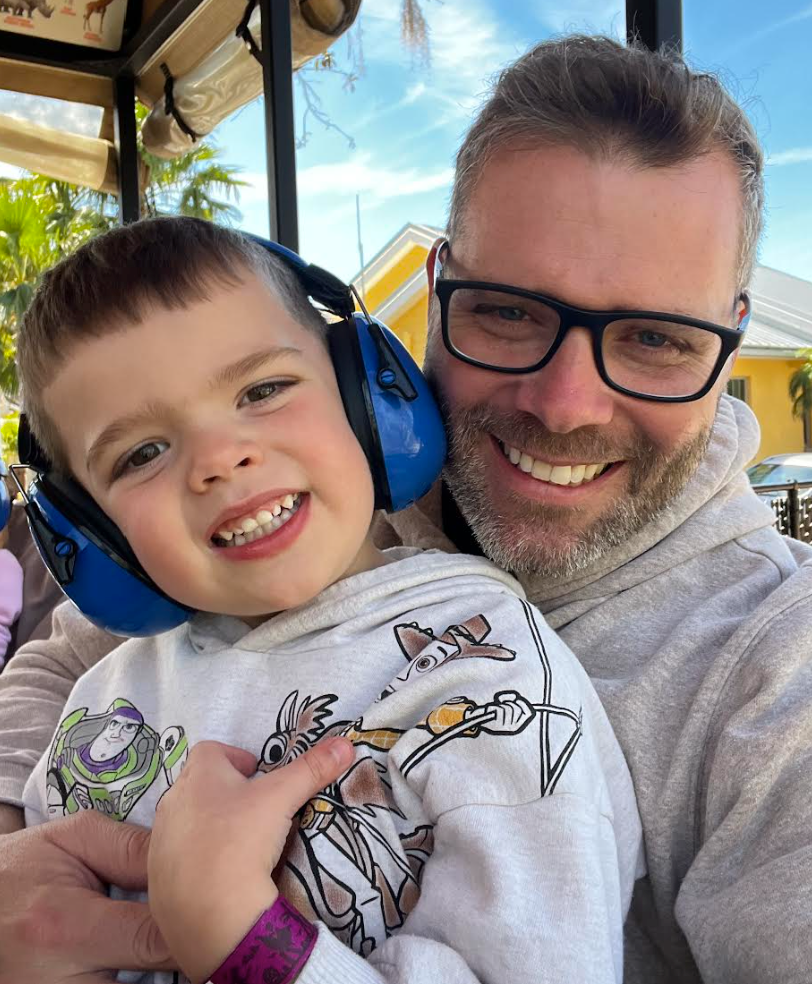
My son was nonverbal until he was two. I remember the day after his diagnosis with the clarity that only fear can produce. I remember sitting on the living room floor with a stack of printouts and a child who could not tell me what he needed. I remember the feeling of wanting to fix everything and not knowing where to start.
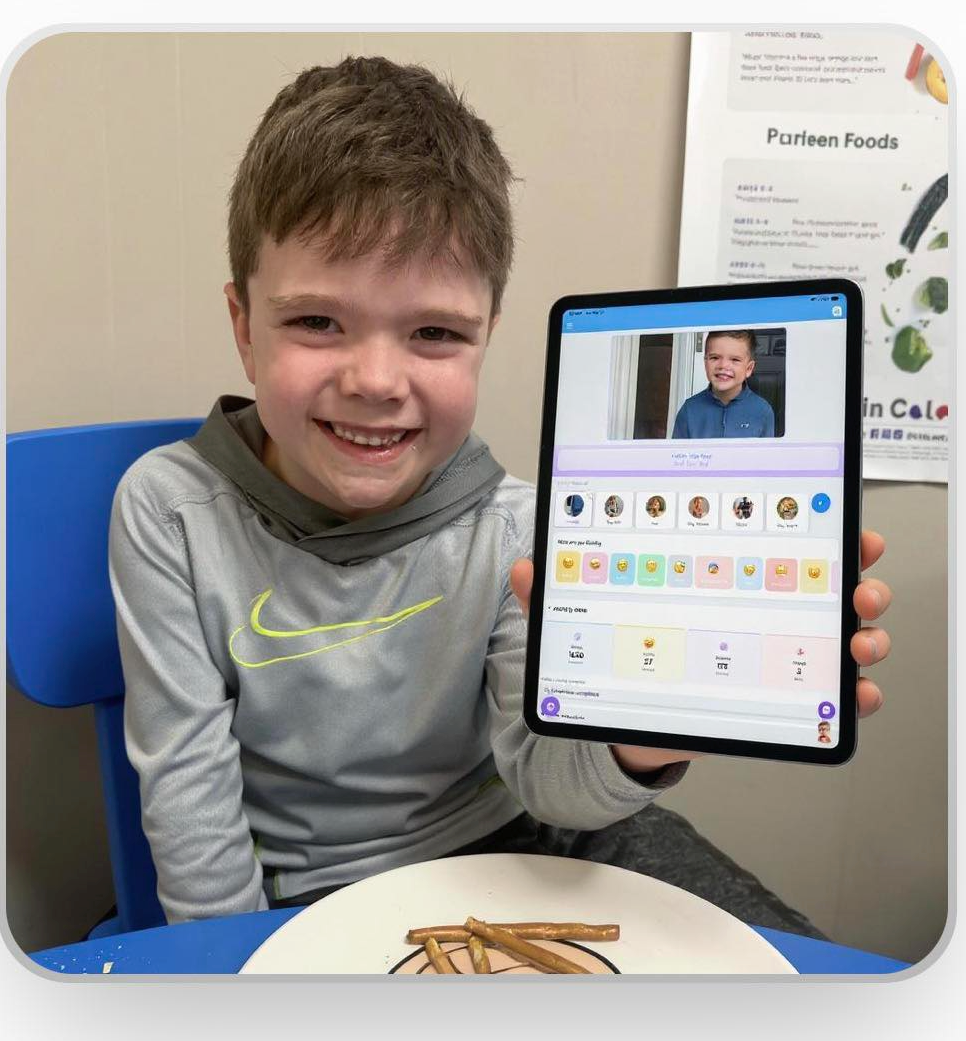
I did not build VizyPlan because I had the answers. I built it because I was drowning in the same questions every parent in this community is drowning in. How do I show him what comes next? How do I help him communicate when words are not available yet? How do I track what is working when every day feels like chaos?
The app came later. The visual schedules. The social stories. The emotion tracking. The calming tools. All of that came from specific moments on specific days where I needed something that did not exist.
But before any of that, there was just a dad on a floor. Trying to figure out Monday morning.
If that is where you are right now, I see you.
The Day After Is Not the End
The day after diagnosis feels like a door closing. It is not. It is a door opening to a hallway you did not know existed, full of rooms you have never been in, with people you have not met yet who understand exactly what you are carrying.
You are not behind. You are not failing. You are not the only one who does not understand the acronyms. You are not the only one whose marriage is strained. You are not the only one who cried in the Target parking lot because a stranger gave you a look when your child had a meltdown in aisle seven.
There are millions of us. We found our way. Not to a place where everything is perfect, but to a place where we stopped expecting perfect and started building something that actually works for our family.
The diagnosis was the beginning. Not the end.
And Monday morning? You will figure it out. Not because you have all the answers. But because you love someone enough to keep showing up for a life that did not come with a manual.
Download VizyPlan and start your 7-day free trial today. Build visual routines that give your child the predictability their brain craves, track emotions and patterns so you have real data instead of guesswork, and create social stories that prepare them for what is coming next. If it helps, keep going for $6.99/month or $59.99/year.
VizyPlan was built by an autism dad who sat on his living room floor and needed something that did not exist. Now it does. Start your free trial and give your child the tools to see their day and navigate it with confidence.