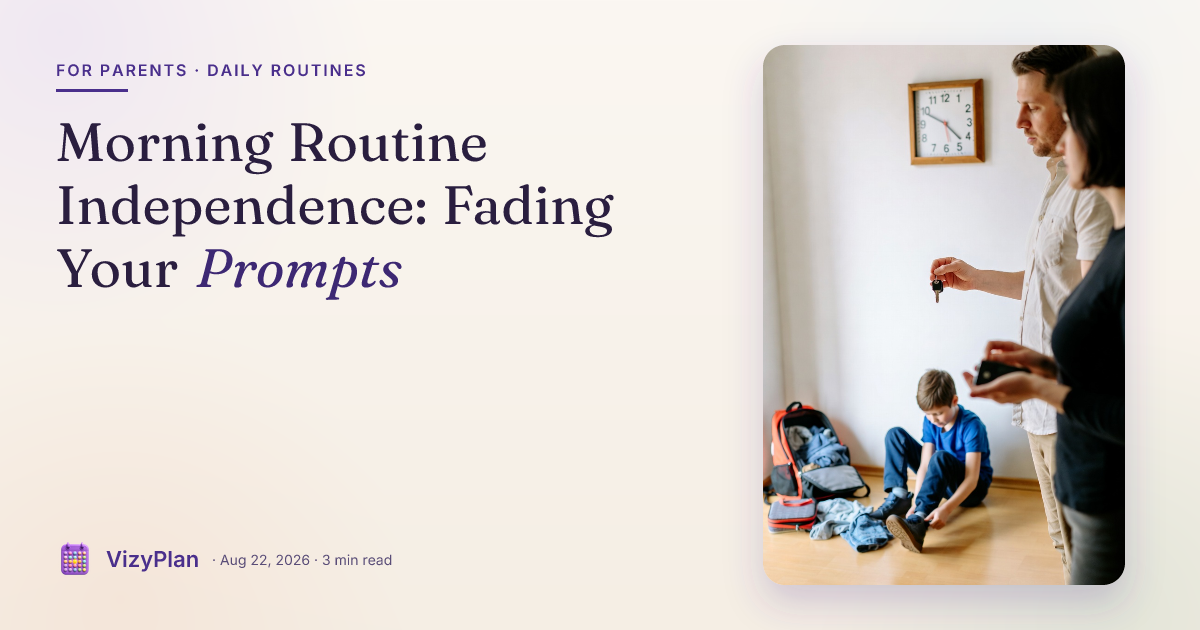
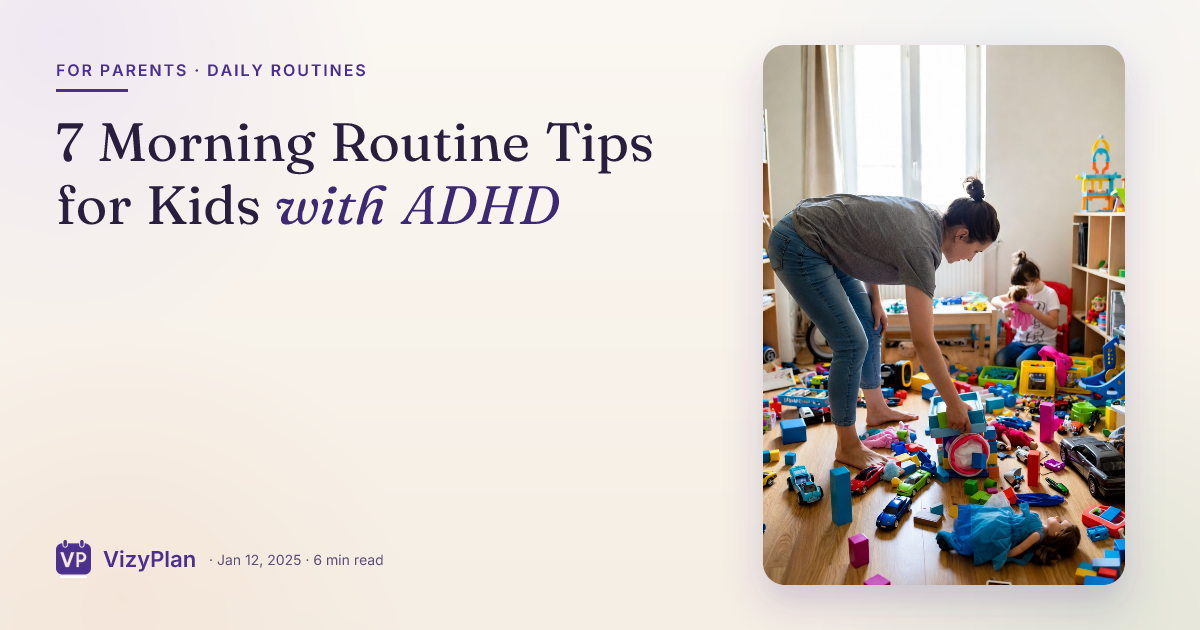
It is 7:42 AM. School starts in 18 minutes. Your child is still in pajamas, has not touched breakfast, cannot find their left shoe, and just remembered they need something signed for school today. You are repeating instructions for the fourth time while simultaneously making lunches, and the stress level in the house is through the roof.
Sound familiar? For families navigating ADHD, mornings are not just busy. They are a collision of every executive function challenge your child faces, compressed into the most time-pressured hour of the day. Here are seven strategies that actually change the equation.
1. Prepare the Night Before
The morning battle is often won or lost the night before. Lay out clothes, pack backpacks, and prepare breakfast items before bed.
This reduces the number of decisions and tasks that need to happen during the already-challenging morning hours.
2. Use Visual Checklists
Children with ADHD often struggle to remember multi-step sequences. A visual checklist they can see and check off removes the need to hold everything in working memory.
Post it where they'll see it, bathroom mirror, bedroom door, or on a tablet they carry with them.
3. Build in Buffer Time
Whatever amount of time you think you need, add 15-20 minutes. This removes the pressure that makes everything worse.
Rushed mornings trigger the ADHD brain's stress response, making focus even harder.
4. Create Consistent Routines
The same sequence, every day, in the same order. Consistency allows routines to become automatic, requiring less mental effort over time.
Wake up → Bathroom → Get dressed → Breakfast → Teeth → Backpack → Shoes → Out the door.
.png)
5. Minimize Distractions
Keep screens off until ready to leave. Put away toys that might catch attention. Create a clear path from bedroom to door.
The ADHD brain is easily pulled off task. Remove temptations proactively.
6. Use Timers Visually
Abstract time is hard for kids with ADHD to grasp. Visual timers that show time "running out" make the abstract concrete.
"You have 10 minutes" means little. Watching a timer countdown means something.
7. Celebrate Small Wins
Positive reinforcement works better than criticism. Notice when things go well, even partially.
"You got dressed without a reminder today, that's awesome!" builds motivation for tomorrow.
The Bigger Picture
Morning struggles aren't character flaws, they're executive function challenges. With the right supports, kids with ADHD can learn to navigate mornings successfully.
Consistency, visual supports, and patience are your best tools.
VizyPlan helps you create visual morning routines customized for your child. Start your free trial and bring calm to your mornings.