
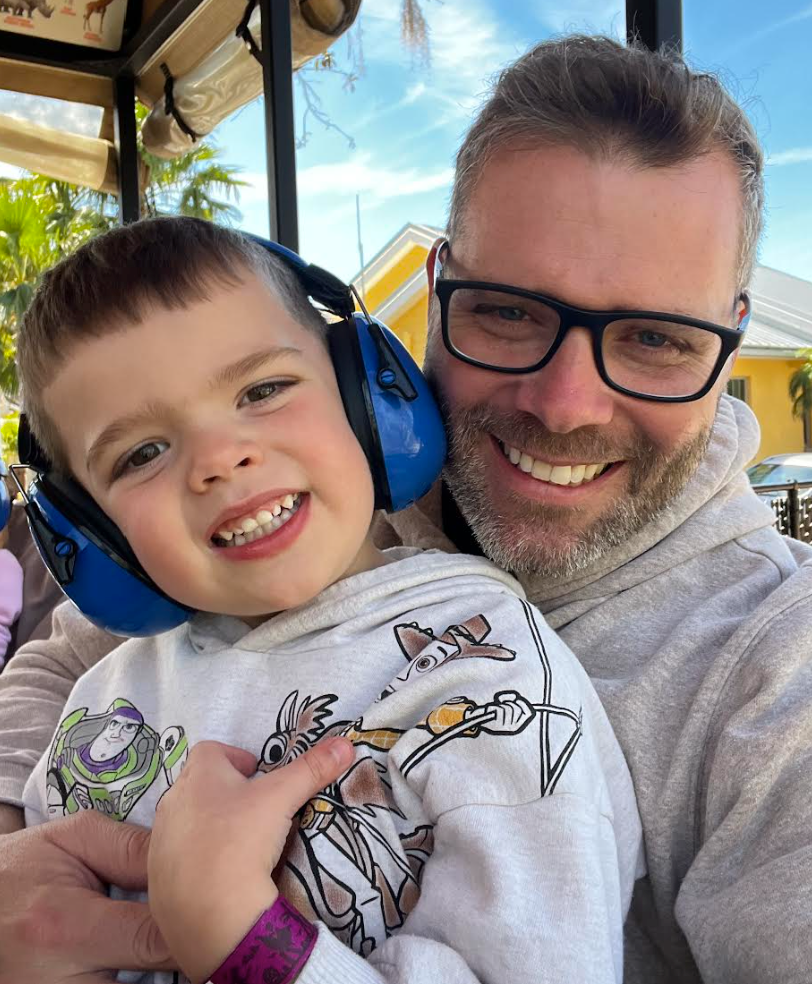
Your child has a birthday party on Saturday and you can already feel both of your stress levels rising. What will happen when we get there? Will it be loud? Do I have to sing? What if I do not like the cake? The questions start days in advance because your child's brain needs answers before it can feel safe walking into the unknown.
What if you could give them a preview of exactly what to expect, written in their language, from their perspective, before they ever walk through the door? That is exactly what social stories do, and they have been transforming how neurodivergent children navigate the world since Carol Gray developed them in 1991.
What Are Social Stories?
Social stories are short, personalized narratives that describe a situation, skill, or concept in terms of relevant social cues, perspectives, and appropriate responses. They are written from the child's perspective and provide clear, concrete information about what to expect and how to respond.
Unlike typical stories meant for entertainment, social stories serve a specific purpose: to increase understanding and reduce anxiety around particular situations or social expectations.
A social story might cover topics like:
- Going to the dentist
- Starting at a new school
- What to do when feeling angry
- How to join a group of children playing
- What happens during a fire drill
- Meeting a new family member
Why Social Stories Work
Children with autism often experience the world differently. What seems intuitive to neurotypical children, reading social cues, understanding unwritten rules, predicting what will happen next, can be genuinely puzzling for autistic children.
Social stories work because they:
Make the implicit explicit. Many social expectations are never directly taught, we assume children will "just know." Social stories spell out what others might take for granted.
Reduce anxiety through predictability. When children know what to expect, anxiety decreases. Social stories provide a roadmap for unfamiliar situations.
Present information visually and verbally. Many autistic children are visual learners. Social stories combine words with images, making information more accessible.
Allow for repeated practice. Reading a social story multiple times helps children internalize the information before they need to use it.
Provide perspective-taking support. Social stories often include information about how others might feel or think, supporting development of theory of mind.
Key Components of Effective Social Stories
Carol Gray's guidelines provide a framework for writing effective social stories. Understanding these components helps whether you're creating stories yourself or evaluating pre-made resources.
Descriptive sentences provide factual information about the situation. "The dentist's office has a waiting room with chairs and magazines."
Perspective sentences describe the thoughts, feelings, or beliefs of others. "The dentist wants to help keep my teeth healthy."
Directive sentences suggest appropriate responses. "I can try to sit still in the dentist's chair."
Affirmative sentences express a shared value or reassure. "It is important to take care of our teeth."
Control sentences are written by the child to identify personal strategies for remembering information. "I can think of the dentist as a tooth helper."
The ratio matters, effective social stories have significantly more descriptive and perspective sentences than directive ones. The goal is understanding, not just compliance.
When to Use Social Stories
Social stories are versatile tools that can address many different situations.
Preparing for new experiences. Doctor visits, airplane flights, starting school, attending a birthday party, any new situation benefits from advance preparation through a social story.
Teaching social skills. Making friends, taking turns, understanding personal space, and responding to greetings can all be addressed through social stories.
Explaining changes in routine. When schedules must change, a substitute teacher, a canceled activity, a different route to school, social stories help children understand and adapt.
Addressing challenging behaviors. When a child engages in behavior that causes problems, a social story can explain why the behavior is problematic and suggest alternatives, without shame or punishment.
Processing difficult events. After upsetting experiences, social stories can help children make sense of what happened and feel more prepared if it happens again.
Creating Personalized Social Stories
While pre-made social stories exist for common situations, the most effective stories are personalized to your specific child and their specific circumstances.
Use your child's name and specific details. "Marcus is going to Dr. Johnson's office on Oak Street" is more meaningful than a generic story about "going to the doctor."
Include photographs when possible. Pictures of the actual location, people, or objects your child will encounter make the story concrete and recognizable.
Match the language level to your child. Use vocabulary and sentence structure your child can understand. Simpler is usually better.
Keep it accurate. Never promise something that might not happen. If getting a shot is possible, the story should include that possibility.
Be positive but honest. Focus on what your child CAN do while acknowledging that things might be challenging.
Involve your child in creation. Older children can help write their own social stories, which increases engagement and ownership.
Enjoying this article?
Get practical tips and insights delivered to your inbox — no spam, ever.
How to Use Social Stories Effectively
Having a well-written social story is only the beginning. How you use it determines its effectiveness.
Read it in advance. Introduce the social story well before the situation occurs, ideally days before for major events, and multiple times leading up to it.
Read it consistently. Make reading the social story part of the routine. Repetition helps the information become familiar and accessible.
Read it calmly. Social stories work best when introduced during relaxed moments, not during times of stress or as a response to meltdowns.
Keep it available. The social story should be accessible so your child can review it independently or carry it to the situation as a reference.
Update as needed. As your child masters a skill or situation, the story can be retired. When circumstances change, stories may need updating.
Don't force it. If your child resists a particular social story, consider whether the format, content, or approach needs adjustment.
.png)
Social Stories in the Digital Age
While traditional social stories on paper remain effective, digital formats offer new possibilities.
Interactive elements can increase engagement. Tapping to reveal the next part of the story or hearing audio can make social stories more appealing.
Easy personalization through apps allows for quick creation and modification of stories with personal photos and details.
Portability means stories are always available on a tablet or phone, ready to review before or during challenging situations.
Multimedia options allow for including video, audio, and animation, which may resonate more strongly with some children.
VizyPlan's Vizy Stories feature makes creating personalized social stories simple, with the ability to add custom images, multiple pages, and covers that make each story unique to your child.
Beyond Basic Social Stories
As children develop, social story approaches can evolve.
Comic strip conversations use simple drawings to represent conversations, helping children understand the back-and-forth of social interaction.
Video modeling shows real or animated people demonstrating social skills, providing a dynamic visual example.
Social scripts provide exact words children can use in specific situations, helpful for children who struggle to generate language in the moment.
Self-created stories allow older children to write stories about their own experiences, processing events and planning for future situations.
Measuring Success
How do you know if social stories are helping?
Observe behavior changes. Is your child more cooperative or less anxious in situations addressed by social stories? Are challenging behaviors decreasing?
Ask your child. If developmentally appropriate, ask how they feel about the situations covered in social stories. Do they feel more prepared?
Monitor over time. Keep notes about how situations go before and after introducing social stories. Patterns emerge over time.
Adjust as needed. If a social story does not seem to help, consider revising the content, trying a different format, or consulting with a professional who can provide guidance.
Working with Professionals
While parents can create effective social stories independently, professionals can provide valuable support.
Speech-language pathologists often use social stories as part of social communication intervention.
Behavior analysts can help identify which situations would benefit most from social stories and how to measure their effectiveness.
Teachers and special educators use social stories in classroom settings and can coordinate with home use.
Occupational therapists may incorporate social stories into sensory and self-regulation work.
VizyPlan's Vizy Stories feature helps you create personalized social stories with custom images and multiple pages. Start your free trial and help your child feel prepared for any situation.