
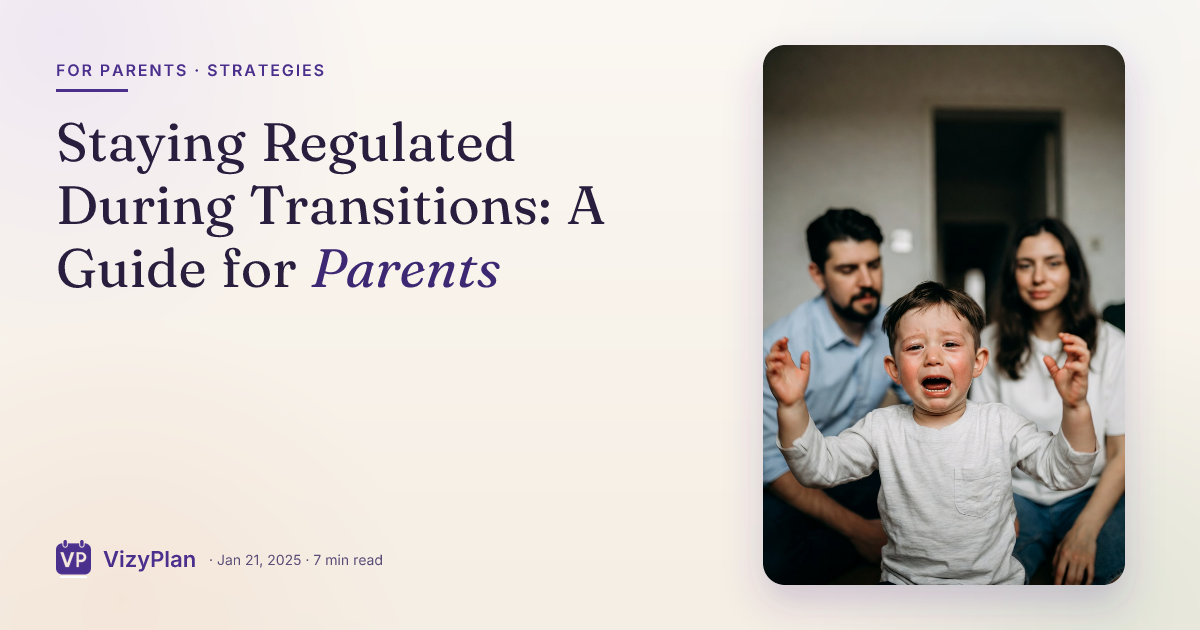
"Time to turn off the TV." Instant tears. "We need to leave the playground." Full meltdown. "Dinner is ready, come to the table." They act like you just asked them to climb Everest. Every single transition, all day long, feels like you are dragging your child through an invisible wall of resistance.
It is not stubbornness. It is not defiance. For neurodivergent children, every transition requires their brain to disengage from one thing, process that it is ending, and prepare for something entirely new. That mental shifting demands enormous cognitive and emotional effort, and when it goes wrong, the nervous system responds with fight, flight, or freeze.
The Transition-Regulation Connection
When children struggle with transitions, we often focus on the behavioral symptoms, resistance, meltdowns, refusal to move. But beneath these behaviors lies a nervous system that is working overtime to process change.
Transitions demand cognitive flexibility. The brain must disengage from one activity, process that something is ending, and prepare for something new. For children with autism or ADHD, this mental shifting requires significant effort and can trigger a stress response.
Uncertainty activates the nervous system. Even when children know what comes next, the act of changing states feels unpredictable to their bodies. This uncertainty can push a regulated child into dysregulation within moments.
Sensory shifts compound the challenge. Moving from a quiet activity to a loud environment, or from movement to stillness, requires the sensory system to recalibrate quickly, something many neurodivergent children find difficult.
Proactive Regulation Before Transitions
The best strategy for staying regulated during transitions is to enter them from a regulated state. Building regulation opportunities into the moments before transitions makes a significant difference.
Check in before announcing changes. Before telling your child it is time to transition, observe their current state. Are they calm and engaged, or already showing signs of stress? A child who is already dysregulated will struggle more with any transition.
Use calming activities as bridges. Before difficult transitions, incorporate a brief regulating activity. This might be deep breathing, a quick movement break, or a moment of deep pressure through a firm hug.
Provide sensory input proactively. If your child seeks proprioceptive input, have them do a heavy work task before the transition, carrying something, pushing against a wall, or doing jumping jacks. This input helps organize the nervous system for the change ahead.
Lower demands before high-stress transitions. If you know a particular transition is challenging, reduce other demands in the minutes leading up to it. A child who has just finished a frustrating task will have fewer resources for the transition.
Visual Supports That Promote Regulation
Visual supports do more than communicate what happens next, they provide the predictability that keeps nervous systems calm.
Include regulation cues in visual schedules. Your visual schedule can show not just the next activity, but also what regulation strategy to use before moving. A picture of deep breaths between activities normalizes regulation as part of the routine.
Use emotion check-ins during transitions. A simple visual emotion scale can help children identify their state before, during, and after transitions. This builds awareness and gives you information about what support they need.
Show the regulation space on the schedule. If your child has a calm-down corner or regulation tools, include these as options within the transition routine. Seeing that regulation support is available can itself be calming.
Create visual countdown systems. Visual timers and countdown boards show that the transition is approaching gradually rather than appearing suddenly. Watching time pass helps children mentally prepare, keeping their nervous systems more settled.
When Dysregulation Happens During Transitions
Even with excellent preparation, dysregulation will sometimes occur during transitions. Having a plan for these moments helps everyone.
Pause and co-regulate first. When a child becomes dysregulated during a transition, stop and focus on regulation before anything else. The transition can wait. Getting to the next activity while dysregulated will only make things harder.
Reduce sensory input immediately. Lower your voice, reduce visual clutter if possible, and give physical space. A dysregulated nervous system is overwhelmed, adding more input makes it worse.
Offer rather than demand regulation tools. Instead of saying "You need to calm down," try offering: "Would you like your squeeze ball?" or "Let's take some breaths together." Demands increase stress; offers provide support.
Use minimal language. When a child is dysregulated, processing verbal information becomes harder. Use short phrases, visual cues, or gestures instead of explanations or reasoning.
Allow recovery time before proceeding. After the intense moment passes, give additional time before completing the transition. Rushing a child who has just been dysregulated often triggers another episode.
Building Regulation Into Transition Routines
Rather than treating regulation as something to do only when problems arise, build it directly into your transition routines.
Enjoying this article?
Get practical tips and insights delivered to your inbox — no spam, ever.
Create a transition ritual that includes regulation. Every transition could follow the same pattern: warning, regulation activity, movement to the next activity. When regulation is part of the routine, children begin doing it automatically.
Use movement as the transition. Instead of asking children to simply stop and start, incorporate movement into the change itself. Walking to the next activity while doing arm movements, or hopping between rooms, channels transition energy productively.
Include choice within regulation. "It's almost time to transition. Do you want to do five jumps or squeeze your hands?" Offering choice gives children control while ensuring regulation happens.
Practice transitions when calm. During relaxed moments, practice the physical act of transitioning between activities while using regulation strategies. This builds muscle memory for difficult moments.
.png)
Recognizing Early Signs of Dysregulation
Catching dysregulation early, before it escalates, allows for faster recovery and smoother transitions.
Watch for changes in movement. Increased fidgeting, pacing, or sudden stillness can signal that a child's nervous system is becoming overwhelmed. These physical signs often appear before behavioral changes.
Notice changes in tone or volume. A child whose voice gets louder, faster, or higher is showing signs of activation. Similarly, a child who becomes very quiet may be shutting down.
Pay attention to sensory seeking or avoiding. A child who suddenly covers their ears, squints, or moves away from sensory input is signaling overwhelm. A child who increases stimming or sensory-seeking behaviors is trying to regulate.
Track patterns over time. Many children show consistent early warning signs. Learning your child's specific signals helps you intervene earlier.
Environmental Modifications That Support Regulation
The physical environment plays a significant role in whether children can maintain regulation during transitions.
Create clear transition pathways. When the physical path from one activity to another is cluttered or confusing, it adds cognitive load that depletes regulation resources. Clear, consistent pathways support smoother transitions.
Reduce sensory intensity at transition points. If transitions happen in spaces with bright lights, loud sounds, or visual clutter, children enter them already somewhat activated. Calmer transition spaces support calmer transitions.
Make regulation tools accessible. Fidgets, weighted items, or comfort objects should be easily available during transitions, not stored away where children cannot access them when needed.
Design spaces with regulation in mind. Having a quiet corner near common transition points gives children a place to pause and regulate if needed before completing the change.
The Role of Caregiver Regulation
Children co-regulate with the adults around them. Your own state significantly impacts their ability to stay regulated during transitions.
Monitor your own stress. Rushed, anxious adults create rushed, anxious transitions. When you feel yourself becoming activated, take a breath before initiating or continuing the transition.
Model regulation strategies. Narrate your own regulation during transitions: "I'm feeling a little stressed about time. I'm going to take a deep breath." Children learn from watching you regulate.
Adjust expectations when you are dysregulated. If you are having a hard day, recognize that transitions will be harder for everyone. Simplify what you can and extend grace to yourself and your child.
Build in buffers that protect your regulation. Running late makes everything harder. Building in extra time for transitions protects your own nervous system, which in turn supports your child's.
Progress Takes Time
Building regulation skills during transitions is a gradual process. Celebrate small improvements rather than expecting immediate transformation.
Notice effort, not just success. A child who tried to use a regulation strategy, even if they still became upset, is building skills. Acknowledge the attempt.
Track patterns over time. What seemed impossible three months ago may now happen occasionally. This is meaningful progress even if daily struggles continue.
Adjust strategies as children grow. What works at age five may not work at age eight. Stay curious about what helps your specific child at their current stage.
VizyPlan helps you create visual transition supports with built-in regulation cues. Start your free trial and bring more calm to your family's transitions.