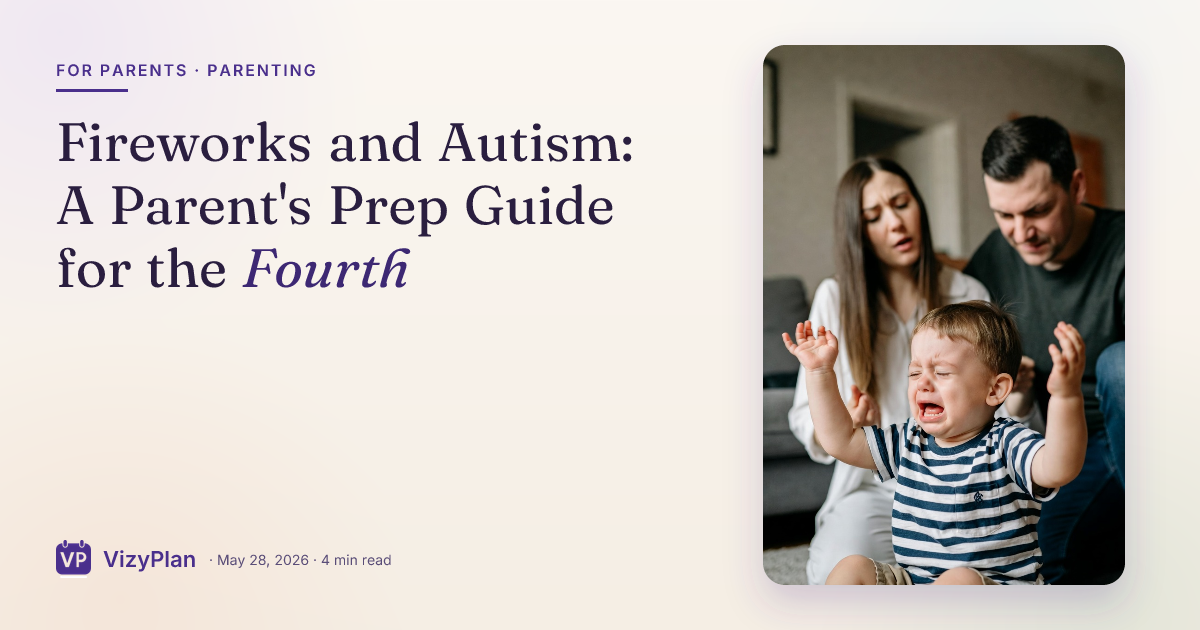
Your neighborhood is already stockpiling for the Fourth, and you can feel the dread building. Fireworks and autism can be one of the hardest sensory collisions of the summer. The bangs are loud, the timing is unpredictable, and the social pressure to "just bring the kids" is real. The auditory research is clear about why this combination is so brutal, and the prep steps that lower the cost are concrete.
Why fireworks and autism are such a sensory collision
Stiegler and Davis 2010 documented sound sensitivity in autistic children at far higher rates than the general pediatric population. Tomchek and Dunn 2007 catalogued atypical sensory processing in more than 95 percent of the autistic children in their sample, with auditory differences among the most common. Fireworks combine three of the hardest auditory features for an autistic nervous system at once. The decibel level is high, the timing is unpredictable, and the startle reflex is already on a hair trigger. The CDC puts consumer fireworks at the source between 140 and 150 dB. The AAP recommends hearing protection at any sustained exposure above 85 dB.
What helps before the night arrives
Three prep moves that lower the cost.
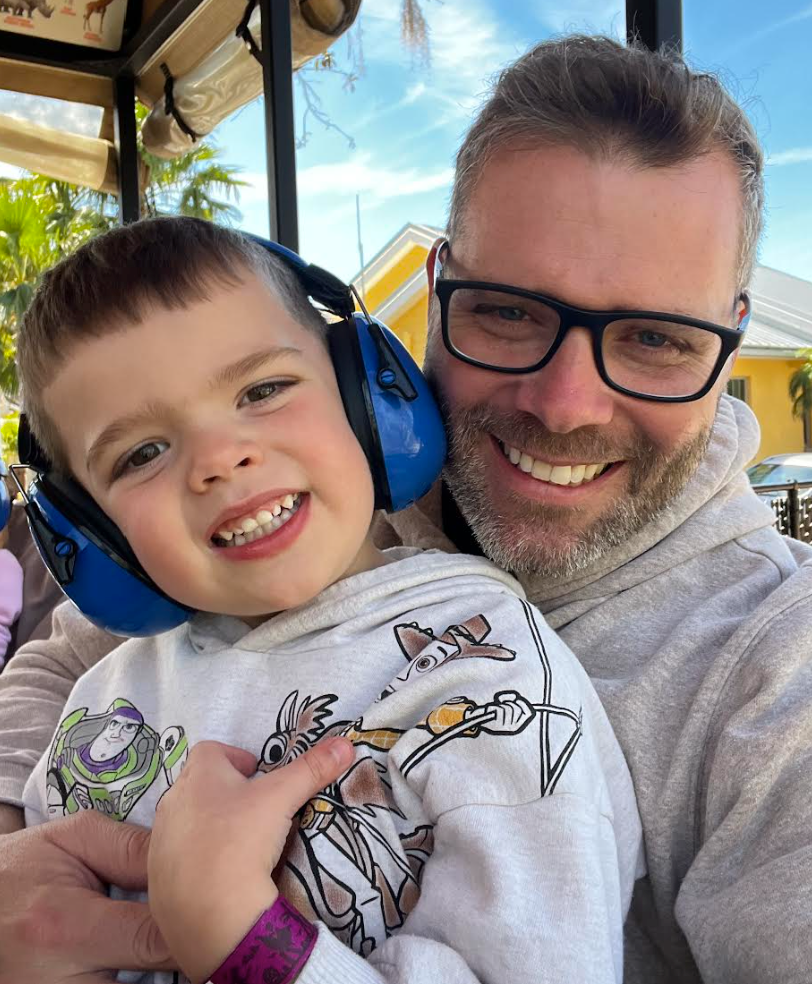
- Hearing protection that fits. Over-ear protective muffs rated NRR 25 or higher cut the peak intensity enough that the startle does not land. Trial them at home for a week before the event so the muffs themselves are not a new sensory load.
- A visual preview of the night. A short social story walking through the order of events, what the booms will sound like, where the exits are, and what your child can do when overwhelm starts. The preview gives the nervous system a rehearsal before the live exposure.
- A pre-built exit plan. Decide before you leave the driveway what "we are done" looks like and where you will go. A clear exit is what makes the event survivable. The threat of being stuck is often louder than the booms themselves.
Enjoying this article?
Get practical tips and insights delivered to your inbox — no spam, ever.
What helps in the moment
A visible countdown, a safe corner away from the launch site, and a parent who is not pretending it is fine. Children regulate off the parent's nervous system. Pretending the noise does not affect you signals to your child that distress is not allowed. Naming it, "the next one is going to be loud, I have the muffs ready," is the regulation your child is using to gauge the room.
VizyPlan was built by an autism dad for moments like these. Drop a social story for the Fourth into the day view, add a visual exit plan, and your child gets to rehearse the night before it arrives.
Download VizyPlan and start your 7-day free trial today. Build the noise prep before the Fourth lands. If it helps, keep going for $6.99/month or $59.99/year.
VizyPlan was built by an autism dad who needed something that did not exist. Start your free trial.