If you are an SLP working with an AAC user, you already know the gap. The device gets used in your session and stays in the bag at home. AAC visual schedules are the bridge that turns a communication tool into part of the day. The carryover literature is consistent on what makes the difference, and the scaffold pairs directly with what the family is already doing on the phone.
What the AAC literature shows
Ganz and colleagues 2012 meta-analysis confirmed AAC produces meaningful communication gains for autistic children, with the strongest effects when use is embedded across settings. Light and McNaughton 2014 frame AAC competency as four threads, operational, linguistic, social, and strategic, rather than a single device behavior. The ASHA Practice Portal recommends embedded modeling across the day, not isolated drill blocks. The intervention common denominator is the same. Communication grows where the device shows up in real life, not where it sits next to the snack.
Why the device gets stranded between sessions
Three failure modes you have probably seen.
- The home program lives in your head. You know which icons to model at breakfast. The family does not. The carryover plan is implicit, so it does not run.
- The day does not signal the device. The AAC user picks up the device when prompted, not when the moment calls for it. Without an anchor, the device drifts.
- Modeling fatigue is real. Aided language stimulation works, but a parent running it across an entire day with no scaffolding burns out by Wednesday.
Enjoying this article?
Get practical tips and insights delivered to your inbox — no spam, ever.
Where AAC visual schedules earn their keep
Pair each daily routine step with the icons the child would use to comment, request, or label. The 10:30 snack card carries SNACK, MORE, ALL DONE. The bath card carries WATER, HOT, BUBBLES. The family is not generating language load on top of running the routine. The visual schedule is the prompt. The icons are pre-staged for the parent to model.
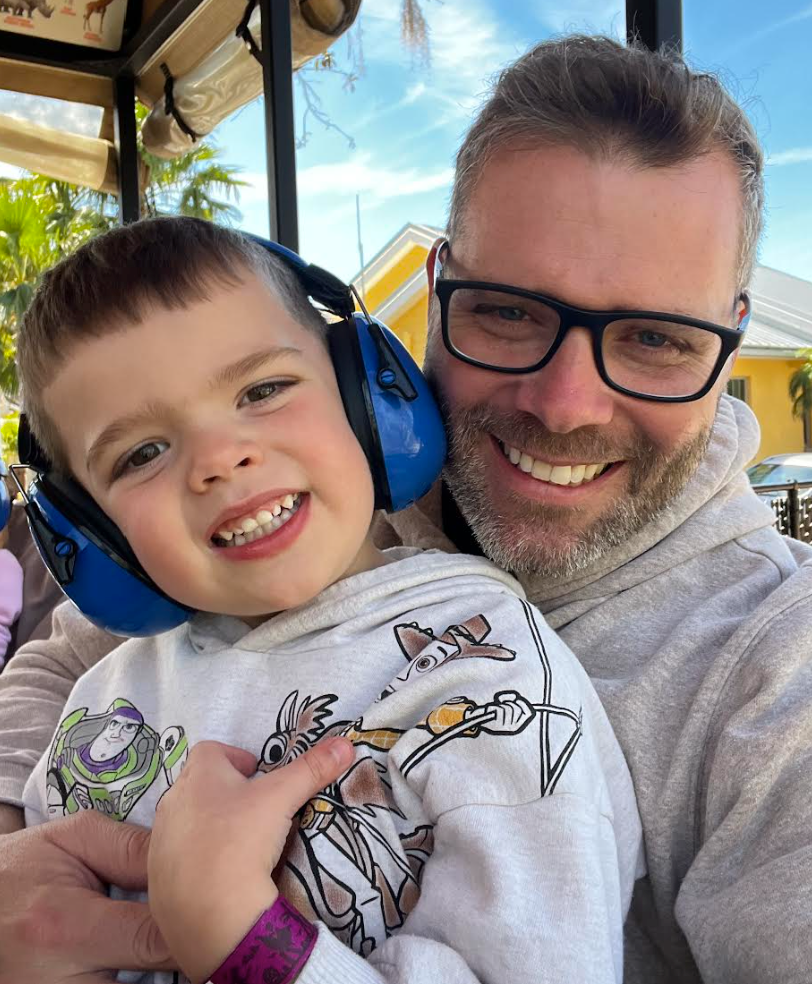
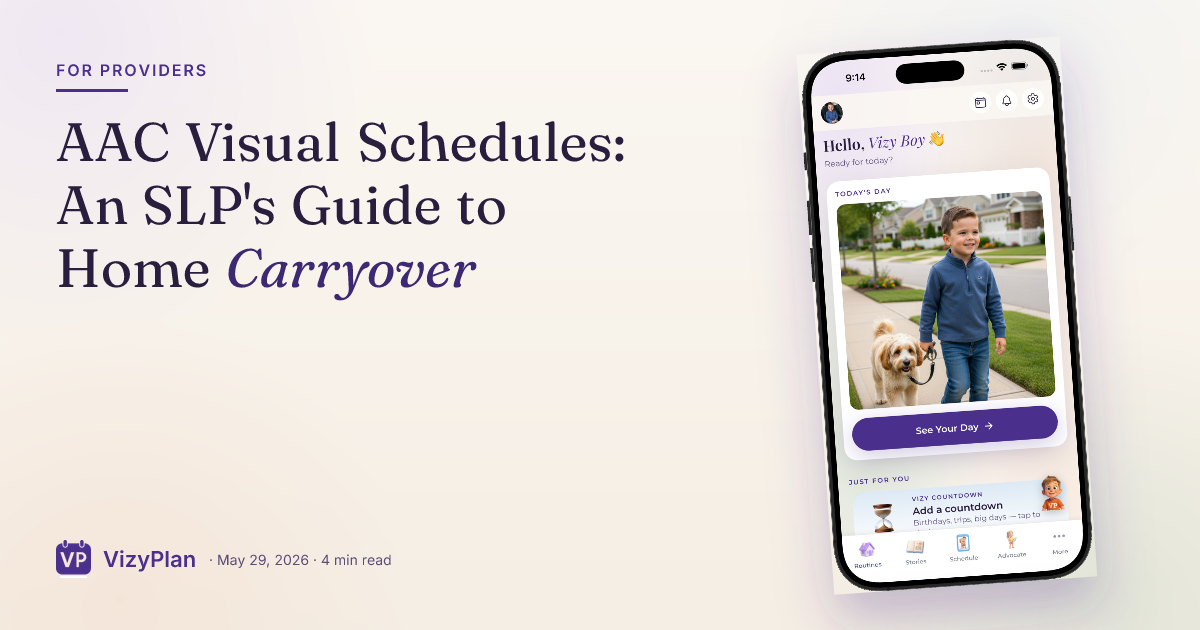
VizyPlan was built by an autism dad and an autism mom SLP for the home program problem. The visual schedule lives on the family's phone, the photos are of the actual child in the actual home, and the icons you want modeled can be placed inside the routine step where they are most natural. The clinical work stays yours. The communication practice gets the density it needs.
Download VizyPlan and start your 7-day free trial today. See what your families would run between sessions. If it helps, keep going for $6.99/month or $59.99/year.
VizyPlan was built by an autism dad and an autism mom who is a licensed speech-language pathologist who needed something that did not exist. Start your free trial.