
Many parents first hear about the zones of regulation when a teacher or therapist mentions color coded feelings, and the idea sticks because it is simple. The zones of regulation approach sorts emotions into four colors so a child can point to how a body feels instead of finding the perfect words. Blue covers low energy states like tired or sad. Green covers calm and ready to learn. Yellow covers heightened feelings like silly, worried, or frustrated. Red covers intense feelings like anger or panic. The framework was created by educator Leah Kuypers, and many families use the general color idea at home in their own gentle way.
Why a Color Framework Helps Neurodivergent Kids
Naming a feeling is hard work, especially for autistic and ADHD children who may feel emotions strongly before they can label them. A color gives a child a handhold. Pointing to yellow is easier than explaining frustration in a hard moment. The zones of regulation framework also lowers shame, because a color is just information, not a verdict on character.
No zone is a bad zone. Blue is not wrong, and red is not naughty. Every color is a normal part of being human, and the goal is recognizing and supporting feelings, not suppressing them. A child who learns that red is allowed will trust you sooner when red shows up. This builds on co-regulation before self-regulation, because your calm presence teaches the nervous system what safe feels like.
Using Zones of Regulation at Home
Try these steps to bring the zones of regulation into daily family life.
- Name the colors together. Talk about all four zones during a calm moment, not mid meltdown, so the words are familiar later.
- Check in often. Ask "what color are you right now" at breakfast and bedtime so naming feelings becomes ordinary.
- Match a tool to each zone. A yellow body might need movement, while a red body might need a quiet space and deep breaths.
- Stay neutral about every color. Greet blue and red with the same warmth you give green, so no feeling feels forbidden.
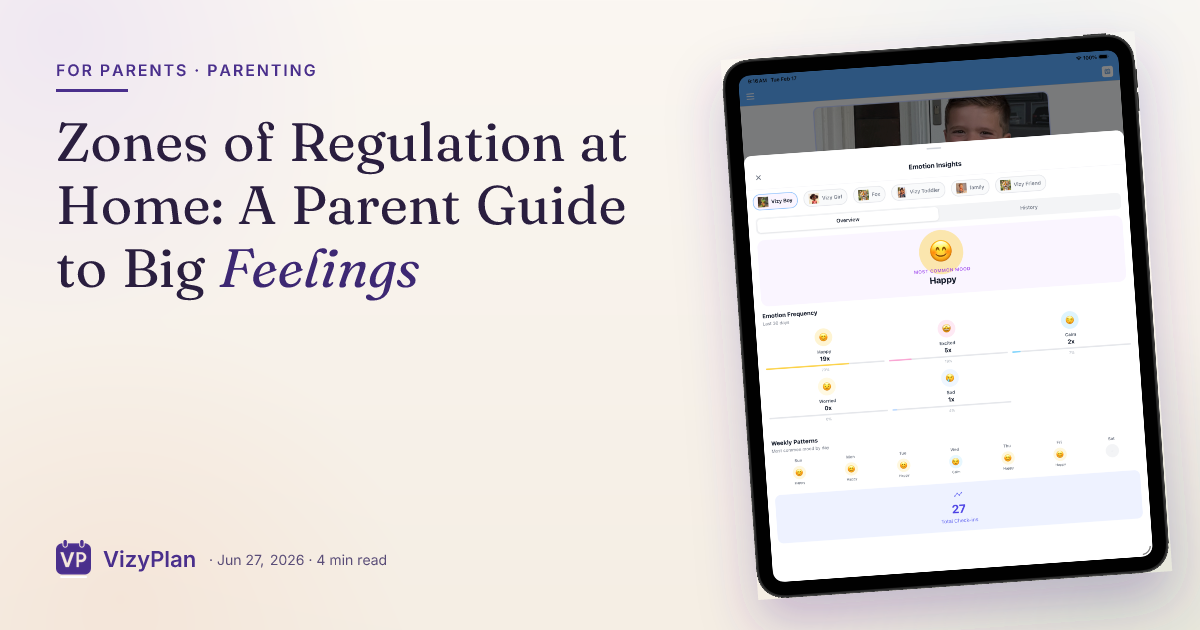
Knowing a feeling and acting on a plan are different skills, and the gap between them often lives in executive function. Visuals close that gap. VizyPlan offers visual emotion check-ins and calm-down routines, so your child can spot a color and walk through a soothing sequence without needing you to script every step.
Enjoying this article?
Get practical tips and insights delivered to your inbox — no spam, ever.
Download VizyPlan and start your 7-day free trial today. Give your child a calm, visual way to name and manage big feelings. If it helps, keep going for $6.99/month or $59.99/year.
VizyPlan was built by an autism dad who needed something that did not exist. Start your free trial.