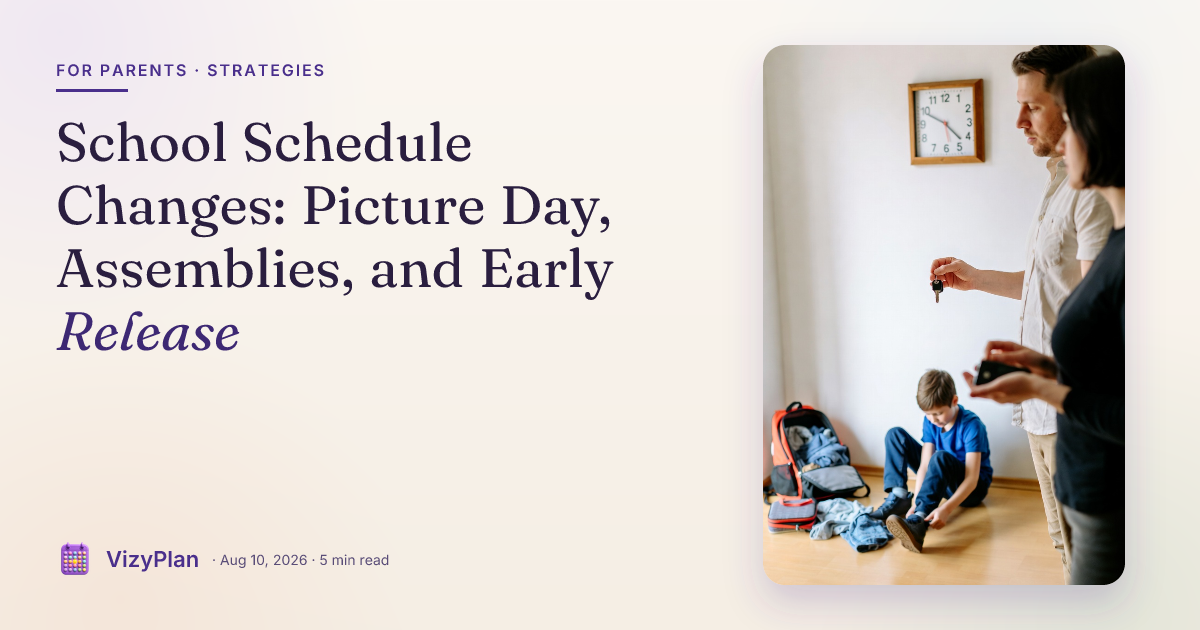


Your child knows how to brush their teeth. They have done it hundreds of times. But every single morning, they stand in the bathroom staring at the toothbrush like they have never seen one before. You have reminded them three times. You are running late. And you are wondering, for the hundredth time, why something so simple is so hard.
Or maybe it looks like this: your child's backpack is a disaster. Papers crumpled at the bottom, a permission slip from three weeks ago that never made it home, a lunch box you thought was lost. Their room looks like a storage unit after an earthquake. You have tried chore charts, consequences, and long talks about responsibility. Nothing sticks.
Or this: your child melts down when plans change. Not a small complaint, but a full-body, inconsolable reaction to finding out that Tuesday's soccer practice was moved to Wednesday. The change is minor. The response is enormous.
These are not behavior problems. They are not signs of laziness, defiance, or a lack of caring. What you are seeing is executive function, or more accurately, executive function that works differently than you might expect.
What Is Executive Function, Exactly?
Executive function is a set of mental skills managed primarily by the prefrontal cortex, the front part of the brain that handles planning, decision-making, and self-control. Think of executive function as your brain's air traffic control system. It coordinates incoming information, manages competing demands, and directs behavior toward goals.
For neurotypical children, these skills develop gradually and somewhat predictably throughout childhood and into the mid-twenties. For neurodivergent children, particularly those with autism, ADHD, or both, executive function often develops on a different timeline and follows a different pattern.
Research from Dr. Russell Barkley, one of the leading researchers on ADHD and executive function, suggests that children with ADHD may be 30 percent behind their peers in executive function development. That means your ten-year-old might have the executive function capacity of a seven-year-old. Your fourteen-year-old might function more like a ten-year-old in this area. Not because they are less intelligent, but because these specific brain systems are developing at their own pace.
Executive function is not one single skill. It is a collection of interrelated abilities that work together. Understanding each one helps explain why your child struggles where they do.
Working Memory
Working memory is the ability to hold information in your mind while using it. Following multi-step directions, remembering what you went upstairs to get, keeping track of where you are in a math problem. When working memory is limited, your child hears "Go upstairs, put on your shoes, grab your jacket, and meet me at the car" and retains maybe one of those four instructions.
Task Initiation
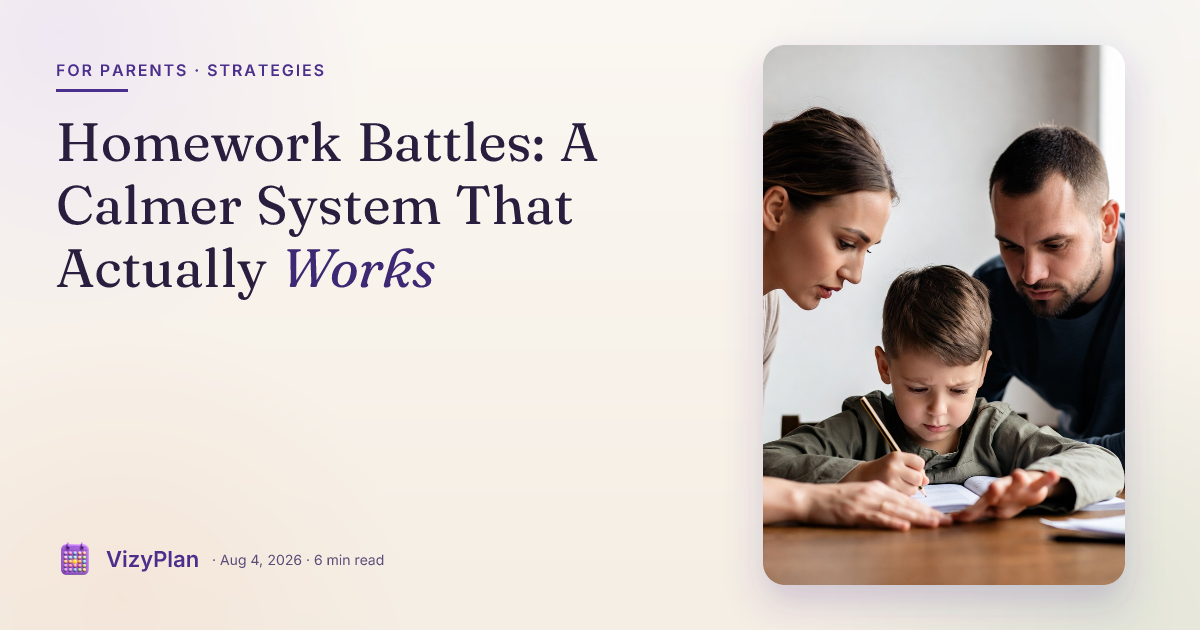
This is the ability to start a task without excessive procrastination. For many neurodivergent children, getting started is the hardest part. They know they need to do their homework. They want to do their homework (or at least they want it to be done). But the act of beginning feels like pushing through an invisible wall. This is not laziness. It is a neurological difficulty with activating and directing attention toward a non-preferred task.
Planning and Organization
Planning involves figuring out the steps needed to reach a goal and putting them in order. Organization involves keeping track of materials, time, and information. A child with planning difficulties might sit down to write a book report and have no idea where to begin, not because they did not read the book, but because "write a book report" is an overwhelming, multi-step project that their brain cannot break into manageable pieces on its own.
Cognitive Flexibility
This is the ability to shift between tasks, adjust to new information, and handle unexpected changes. When your child falls apart because the restaurant is out of chicken nuggets or because you took a different route to school, cognitive flexibility is what is being challenged. Their brain built a mental map of how things were supposed to go, and deviating from that map feels genuinely distressing.
Inhibitory Control
Inhibitory control is the ability to stop and think before acting, to resist impulses, and to filter out distractions. It is what allows a child to raise their hand instead of shouting out the answer, to wait their turn in a game, or to keep their hands to themselves when they are frustrated. Weak inhibitory control does not mean your child does not know the rules. It means that in the moment, their brain's braking system is not fast enough.
Emotional Regulation
While not always listed as a core executive function, emotional regulation is deeply connected to executive function systems. The ability to manage the intensity of your emotional responses, to calm down after getting upset, to tolerate frustration, all of this relies on the same prefrontal cortex systems that manage the other executive skills. This is why so many neurodivergent children experience what looks like "overreacting." Their regulatory systems are genuinely working harder than their peers' systems to manage the same emotional experiences.
Why Punishment Does Not Fix Executive Function
This is one of the most important things you can understand as a parent: you cannot punish a child into having better executive function. And yet, so much of traditional parenting advice is built on the assumption that children who do not complete tasks, stay organized, or control their impulses are choosing not to.
"He knows better." "She just needs more motivation." "If I make the consequence big enough, he will start remembering."
These approaches do not work for executive function difficulties because the problem is not motivation or knowledge. The problem is a skill deficit. Dr. Ross Greene puts it simply: "Kids do well if they can." When a child is not doing well, the question is not "How do I make them want to do better?" It is "What skill are they missing, and how do I support it?"
Repeated punishment for executive function failures does real damage. It teaches your child that they are lazy, irresponsible, or bad. It erodes their self-esteem and their relationship with you. And it does absolutely nothing to build the skills they actually need.
Practical Strategies That Actually Help
The good news is that while you cannot force executive function to develop faster, you can provide external supports that compensate for what your child's brain is not yet doing internally. Think of these supports as scaffolding. They hold the structure up while it is being built.
Enjoying this article?
Get practical tips and insights delivered to your inbox — no spam, ever.
Make the Invisible Visible
Most executive function tasks are invisible. "Get ready for school" requires your child to hold a sequence of steps in their head, initiate each one, and stay on track without getting distracted. That is an enormous cognitive demand.
Visual checklists and schedules take that invisible sequence and make it concrete and external. When your child can see each step laid out in front of them, they do not have to rely on working memory to keep track of where they are. They can look at the list, see what comes next, and move forward.
VizyPlan was designed around exactly this principle. It breaks routines into visual, sequential steps that your child can follow independently. Instead of you repeating "Did you brush your teeth? Did you get dressed? Where are your shoes?" your child has a tool that carries that cognitive load for them. Over time, the external support helps build the internal skill.
Break Everything Into Smaller Steps
When a task feels overwhelming, your child's brain will avoid it. Not consciously, but automatically. Task initiation becomes nearly impossible when the task in front of you feels too big to manage.
The solution is to break tasks into the smallest possible steps. Not "clean your room" but "pick up the books on the floor." Not "do your homework" but "open your math folder and find tonight's worksheet." Each step should be small enough that it does not trigger avoidance.
First-then boards are a simple, effective tool for this. "First put the books on the shelf, then you can have a snack." The structure reduces cognitive load and connects each small effort with a clear outcome.
Reduce Cognitive Load in the Environment
Look at your child's environment through the lens of cognitive demand. A cluttered desk makes it harder to find materials and start work. A room with too many toy options makes it harder to choose and play. A morning routine with too many decisions (What should I wear? What do I want for breakfast?) uses up executive function resources before the day even begins.
Simplify where you can. Lay out clothes the night before. Offer two breakfast choices instead of an open-ended question. Create designated spots for backpacks, shoes, and keys. Every decision you remove from your child's plate frees up cognitive resources for things that matter more.
Use Body Doubling
Body doubling is the practice of having another person nearby while you work on a task. For many neurodivergent children and adults, the presence of another person provides just enough external accountability and stimulation to help with task initiation and sustained attention.
This can look like sitting at the kitchen table doing your own work while your child does homework. It can look like folding laundry together. It does not require you to direct or supervise. Just being there, doing a parallel activity, can make a remarkable difference.
Build in External Reminders and Timers
Since working memory is often a challenge, external reminders are not a crutch. They are a legitimate accommodation. Visual timers help your child understand the passage of time, which is often difficult for neurodivergent brains. Alarms and notifications can prompt transitions. Checklists posted in key locations (bathroom mirror, bedroom door, by the front door) serve as memory supports.
VizyPlan combines several of these supports in one place, giving your child visual routines with built-in structure that reduces the need for you to be the constant reminder system. This is important not just for your child's independence, but for your relationship. When you are always the one nagging, it takes a toll on both of you.
Support Emotional Regulation Actively
Because emotional regulation is so closely tied to executive function, strategies that help your child manage big feelings also support broader executive function development. Teaching your child to recognize their emotional triggers and use calming strategies is executive function work, even though it might not look like it.
Co-regulation is the foundation here. Before your child can regulate themselves, they need you to regulate with them. Stay calm during their storms. Name what you see. Offer comfort before correction. Over time, your steady presence helps their brain build the regulatory pathways it needs.
Reframe the Story You Tell About Your Child
Perhaps the most powerful shift you can make is changing the narrative. When you see your child's struggles through the lens of executive function, everything changes. They are not lazy. They have difficulty with task initiation. They are not careless. They have limited working memory. They are not dramatic. They are still developing emotional regulation skills.
This reframe is not about making excuses. It is about accuracy. And when you understand the real problem, you can find real solutions instead of cycling through consequences that never work.
Your child is working harder than you realize to do things that come easily to their peers. That effort deserves recognition, even when the results are imperfect. Especially when the results are imperfect.
Download VizyPlan and start your 7-day free trial today. Turn invisible executive function demands into visual routines your child can see and follow, reduce daily friction with structured morning and bedtime supports, and build independence one step at a time with first-then boards and visual checklists. Just $6.99/month after your trial, no credit card required upfront.
VizyPlan was built by an autism dad who sat on his living room floor and needed something that did not exist. Now it does. Start your free trial and give your child the tools to see their day and navigate it with confidence.