"He should be able to calm himself down by now."
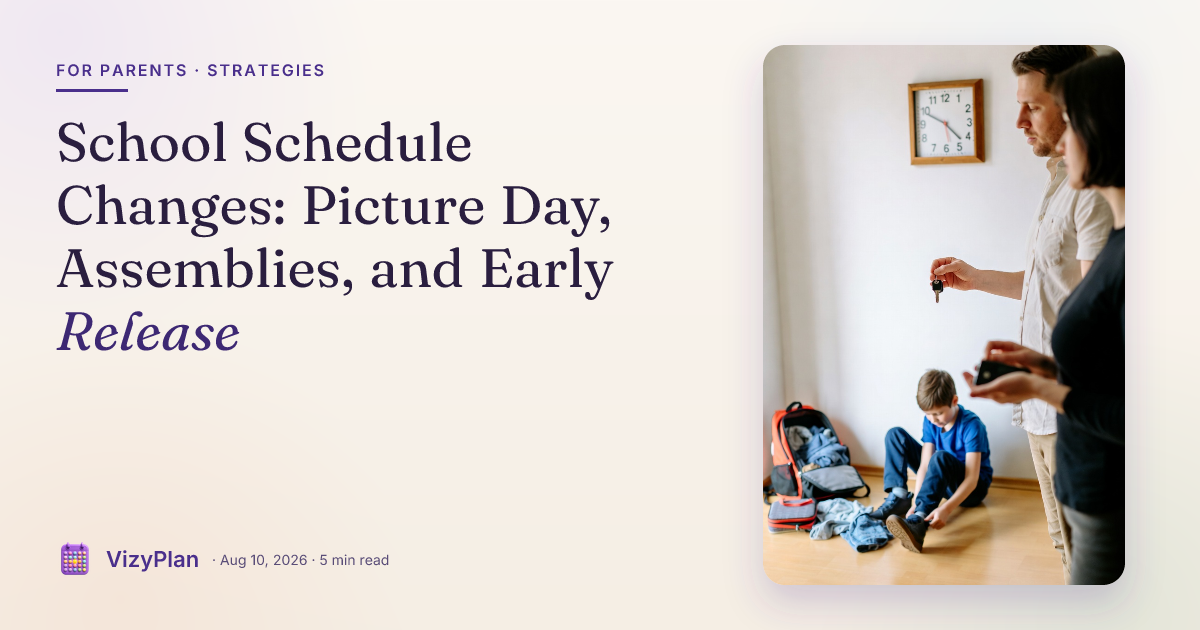
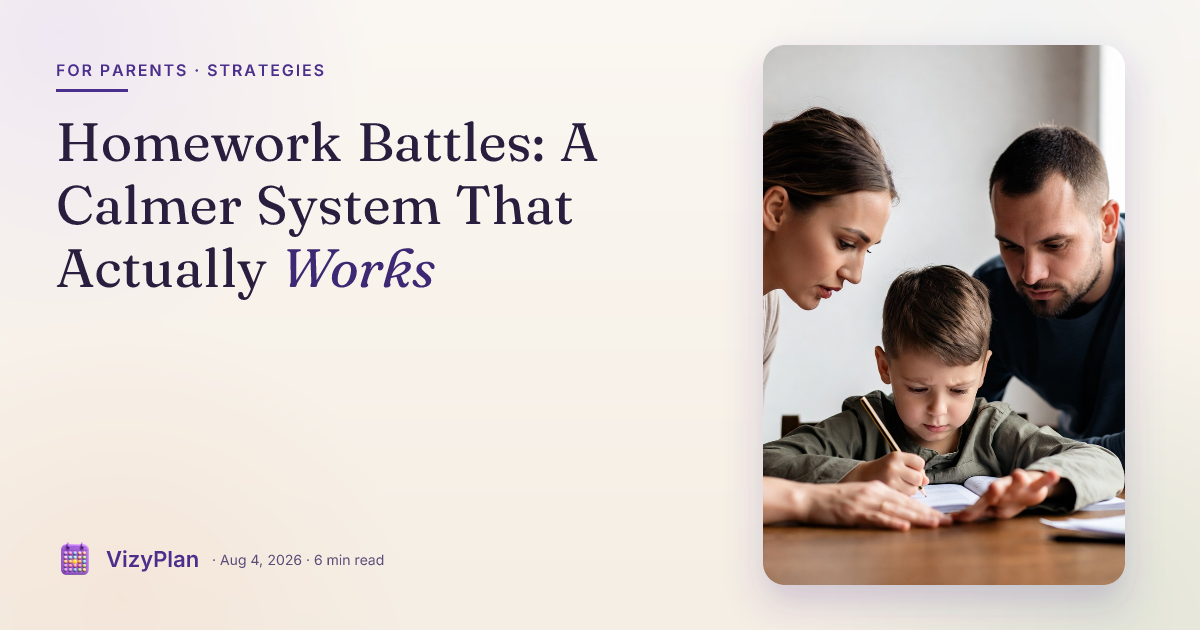
You have heard some version of this from a teacher, a family member, maybe even a therapist. Your child is six, or eight, or ten, and they still need you to help them through big emotions. They still cannot "just take a deep breath" and move on.
And you feel like you are failing. Like you should have taught them this by now. Like every other child their age has figured this out.
Here is what nobody told you: self-regulation is not a skill you teach. It is a skill that develops through thousands of moments of being regulated by someone else first. And for neurodivergent children, this developmental process takes longer, not because something is wrong, but because their nervous systems are wired differently.
What Co-Regulation Actually Means
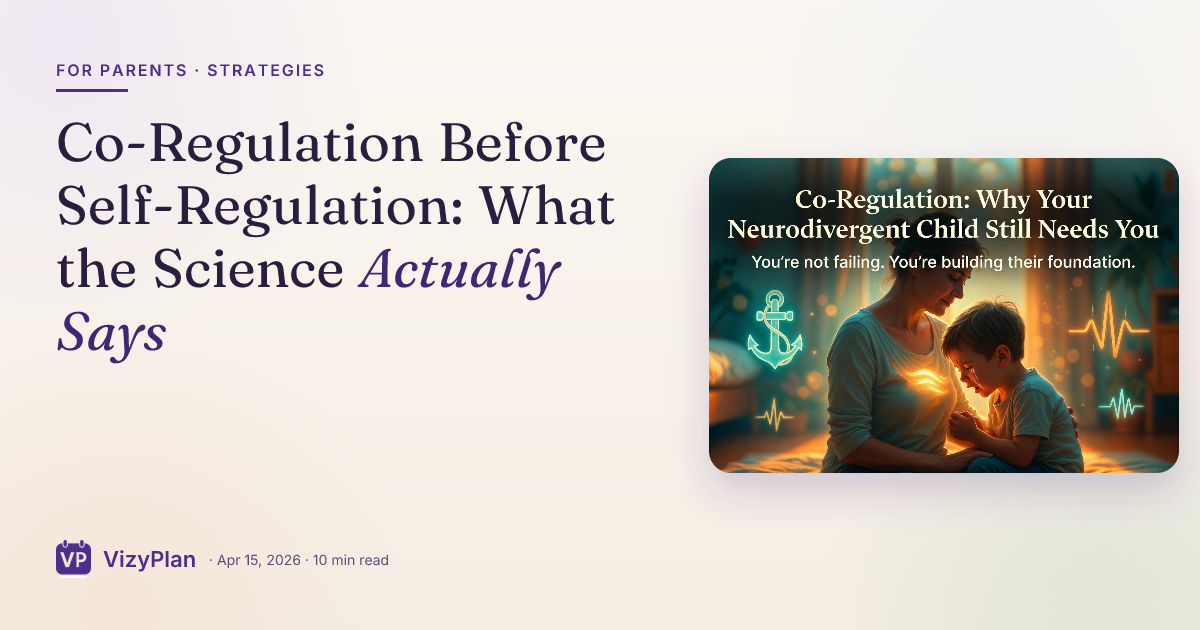
Co-regulation is the process of using your own calm nervous system to help regulate your child's dysregulated one. It is not a technique you perform on your child. It is a relational state you create between you.
When your child is melting down and you get close, lower your voice, slow your breathing, and stay present without trying to fix or lecture, you are co-regulating. Your nervous system is communicating safety to theirs. Not through words, but through tone, proximity, rhythm, and presence.
Research in developmental psychology shows that self-regulation develops through a gradual transition from interpersonal regulation, meaning co-regulation, to intrapersonal regulation, meaning self-regulation. The child cannot build the internal version without first experiencing the external one repeatedly.
Think of it this way. You cannot teach a child to swim by throwing them in deep water and shouting instructions from the side. You get in the water with them. You hold them. You let them feel buoyancy while your arms are underneath. Gradually, as their body learns what floating feels like, you remove support. Co-regulation works the same way.
Why Neurodivergent Children Need More Co-Regulation
The autonomic nervous system, which governs our stress responses, develops differently in neurodivergent children. Polyvagal theory, developed by Dr. Stephen Porges, explains that our nervous systems operate through three primary circuits: the ventral vagal system that supports social engagement and calm, the sympathetic system that drives fight-or-flight responses, and the dorsal vagal system that triggers shutdown and withdrawal.
Neurodivergent children often have nervous systems that shift into fight-or-flight or shutdown more quickly and with less provocation. Their neuroception, the subconscious process of scanning the environment for safety or danger, may interpret neutral situations as threatening. A classroom that feels fine to most children may register as overwhelming to a child whose sensory processing amplifies every sound, movement, and social demand.
This means neurodivergent children spend more time in dysregulated states. And because self-regulation builds on the foundation of co-regulation, they need more co-regulation experiences, not fewer, and they need them for longer.
The child who "should be calming down by now" is not behind. They are building a foundation that simply takes more time.
What Co-Regulation Looks Like in Practice
Match their energy first, then bring it down. If your child is yelling, start at a slightly elevated volume yourself, then gradually decrease. Jumping straight to whisper-calm when they are at a ten can feel dismissive. Meet them closer to where they are, then guide them down.
Use your body. Sit next to them on the floor. Open your posture. Breathe audibly so they can hear your rhythm. Research on polyvagal-informed interventions shows that rhythmic pacing, prosodic voice, and relational presence help stabilize autonomic states and recalibrate the child's neuroception from "danger" back to "safe."
Reduce language during peak distress. When a child is dysregulated, their higher brain functions, including language processing, go offline. Long explanations, questions, and reasoning attempts will not land. Instead, use short, rhythmic phrases: "I am here. You are safe. I have got you." Or say nothing at all. Sometimes your presence is enough.
Regulate yourself first. You cannot co-regulate if your own nervous system is in fight-or-flight. This is the hardest part. Taking three slow breaths before responding to your child's meltdown is not selfish. It is the most effective thing you can do.
Stay after the storm passes. Co-regulation does not end when the crying stops. The minutes after a meltdown are when repair happens. Stay close. Offer gentle connection. This is where trust builds.
Enjoying this article?
Get practical tips and insights delivered to your inbox — no spam, ever.
Why "Calm Down" Strategies Alone Do Not Work
Deep breathing. Counting to ten. Going to a calm corner. These are all self-regulation strategies. And they are all useless for a child who has not yet built the co-regulatory foundation to use them.
Teaching a dysregulated child to take deep breaths is like handing a drowning person a textbook on swimming. The information is correct. The timing makes it impossible to use.
Self-regulation strategies become tools a child can access once their nervous system has been trained, through repeated co-regulation, to recognize what "calm" feels like in their body. That internal reference point, the felt sense of returning to baseline, is what makes strategies like breathing or mindfulness accessible.
Until then, you are the strategy.
Building Toward Independence
Co-regulation is not about creating dependence. It is about building the neurological infrastructure that eventually supports independence.
Over time, you will notice shifts. Your child might start humming to themselves during stress, a rhythm they learned from your co-regulation. They might reach for a calm-down tool before you suggest it. They might recover from a meltdown in ten minutes instead of forty.
These moments are not random. They are the result of every time you sat on the floor with them and breathed. Every time you stayed instead of sending them to their room. Every time you chose connection over correction.
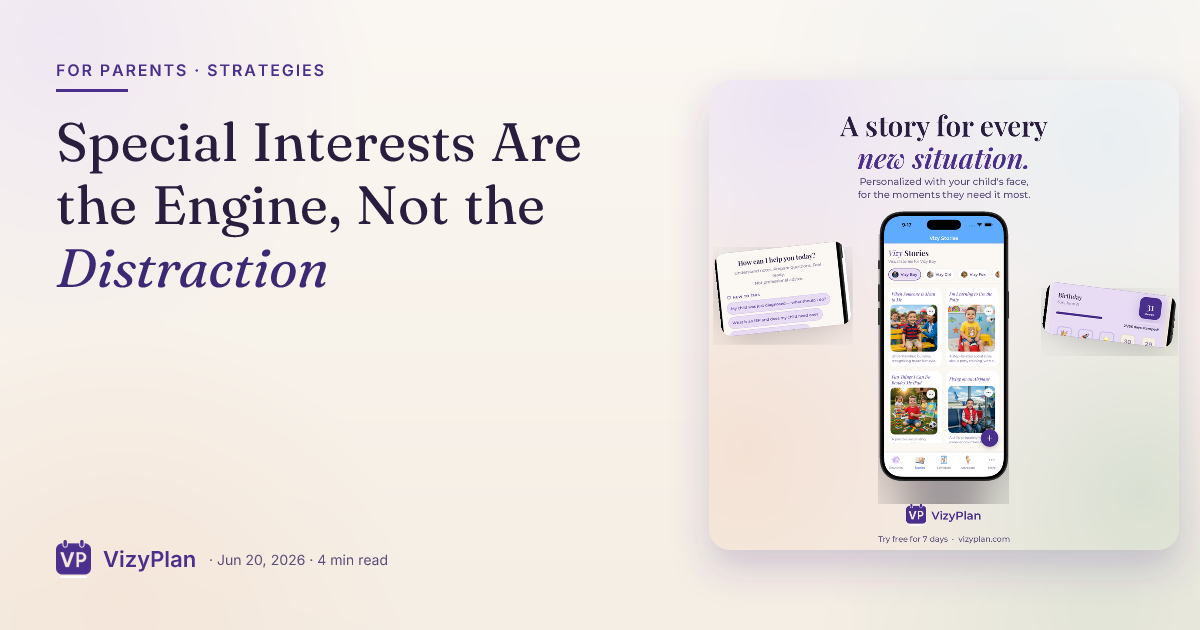
Visual supports accelerate this process. When a child can see what comes next in their day, predictability reduces the number of times their nervous system spikes into fight-or-flight. Fewer spikes means more time in the regulated state where learning happens. Emotion tracking helps you see patterns over weeks, revealing which situations consistently dysregulate your child so you can prepare, plan, and support.
You Are Not Failing
If your child still needs you to help them regulate, you are not behind. You are doing exactly what their developing nervous system requires.
The timeline is not the same as other children. The milestones will not match the charts. And the people who say "they should be able to do this by now" do not understand the neurobiology of how regulation actually develops.
Every time you show up calm in the middle of chaos, you are building something inside your child that will eventually function without you. Not today. Maybe not this year. But it is being built.
You are not a crutch. You are a foundation.
Download VizyPlan and start your 7-day free trial today. Build visual routines that reduce the daily triggers that overwhelm your child's nervous system, track emotions and patterns to understand their regulation journey over time, and create social stories that prepare them for challenging moments before they happen. If it helps, keep going for $6.99/month or $59.99/year.
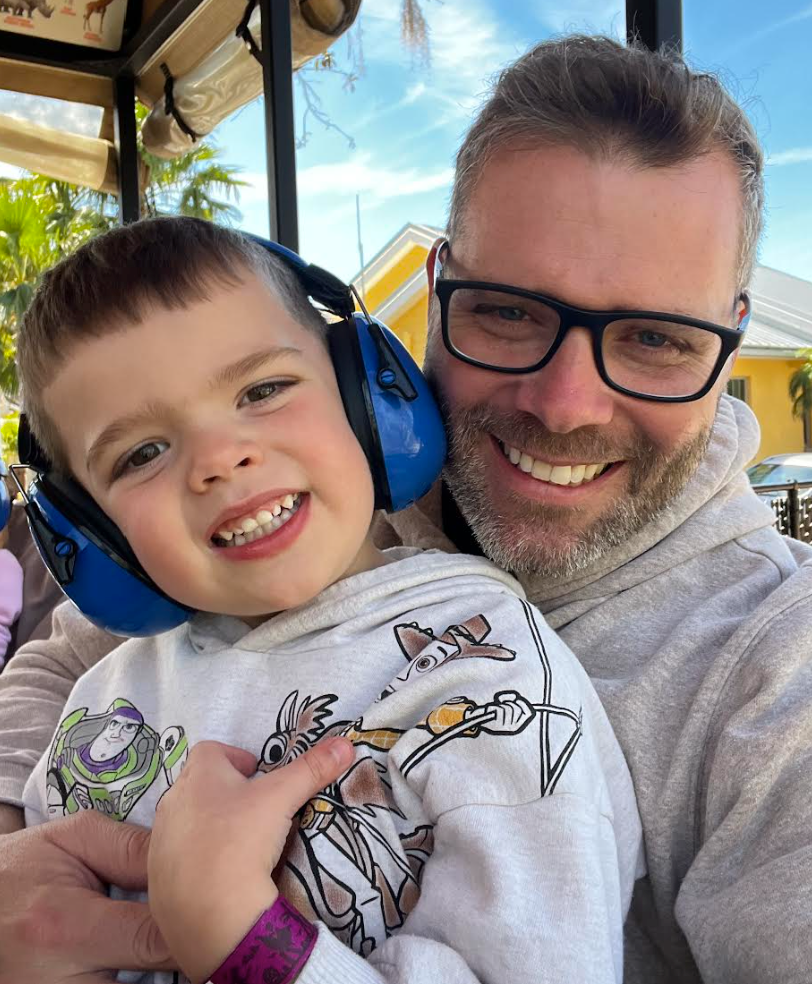
VizyPlan was built by an autism dad who sat on his living room floor and needed something that did not exist. Now it does. Start your free trial and give your child the tools to see their day and navigate it with confidence.