
Trauma-informed care is a clinical approach that recognizes how past stress, medical experiences, and a history of being misunderstood can shape how a child shows up in therapy. For autistic and neurodivergent clients, trauma-informed care means building safety, choice, and trust into every interaction rather than expecting compliance. The widely used framework rests on a few well established principles: safety, trustworthiness, choice, collaboration, and empowerment. None of these require a documented trauma history to matter. They simply make sessions kinder and more effective.
Why Predictability and Safety Come First
Predictability is one of the most powerful tools in trauma-informed care. When a child knows what is coming next, the nervous system can settle, and learning becomes possible. Surprise transitions, sudden demands, and unfamiliar routines can read as threats to a dysregulated child. Recognizing dysregulation as communication, rather than as defiance, changes how a provider responds. A meltdown is information about an unmet need, not a behavior to extinguish.
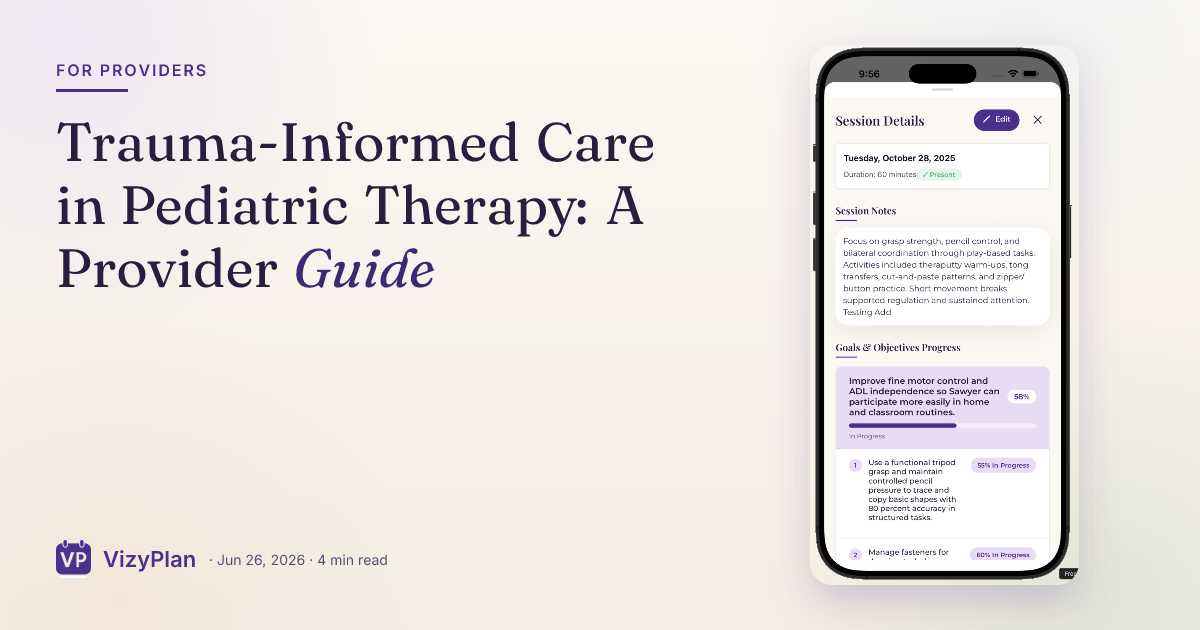
A simple visual preview can lower that threat. VizyPlan gives clients a clear, visual look at what the session holds, so predictability and safety are built in before the first demand arrives. Visual previews reduce surprise and give children a sense of control over their own day.
How to Apply Trauma-Informed Care in a Session
Small, concrete choices turn principles into practice. Here is how providers can apply trauma-informed care during everyday sessions:
- Honor assent. Watch for both spoken and unspoken cues, and treat withdrawal or distress as a no. This pairs closely with assent-based compassionate care.
- Preview the plan. Show the child what the session includes before it starts, so transitions feel expected rather than forced.
- Offer real choices. Let the child pick the order of activities or the reinforcer, which restores a sense of agency.
- Avoid coercive compliance. Drop strategies that override a child's no, and follow a neurodiversity-affirming practice that respects autonomy.
Trauma-informed care does not slow progress. It protects the trust that progress depends on. When a child feels safe, seen, and free to say no, the therapeutic relationship grows stronger, and meaningful gains follow.
Enjoying this article?
Get practical tips and insights delivered to your inbox — no spam, ever.
Download VizyPlan and start your 7-day free trial today. Build predictability and safety into every session. If it helps, keep going for $6.99/month or $59.99/year.
VizyPlan was built by an autism dad and an autism mom who is a licensed speech-language pathologist who needed something that did not exist. Start your free trial.