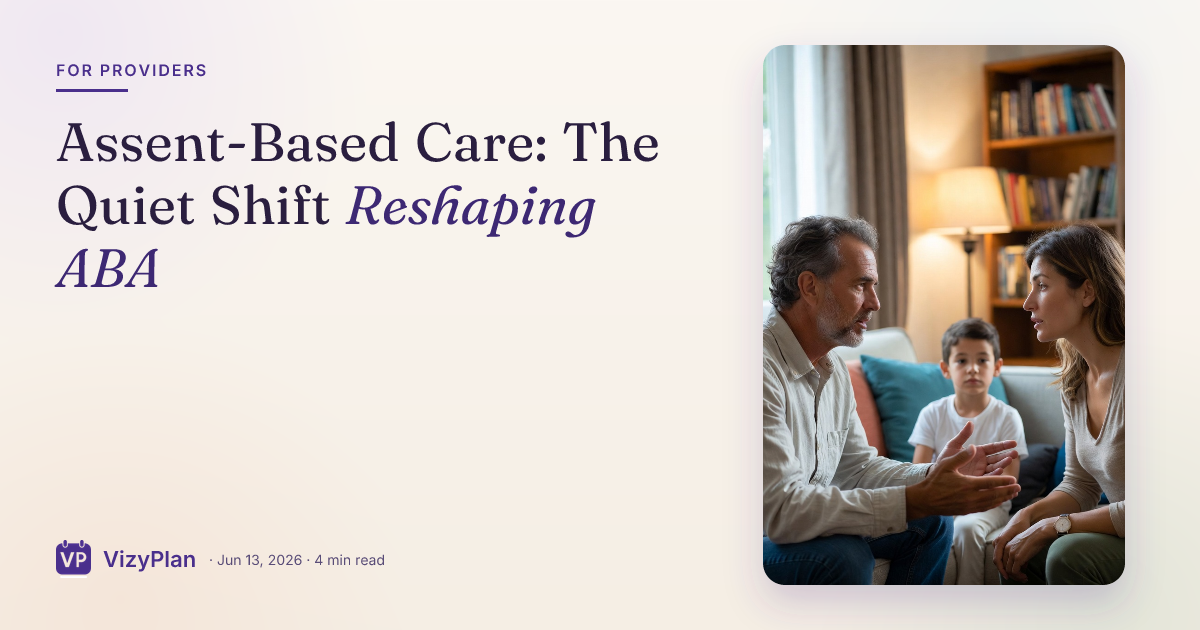
The center of gravity in behavior analysis has moved. The field has spent the last few years listening harder to autistic self-advocates, and the result is a clear consensus heading into 2026. Assent-based care is now widely described as the ethical gold standard of quality ABA. Rigid compliance protocols are out. Mutual trust, psychological safety, and a learner who is genuinely on board are in.
What assent-based care means in practice
Consent is what a parent or guardian gives. Assent is the ongoing signal from the learner that they are willing to participate, whether they communicate that with words, with their body, or with engagement. Compassionate, assent-based practice means continuously checking that the child is with you rather than being marched through a plan. The framing many practitioners now use is straightforward. When a learner is an active participant instead of a passive recipient, they feel safer, and skills they help shape are more likely to stick and generalize.
Why assent is hard to hold across settings
Three pressures that quietly erode it.
- Assent is a moment-to-moment read, not a form. It can be honored beautifully in session and lost entirely the second the child gets home to a different adult and a different plan.
- Predictability is a precondition for assent. A child who cannot tell what is coming next has little real ability to opt in, because every transition is a surprise to brace against.
- Choice has to be visible to count. Telling a child they have a say means little if the options never take a form they can actually see and point to.
Enjoying this article?
Get practical tips and insights delivered to your inbox — no spam, ever.
Where the home routine reinforces assent
Assent-based care does not stop at the clinic door, and the home routine is where it either holds or breaks. A predictable, visual day gives a child the two things assent depends on. They can see what is coming, so a transition is an invitation rather than an ambush, and they can make real choices inside the routine. Our guide to choice boards covers how to build that in.
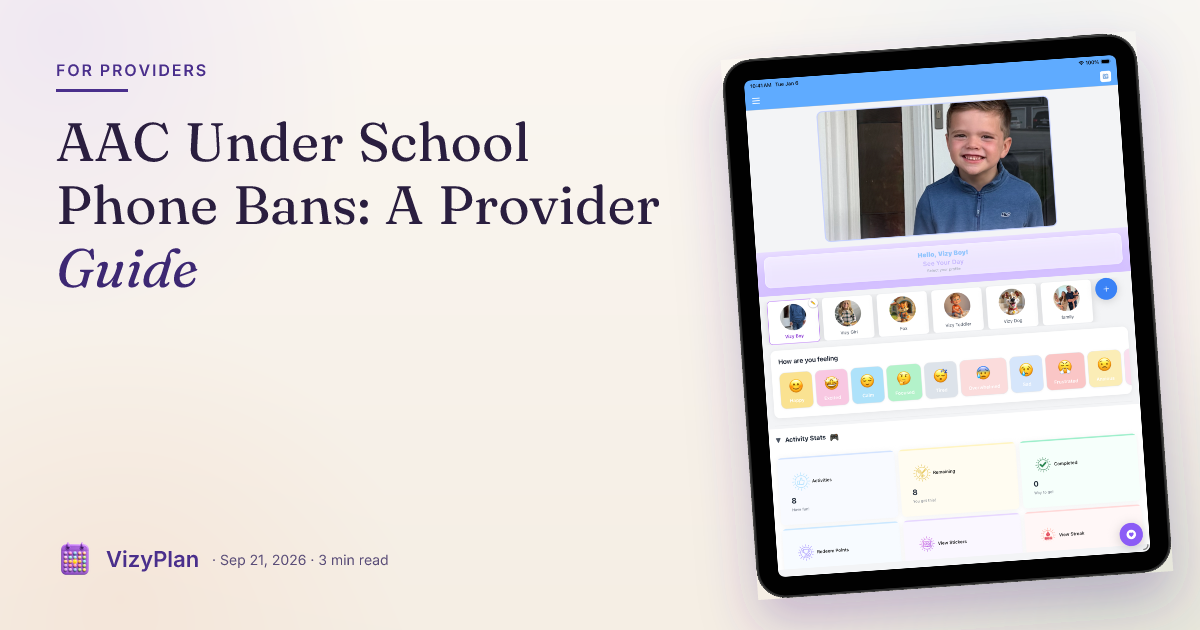
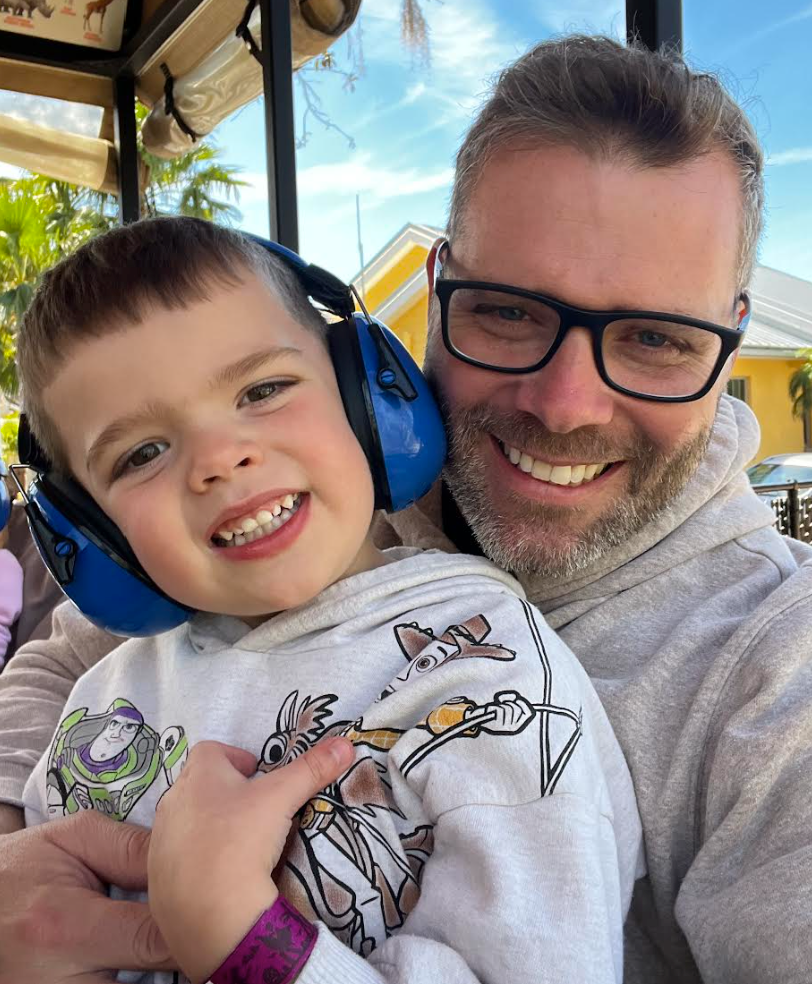
VizyPlan was built by an autism dad and an autism mom SLP around predictability and choice. The child sees the day, picks inside it, and meets each step already knowing it is coming. The clinical model stays yours. The conditions that make assent possible follow the child home.
Download VizyPlan and start your 7-day free trial today. See what your families would run between sessions. Just $6.99/month after your trial, no credit card required upfront.
VizyPlan was built by an autism dad and an autism mom who is a licensed speech-language pathologist who needed something that did not exist. Start your free trial.