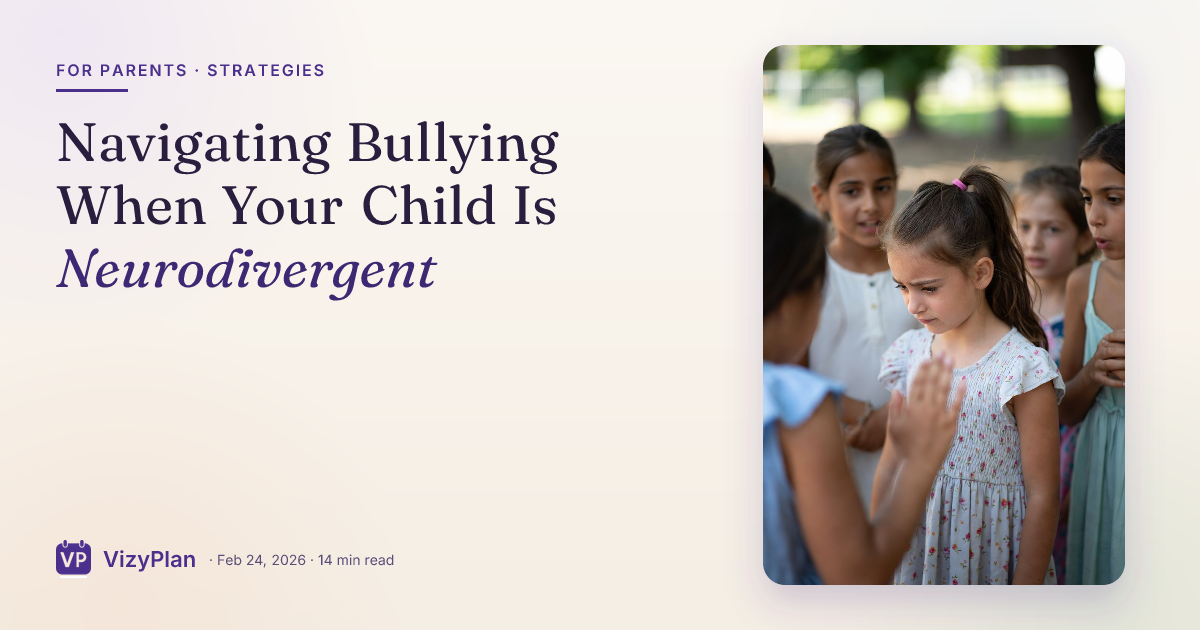
Your child climbed into the car after school and did not say a word. No stories about recess. No chatter about their favorite subject. Just silence, a clenched jaw, and eyes fixed on the window. When you asked how their day was, they whispered "fine" in a voice that told you everything was the opposite. Then, fifteen minutes later at home, they exploded. Screaming. Throwing things. Sobbing on the floor over something as small as a sock seam. You knew this was not about the sock. Something happened at school. But when you asked, they could not tell you what.
If this pattern is playing out in your house, you may be watching your neurodivergent child navigate bullying without the words, the social awareness, or the support system to fight back. And the hardest part is that traditional bullying advice ("just tell a teacher" or "ignore them and they will stop") was never designed for kids like yours.
The numbers are staggering. A meta-analysis published in Autism Research found that 44% of youth with autism experience bullying victimization, with 50% facing verbal bullying, 33% physical bullying, and 31% relational bullying (Maiano et al., 2016). A study in JAMA Pediatrics found that 46.3% of adolescents with autism were bullying victims compared to just 10.6% of the general population, making them roughly four times more likely to be targeted (Sterzing et al., 2012). For children with ADHD, a 2024 study using national survey data from over 71,000 youth found that 47% were bullying victims compared to 23% of peers without ADHD (Lebrun-Harris et al., 2024).
Your child is not weak. The system around them was not built to protect how they experience the world.
Why Neurodivergent Children Are Targeted
Understanding why your child is a target is not about blaming them. It is about recognizing the dynamics so you can disrupt them.
Social Cue Differences Make Them Vulnerable
Neurodivergent children often process social information differently. They may not recognize sarcasm, detect hidden intentions, or distinguish between friendly teasing and cruelty. Researchers Tony Attwood and Michelle Garnett note that children with autism "may lack the ability to determine if an action or suggestion was deliberate or accidental, whether teasing is friendly or malicious, and the difference between humor and insult." This means a bully can target your child repeatedly, and your child may not even realize it is happening.
They Often Lack the Peer Protection Network
Bullying thrives on power imbalances. A 2025 systematic review in Frontiers in Psychiatry found that autistic children are perceived as easier targets because they are "often alone and not having a group of friends for protection." When other children move in packs and your child sits alone at lunch reading about dinosaurs, bullies see an opportunity without consequences.
Masking Does Not Protect Them
Here is something that surprises many parents: research shows that autistic children who demonstrate more social understanding and integration with neurotypical peers are actually at higher risk for bullying, not lower. The effort of masking their differences makes them visible enough to be targeted but still different enough to be singled out.
Their Interests and Behaviors Stand Out
The Kennedy Krieger Institute's Interactive Autism Network survey of nearly 1,200 parents found that autistic students in mainstream settings are "more likely to be ignored, purposely excluded by their peers, victimized for having intense areas of interest, and provoked to exhibit social or emotional responses." That passionate monologue about train schedules that you find endearing? Peers may weaponize it.
The Types of Bullying You Might Not Recognize
Bullying of neurodivergent children rarely looks like the schoolyard shoving match from movies. It is far more subtle, layered, and deliberately designed to avoid adult detection.
Fake Friendships and Social Manipulation
This is one of the most devastating forms. A group of kids "befriends" your child, but the friendship is performative. They give instructions that lead to embarrassment. They exploit your child's literal thinking by making promises they never intend to keep. Because your child struggles to read social intentions, they genuinely believe these kids are their friends and defend them even when you suspect something is wrong.
Provocation Bullying
Peers learn exactly what triggers your child's meltdowns, then deliberately push those buttons. Loud noises near a child with sensory sensitivities. Touching their belongings. Saying the one phrase that causes a visible reaction. When your child melts down, the bully looks innocent and your child gets sent to the office. The ADDitude 2022 survey found that 61% of neurodivergent children had been bullied at school, and a significant portion of that bullying involved deliberate provocation.
Sensory-Based Targeting
Research shows that sensory processing differences affect 87 to 95% of autistic individuals. Bullies who figure this out may deliberately create sensory overload: banging on desks, spraying strong perfume, flickering lights, or invading personal space. To an outside observer, nothing "happened." To your child, it was an assault on their nervous system.
Exclusion and Relational Aggression
Being left out of group chats. Whispered conversations that stop when your child approaches. Birthday party invitations that never arrive. The meta-analysis by Maiano et al. found that relational bullying affects roughly one in three autistic youth. This type of bullying leaves no bruises but carves deep wounds in a child who already struggles to build social connections.
Cyberbullying
The ADDitude survey found that 32% of neurodivergent children experienced bullying through social media and 27% through text messages. Online spaces can be especially dangerous for neurodivergent kids who may not detect tone, sarcasm, or manipulation in written communication.
The Hidden Signs Your Child Is Being Bullied
Here is what makes bullying detection especially difficult with neurodivergent children: they may not recognize it themselves. Research confirms that neurodivergent children "may not even realize that they are being bullied at first" and "may misunderstand the intentions of their peers." You cannot wait for your child to tell you. You need to watch for the signals.
The Mask-Then-Crash Pattern
Your child is "fine" at school. Teachers report no issues. But the moment they get in the car or walk through the front door, they fall apart. This behavioral discrepancy between school and home is one of the strongest indicators. Your child is spending every ounce of energy holding it together in an unsafe environment and has nothing left when they reach safety.
Sudden School Refusal
A study by Ochi et al. (2020) found that bullying was significantly associated with school refusal in both boys and girls with autism. If your child who previously tolerated school suddenly fights going every morning, develops mysterious stomach aches on weekday mornings, or begs to stay home, bullying may be the root cause.
Regression in Skills
A child who was managing homework independently starts needing constant help. A child who was building independence with daily routines suddenly cannot get through their morning checklist. Bullying drains cognitive and emotional resources, and skills that were once automatic start falling apart under the weight of chronic stress.
Loss of Special Interests
If your child suddenly stops talking about the topic they were obsessed with last week, pay attention. Their special interest may have been mocked or used against them, making it feel unsafe to express joy about the things they love.
Increased Meltdowns with Invisible Triggers
The meltdown is not about the sock seam, the wrong cup, or the homework assignment. Those are the final straw on a nervous system that has been absorbing social pain all day. When meltdowns increase in frequency and intensity without an obvious environmental change at home, look at what is happening during school hours.
Physical Symptoms
Unexplained headaches, stomach aches, sleep disruption, and appetite changes. The body keeps score, and chronic stress from bullying manifests physically, especially in children who cannot verbalize what they are experiencing.
What You Can Do Starting Today
Build a Reporting System That Works for Your Child
"Just tell a teacher" does not work for a child who cannot identify that bullying is happening, does not know the right words, or fears making the situation worse. Instead, create a visual check-in system. Use a feelings chart or emotion tracking tool to help your child communicate their school experience without needing to narrate it. VizyPlan's emotion tracking features let children identify and log how they felt during different parts of their day, giving you a window into patterns you might otherwise miss.
Use Social Stories to Build Recognition Skills
Social stories are individualized short narratives that help children understand social situations by describing appropriate behavior and providing examples of responses. A 2024 scoping review confirmed their effectiveness for behavior change in autistic children. Create social stories that specifically address:
- The difference between a real friend and someone pretending
- What bullying looks like (not just hitting, but excluding, tricking, and mocking)
- What to do when someone makes you feel bad on purpose
- Safe adults to go to and exactly what to say
VizyPlan lets you build custom visual stories with AI-generated images that match your child's specific scenarios, so the social stories feel relevant and personal rather than generic.
Practice with Role-Playing
Research shows that role-playing "provides a safe and controlled environment for practicing interactions." At home, act out scenarios your child might face. Practice responses they can use:
- "I do not want to do that."
- "That is not funny to me."
- "I am going to find my teacher."
- Walking away without responding
Rehearse these until they become automatic. Neurodivergent children often perform better with scripted responses because they do not have to generate language under social pressure.
Teach Self-Advocacy in Layers
Self-advocacy does not start with confronting a bully. It starts with your child being able to say "I need help" to a safe adult. Build skills in stages:
- Layer 1: Identify "I feel unsafe" using a visual scale or emotion card
- Layer 2: Know who to go to (name specific adults and where to find them)
- Layer 3: Use a script: "Someone is being mean to me and I need help"
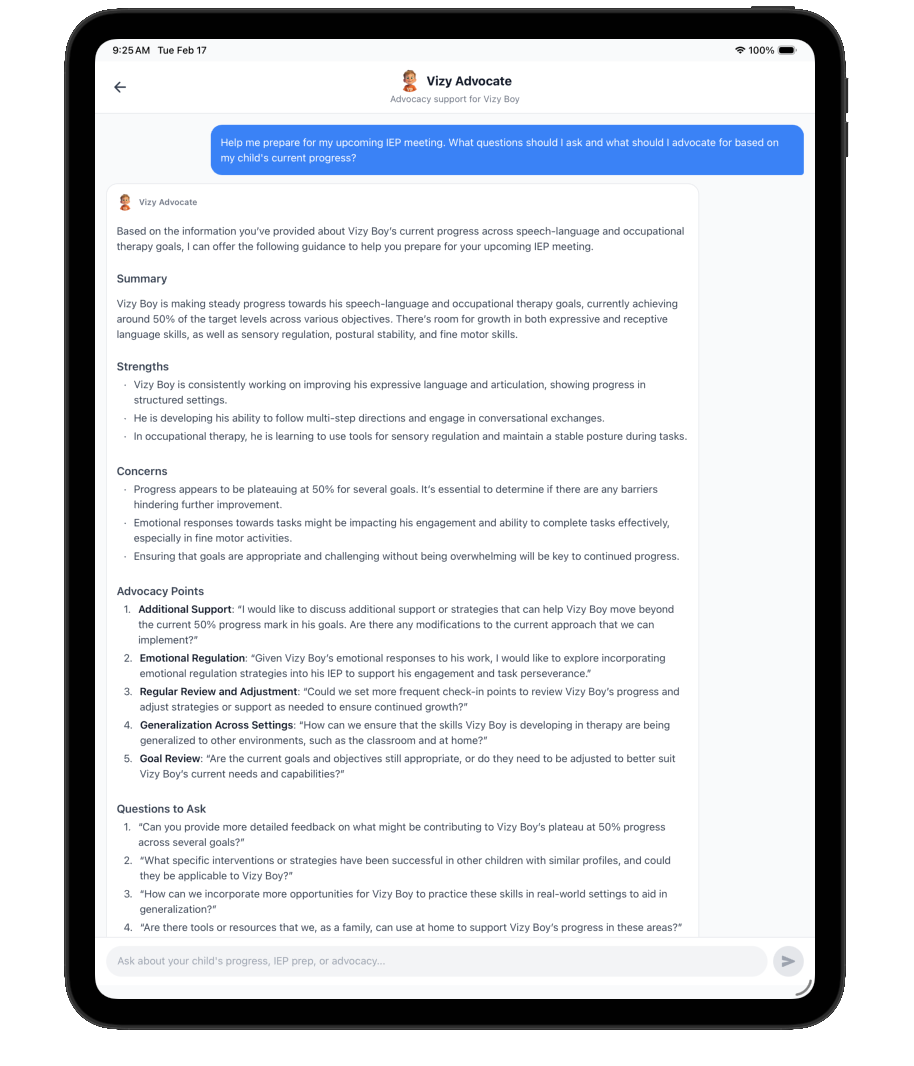
- Layer 4: Self-advocate in an IEP or 504 meeting with parent support
A self-advocacy goal can and should be incorporated into your child's IEP or 504 plan.
Document Everything
Keep a detailed log of every incident: dates, descriptions, witnesses, what your child reported (or what you observed), and how the school responded. This matters because the ADDitude survey found that only 12% of parents reported the school punished the bullies, and more than 37% said the school never even acknowledged the bullying was happening.
If the school fails to act, a formal letter (sometimes called a Gebser letter) puts the administration on legal notice that they have been informed of the bullying and are now responsible for addressing it.
Work with Your Child's IEP or 504 Team
Schools are legally required to respond to harassment or bullying of a student with a disability. The PACER Center, a national parent advocacy organization, emphasizes that IEPs and 504 Plans can "help design strategies for bullying prevention that take into consideration the child's disability, their social skills, the environment around them." Push for specific accommodations:
- A designated safe adult your child can go to at any time
- A safe space or quiet room for decompression
- Structured lunch and recess with adult supervision
- Peer education about neurodevelopmental differences
- Regular check-ins between your child and a counselor or social worker
- Anti-bullying measures written explicitly into the IEP
Push for School-Wide Change
Individual accommodations protect your child, but systemic change protects all neurodivergent students. Research published in Frontiers in Public Health found that anti-bullying programs are most successful when they use multi-component structures that combine social-emotional learning training, parent involvement, and educator workshops.
Ask your school:
- Does the anti-bullying policy specifically address disability-based harassment?
- Have teachers received training to identify bullying of neurodivergent students? (Research shows 69% have not.)
- Are there structured social groups or buddy systems during unstructured times?
- Is there a peer education program that teaches neurotypical students about neurodevelopmental differences?
Why This Cannot Wait
The long-term impact of bullying on neurodivergent children is more severe than for their neurotypical peers. Lebrun-Harris et al. (2024) found that the increase in anxiety and depression associated with bullying was significantly greater among autistic youth and youth with ADHD compared to non-autistic, non-ADHD youth. The same bullying experience produces a more devastating mental health outcome.
Research from Attwood and Garnett documents that rates of probable PTSD in autistic people range from 32 to 45%, compared to 4 to 4.5% in the general population, and that "among autistic students, social incidents such as ostracizing predict PTSD more strongly than violent events." Bullying is described as "the most common traumatic social experience for autistic individuals."
The stakes are real. Research published in Research in Autism Spectrum Disorders found that autistic youth who were teased were three times more likely to show suicidal behavior. This is not something to "wait and see" about.
And the masking cycle makes it worse. Being bullied drives children to camouflage their autistic traits even harder, which creates additional psychological strain, which makes them more vulnerable, which invites more bullying. Breaking this cycle requires adult intervention.
You Are Your Child's Best Advocate
If you are reading this because your gut tells you something is wrong at school, trust that instinct. You know your child better than any teacher, administrator, or standardized behavioral checklist. The silence in the car, the meltdowns at home, the regression in skills you worked so hard to build: these are your child's way of telling you they need help, even when they do not have the words.
You do not have to solve this alone. Document what you see. Bring it to the school with specific requests. Connect with other neurodivergent families who understand. And give your child tools to understand, communicate, and protect themselves in a world that was not designed for how they think and feel.
Managing the anxiety that comes with bullying is a process, not a single conversation. Build it into your daily routine. Check in every day. Make space for the hard feelings. And remind your child, over and over, that who they are is not the problem. How they are being treated is the problem. And you are going to fight like hell to change it.
Download VizyPlan and start your 7-day free trial today. Build social stories that teach your child to recognize unsafe situations, track emotional patterns across the school week to identify when bullying is happening, create self-advocacy scripts with visual supports, and share documentation with your child's school team. If it helps, keep going for $6.99/month or $59.99/year.