Your child woke up at 2 a.m. crying, but not the way they usually cry. This was different. Guttural. Panicked. You touched their forehead and felt the heat before you even reached for the thermometer. 102.3. Your stomach dropped. Not because a fever is unusual for a kid their age, but because you already knew what was coming. They cannot tell you what hurts. The children's Tylenol tastes "wrong" and they gag every time you try. The thermometer under their tongue triggers a meltdown. And the carefully constructed daily routine that holds their world together just shattered into a thousand pieces on the bedroom floor.
If you are a parent of a neurodivergent child, being sick is not just uncomfortable. It is a full sensory, communication, and regulation crisis layered on top of the illness itself. And the standard parenting advice about fluids, rest, and "call the doctor if it gets worse" was not written for a child who cannot identify where the pain is, refuses every form of medicine, and spirals when the visual schedule on the wall no longer matches what is happening.
You are not overreacting. This is genuinely harder for your family. Research confirms it.
Why Illness Hits Neurodivergent Children Differently
They May Not Know They Are Getting Sick
Interoception, sometimes called the body's eighth sense, is the ability to perceive internal signals like hunger, thirst, temperature, and pain. Research shows that many autistic children have significant interoception differences. A 2025 systematic review and meta-analysis in Frontiers in Psychiatry confirmed interoceptive impairments in autistic individuals, meaning your child may not recognize they are getting sick until the fever spikes, the vomiting starts, or the pain becomes severe.
Approximately 50% of autistic individuals also experience alexithymia, the difficulty identifying and describing their own bodily sensations and emotions (Kinnaird, Stewart, & Tchanturia, 2019). A child with alexithymia who has a sore throat may not connect the scratchy feeling to "my throat hurts." They just know something feels wrong and they cannot explain it. That confusion alone can trigger anxiety, which looks like a meltdown, which looks like a behavior problem, when really your child is scared because their body is doing something they do not understand.
Sensory Processing Makes Every Symptom Worse
Sensory processing differences affect up to 92% of children with autism and are part of the DSM-5 diagnostic criteria. The uncomfortable body sensations of illness, congestion that changes how breathing sounds and feels, a sore throat that alters the texture of swallowing, fever chills that create unpredictable temperature shifts, nausea that introduces a completely unfamiliar internal sensation, are amplified by a nervous system that already struggles to filter and regulate sensory input.
For a child who is already managing sensory sensitivities on a good day, being sick can feel like every internal alarm system firing at once with no off switch.
The Routine Is Gone and So Is Their Anchor
Insistence on sameness is a core feature of autism in the DSM-5, and research suggests that predictable routines serve as a self-regulation strategy to reduce anxiety. When illness disrupts the daily schedule, it does not just inconvenience your child. It removes their primary coping mechanism.
COVID-19 pandemic research gave us data on what happens when routines collapse for autistic children: 51.9% experienced behavioral changes including anxiety, irritability, and hyperactivity. 57% showed regression in previously acquired skills. 61.59% of parents reported increased meltdowns. These numbers came from routine disruption alone, without the added burden of physical illness.
Your child is not "being difficult" when they are sick and falling apart. Their body hurts, they cannot explain it, every sensation is amplified, and the structure that normally holds them together is gone. Of course they are melting down.
The Communication Gap That Scares Every Parent
They Cannot Tell You What Hurts
This is the part that keeps you up at night. A critical body of research published in Paediatric and Neonatal Pain (Johnson, van Zijl, & Kuyler, 2023) found that autistic children do express pain, but differently than neurotypical children. They may not cry in expected ways, point to the affected area, or seek comfort. Instead, pain often shows up as:
- Increased self-stimulatory behavior or stimming
- Self-injurious behavior like head-banging or biting
- Aggression or irritability that seems disproportionate
- Withdrawal and refusal to engage
- Changes in appetite or sleep
- Loss of previously acquired skills
The dangerous myth that autistic children do not feel pain has been firmly debunked by research (Allely, 2013). They feel everything. They just express it through behavior rather than words.
What to Watch For
Since your child may not be able to say "my ear hurts" or "my stomach feels bad," you become the interpreter. Watch for:
- Behavioral changes that do not match the situation: A sudden increase in meltdowns, aggression, or self-injury that cannot be explained by environmental triggers may indicate pain or illness
- Touching or guarding a body part: Repeatedly touching their ear, holding their stomach, or refusing to let you touch a specific area
- Changes in eating or drinking: Refusing foods they normally accept, difficulty swallowing, or suddenly refusing to drink
- Sleep disruption: Waking at unusual times, difficulty falling asleep, or sleeping significantly more than usual
- Regression in skills: Losing toileting progress, verbal skills, or self-care abilities during illness
Build a Communication System Before They Get Sick
Do not wait until your child is feverish and miserable to figure out how to communicate about pain. Build the tools now:
- Body outline charts: Print a simple outline of a body and practice having your child point to where something feels different. Do this during calm moments, not just during illness
- Pain scale visuals: The Wong-Baker FACES Pain Scale (happy face to crying face) has been validated for use with autistic children. Practice using it regularly so it is familiar when they need it
- Color-coded feeling cards: Green means "I feel okay," yellow means "something feels wrong," red means "I feel really bad." Keep these accessible at all times
- AAC vocabulary: If your child uses an AAC device, make sure health-related words are programmed and practiced: stomachache, headache, throat hurts, hot, cold, dizzy, nauseous
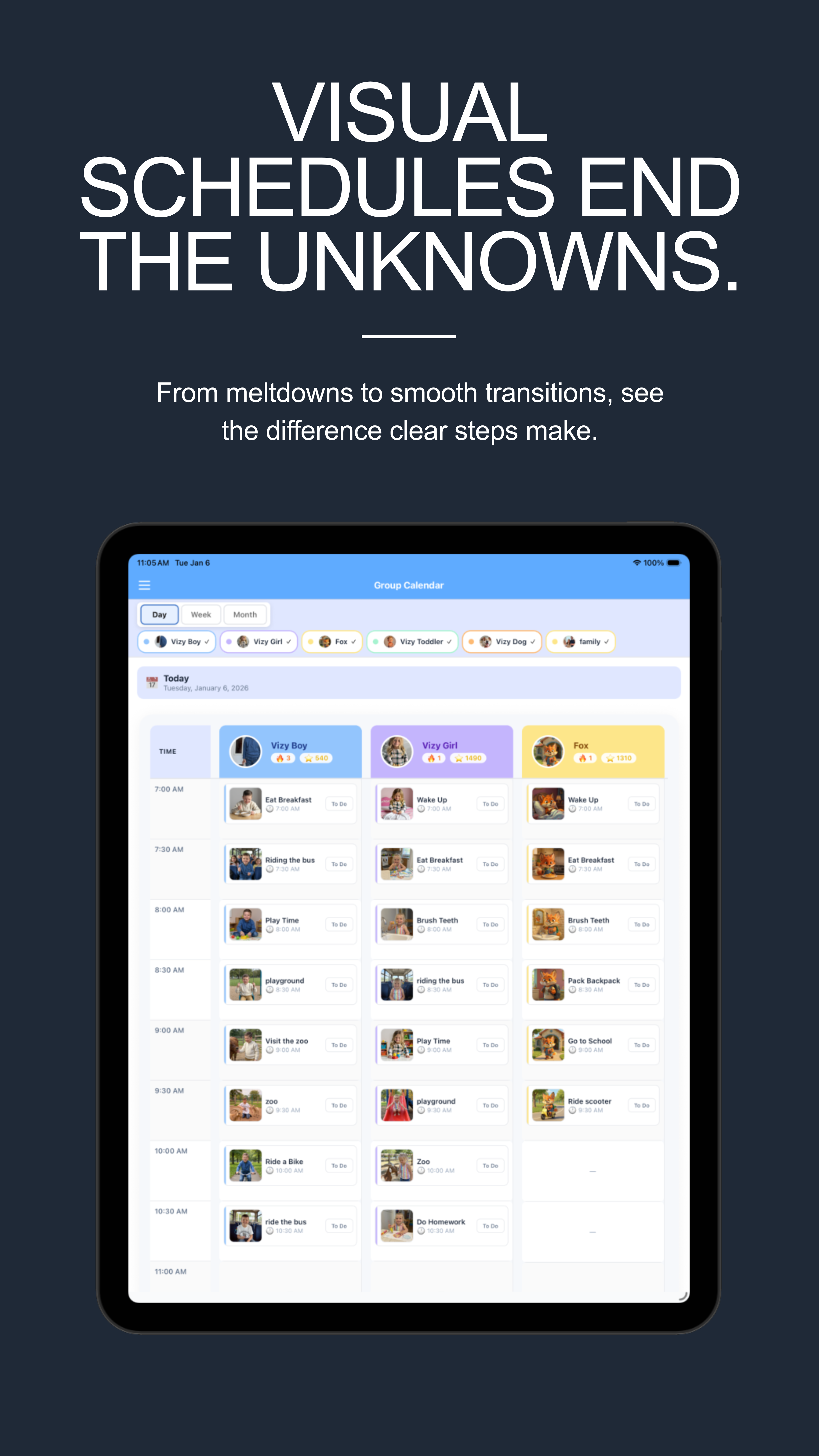
VizyPlan lets you build custom visual check-in routines with AI-generated images that match your child's specific communication level, so they have a familiar tool ready when illness strikes.
The Medicine Battle
Let's talk about the moment every neurodivergent parent dreads: getting medicine into your child.
Why It Is So Hard
Children with autism and sensory processing differences often have extreme sensitivity to taste, texture, temperature, and smell. Liquid medicine that tastes "fine" to a neurotypical child can be genuinely intolerable. Research from Seattle Children's Autism Center confirms that sensory over-responsivity makes medication administration one of the most challenging aspects of caring for a sick autistic child. Some children also have difficulty with the motor coordination required to swallow on command, and certain textures can trigger a gag reflex.
The data on medication compliance is sobering: less than 46% of children with ADHD were adherent to their regular stimulant medication (Charach et al., 2013). Compliance with unfamiliar sick-day medication is even harder.
Strategies That Actually Work
- Chill the medication: Cold temperatures reduce taste sensitivity. Refrigerate liquid medicines before administering
- Mix with a strong flavor: Chocolate pudding, applesauce, or a small amount of juice can mask taste. Check with your pharmacist first to ensure mixing does not affect the medication
- Ask for alternatives: Compounding pharmacies can change the flavor, form (liquid to chewable to suppository), or concentration of many medications. Your pediatrician can call this in
- Use a first-then approach: "First medicine, then your favorite show" with a visual first-then board makes the sequence predictable and gives your child something to look forward to
- Practice when they are well: Research shows that behavioral training using graduated exposure (starting with small items like sprinkles, working up to pill-sized capsules) achieves 75 to 90% success rates for pill swallowing. Practice this skill during healthy periods
- Never force: Coercion leads to increased anxiety, pill aversion, and food selectivity, making future medication compliance even harder
Building a Sick Day Routine
The best thing you can do when your child is sick is replace the lost routine with a modified one. Not the same routine (they cannot go to school or follow their usual schedule), but a predictable sick-day structure that gives them something to hold onto.
Create a Sick Day Visual Schedule
Build a simple visual schedule for sick days that includes:
- Wake up and check temperature
- Take medicine
- Drink fluids (offer choices: water, juice, popsicle)
- Rest time (couch with blanket and favorite show)
- Snack (offer safe foods they can tolerate)
- Calm activity (coloring, audiobook, sensory toy)
- Check temperature again
- Medicine
- Bedtime routine (modified but familiar)
Having this posted where your child can see it replaces the anxiety of "I do not know what is happening" with "I can see what comes next." VizyPlan makes it easy to build a modified sick-day routine quickly, using your child's familiar visual format so the schedule feels safe even though the day is different.
Keep What You Can
Illness does not have to erase everything. Maintain as many familiar elements as possible:
- Same wake and sleep times (adjusted for extra rest)
- Same meals structure (even if the food changes)
- Same bedtime routine elements (shortened if needed)
- Same comfort objects and sensory tools
- Same calm-down strategies from your regular routine
Modify the Sensory Environment
- Dim the lights if they are sensitive to brightness during illness
- Reduce household noise
- Offer a weighted blanket if they find deep pressure calming
- Allow stimming as a self-regulation strategy without redirecting
- Create a "sick nest" in their preferred space with everything they need within reach
When to Call the Doctor vs. Go to the ER
This is critical for families where a child cannot verbally describe their symptoms. Because you cannot rely on "tell me where it hurts," you need to monitor observable signs closely.
Call Your Pediatrician When:
- Fever over 101 that lasts more than 24 hours
- Refusing fluids for more than 6 hours
- Significant behavior change (much more irritable, lethargic, or distressed than a typical sick day)
- Vomiting or diarrhea lasting more than 12 hours
- New onset of self-injurious behavior during illness (this may indicate pain they cannot express)
- Ear pulling, throat guarding, or repeated touching of one body area
Go to the ER When:
- Fever over 104, or any fever in an infant under 3 months
- Difficulty breathing: fast or labored breathing, nasal flaring, wheezing, chest retractions, or bluish color around lips
- Signs of dehydration: no tears when crying, very little or no urination, extreme sleepiness, dry mouth
- Inconsolable distress that does not respond to any comfort strategy
- Seizure, stiff neck, or rash accompanying fever
- Inability to wake your child or extreme lethargy
Bring documentation to any medical visit. Your child's communication style, sensory triggers, what calms them, and a log of symptoms and behavioral changes. Research published in Pediatric Emergency Care emphasizes that healthcare providers need this information to properly assess neurodivergent patients who cannot self-report symptoms. If your child has a 504 plan or IEP, bringing that documentation helps medical staff understand their baseline functioning.
After the Illness: Getting Back to Normal
Expect Regression and Do Not Panic
Skills your child had mastered before the illness may temporarily disappear. Toileting accidents, lost verbal skills, refusal to follow previously established routines, increased sensory sensitivity. Research confirms that stressful events and breaks in routine commonly trigger regression in autistic children, but with consistent support, recovery happens. Studies suggest 60% of children recover lost language abilities within 19 months with consistent therapy support.
Rebuild Gradually
Do not try to snap back to the full routine on day one of recovery. Instead:
- Day 1-2 of recovery: Keep the modified sick-day schedule but add one or two regular activities
- Day 3-4: Reintroduce the morning and evening routine in full, keep midday flexible
- Day 5+: Return to the full schedule with extra sensory breaks built in
- Week 2: Remove the extra supports if your child is back to baseline
Use VizyPlan to visually show your child the transition from "sick day schedule" back to "regular schedule" so they can see the familiar routine returning step by step.
Communicate with School and Therapists
When your child returns to school or therapy, share what happened during the illness: what skills regressed, what behavioral changes you noticed, and what supports helped. This prevents their team from misinterpreting post-illness regression as a new behavioral concern. The provider collaboration strategies you already use for IEP meetings work just as well for post-illness reintegration.
You Know Your Child Best
Caring for a sick neurodivergent child is exhausting in ways that other parents may never understand. You are not just managing an illness. You are managing an illness inside a body that processes every sensation differently, in a child who cannot tell you what is wrong, while the structure that holds their world together falls apart.
Give yourself permission to do what works, even if it does not look like what the parenting books say. If that means they eat nothing but crackers for three days, that is fine. If the screen time limits go out the window, that is fine. If you sleep on their floor because that is the only way anyone rests, that is fine. Your job during illness is survival and comfort, not optimization.
And when the fever breaks and the color returns to their cheeks and they ask for their favorite breakfast, you will rebuild. One visual schedule step at a time. One familiar routine at a time. Because that is what you do. You hold it all together, even when it feels like it is falling apart.
Download VizyPlan and start your 7-day free trial today. Build sick-day visual schedules in minutes, create pain communication check-ins with AI-generated images your child recognizes, track symptom patterns and behavioral changes across illness and recovery, and transition smoothly back to regular routines. If it helps, keep going for $6.99/month or $59.99/year.