
"He just needs more discipline." Your mother-in-law said it at Thanksgiving dinner, loud enough for your child to hear. Your father shook his head and muttered, "There was no autism when I was growing up." Your sister offered helpful advice about how her kids "turned out fine without all these labels." And you sat there, jaw clenched, trying to decide whether to defend your child, educate your family, or simply survive until dessert.
If this scene sounds familiar, you are living one of the loneliest experiences in neurodivergent parenting: loving people who love your child but fundamentally do not understand them. People whose "help" feels like judgment. People whose outdated ideas about behavior, discipline, and diagnosis are slowly eroding your confidence, your patience, and your child's self-image.
You are not overreacting. And you are not alone. A systematic review of 42 studies across 17 countries found that 19 of those studies documented negative attitudes toward autistic individuals from extended family members, including isolation from events, avoidance, and blame directed at parents. This is not a rare family dynamic. It is one of the most common pain points in neurodivergent family life.
Why They Do Not Get It (And Why It Is Not Entirely Their Fault)
Before we get to the scripts and boundaries, it helps to understand where the disconnect comes from. Not to excuse harmful behavior, but because understanding the root makes your response more effective.
They grew up in a different world. Autism was not recognized as a distinct diagnosis until 1980. ADHD was previously labeled "hyperkinetic reaction of childhood." In 1995, roughly 1 in 500 children were diagnosed with autism. Today, the CDC reports approximately 1 in 31 children. This is not because autism is an "epidemic." It reflects broadened diagnostic criteria and increased awareness. But to a grandparent who grew up never hearing these words, it genuinely feels like something new and questionable. People with autism and ADHD in previous generations were often institutionalized, misdiagnosed with intellectual disability, or simply called "odd," "lazy," or "difficult."
They do not understand invisible disabilities. The Child Mind Institute identifies three patterns behind family skepticism: they do not understand the diagnosis and dismiss it, they think they know what autism "looks like" and your child does not match their stereotype, or they feel overwhelmed and do not know how to respond. When your child "seems fine" at a family gathering because they are masking, it reinforces the belief that nothing is really wrong.
They are grieving too. Autism Speaks describes what grandparents experience as "double grief," mourning both for the grandchild's challenges and for the pain they see their own adult child going through. Common reactions include denial, fear about the future, anger, guilt, confusion, and disappointment. The grandmother who insists your child "will grow out of it" may not be dismissing your experience. She may be trying to protect herself from a reality she is not yet ready to face.
Cultural factors add complexity. A systematic review across 17 countries found that in cultures emphasizing family interdependence, there can be both stronger support networks and stronger stigma. In some communities, a diagnosis carries shame that affects the entire family's social standing. In Confucian-influenced cultures, grandparents often hold decision-making authority, and challenging their views risks losing family support entirely.

The Most Common Things Relatives Say (And What They Actually Mean)
Understanding the belief behind the statement helps you respond to the real issue, not just the words.
"He just needs more discipline." What they mean: "I think this is a behavior problem that stricter parenting would solve." What the research says: ADHD is a neurological difference, not a behavior disorder. Punishing a child with ADHD for behaviors rooted in executive function challenges is ineffective and can cause lasting harm. Autistic behaviors like stimming serve a regulatory function and should not be "disciplined away."
"She will grow out of it." What they mean: "I am not ready to accept that this is permanent." What the research says: Autism is a lifelong neurodevelopmental condition that begins before birth. ADHD is a brain difference people are born with and have for life. Symptoms may change with intervention, but neither condition is outgrown.
"You are coddling them." What they mean: "If you stopped making accommodations, they would learn to cope on their own." What the research says: Accommodations are not weakness. They are the scaffolding that allows neurodivergent children to build skills at their own pace. Removing supports prematurely leads to increased anxiety, behavioral challenges, and loss of trust.
"There was no autism in my day." What they mean: "This feels made up or exaggerated." What the research says: Autism has always existed. There is no evidence of an actual change in autism occurrence over the last 70 years, only an increase in knowledge, awareness, and diagnostic capability. In previous generations, these individuals were often hidden away or misdiagnosed.
"I struggled too, but I turned out OK without any help." What they mean: "Everyone has challenges. Why does your child need special treatment?" What the research says: Neurodevelopmental differences are not the same as typical childhood struggles. Comparing the two minimizes the genuine neurological challenges your child faces and ignores the decades of research showing that early intervention dramatically improves long-term outcomes.
How to Have the Conversation
The Child Mind Institute recommends a structured approach to sharing your child's diagnosis with family. This is not a one-time announcement. It is an ongoing conversation.
Before the Conversation
Write talking points. Do not wing it. Write down the two or three most important things you want family members to understand. Keep it focused.
Practice out loud. Say your script aloud at least five times before the actual conversation. This reduces the likelihood that emotion will derail your message.
Never have this discussion in front of the children. As the Child Mind Institute puts it, "then Aunt Suzie loses face, or the grandparent loses face," and the conversation becomes about ego instead of understanding.
Choose your timing. Do not have this conversation at a holiday gathering, during a meltdown, or in front of other family members. Choose a calm, private moment.
During the Conversation
Lead with appreciation. Before anything else, acknowledge how much they mean to your child. "Mom, you know how much Eli loves spending time with you. That relationship is so important to us."
Focus on observable behaviors. Point to things they have already noticed rather than leading with the diagnosis label. "You have probably noticed that Eli covers his ears in loud restaurants, or that he gets really upset when plans change unexpectedly. Those things are connected to how his brain processes information."
Use simple, concrete language. The Child Mind Institute suggests explaining autism in terms of two main areas: differences in social communication and restricted or repetitive behaviors. For ADHD, focus on strengths alongside challenges: "We learned that Maya has incredible creativity and energy. She also struggles with things like following multi-step instructions and controlling her impulses. That is the ADHD."
Explain what the diagnosis gives you. Many family members fear that a label will limit their grandchild. Reframe it: "This diagnosis is not a limitation. It is a roadmap. Now we know why certain things are hard, and we know exactly how to help."
Invite their involvement. Rather than just educating, include them. "Would you be open to coming to one of Eli's therapy sessions? The therapist could show you some of the strategies we use." Research shows that grandparents who attend therapy sessions or diagnostic feedback meetings are significantly more likely to accept and support the diagnosis.
Setting Boundaries Without Burning Bridges
Education is the first step. But when education alone does not change behavior, you need boundaries. The key is being firm enough to protect your child while preserving relationships that matter.
The "Acknowledge, Boundary, Redirect" Framework
Therapists recommend a three-step approach for common situations:
Step 1: Acknowledge their concern. This reduces defensiveness. "I can see that you are worried about how much screen time he gets."
Step 2: Set a firm but kind boundary. State your position clearly. "We have worked with his therapist to find a screen time approach that helps him regulate. We need everyone to be consistent with that plan."
Step 3: Redirect toward something positive. Move the conversation forward. "What would really help is if you could do a puzzle with him after dinner. He loves that one-on-one time with you."
Scripts for Common Situations
When they criticize your parenting approach: "I know this looks different from how you raised us. We are following guidance from professionals who specialize in how our child's brain works. I need you to trust that we are making informed choices, even when they look unfamiliar."
When they ignore dietary or sensory accommodations: "I need you to check with us before giving treats or changing the routine. When his accommodations are not followed, it leads to a meltdown that affects the rest of his day. This is not a preference. It is a need."
When they compare your child to siblings or cousins: "Please do not compare the kids. They each have different strengths and challenges. When Eli hears that his cousin did something 'easily' that is hard for him, it affects how he feels about himself."
When they offer unsolicited advice: "I appreciate that you care. Right now, we have a support team that is guiding our approach, and consistency is really important. The most helpful thing you can do is follow the strategies we share with you."
When they refuse to accept the diagnosis: "I understand this is hard to hear. It was hard for us too. But the diagnosis is real, the professionals who evaluated our child are experts, and the supports we are putting in place are making a measurable difference. I need you to respect that, even if you do not fully understand it yet."
Non-Negotiable Boundaries
Some boundaries are not up for discussion. Identify yours in advance:
Physical boundaries: Respect sensory sensitivities. Do not force hugs, physical contact, or proximity. Maintain safe retreat areas during visits.
Emotional boundaries: No criticizing autism-related behaviors in front of the child. No labeling them as "naughty," "weird," or "difficult." No commenting on parenting choices in front of the kids.
Behavioral boundaries: No "correcting" stimming. Follow the visual schedule and routine. Respect food accommodations. Check before giving gifts or treats.
When Family Support Works, It Changes Everything
It is worth fighting for family understanding because the research on what happens when it works is powerful.
A survey of 1,870 grandparents by the Interactive Autism Network found that over 36 percent care for their grandchild at least once a week, 72 percent play some role in treatment decisions, and 90 percent said the experience of navigating the diagnosis together brought them closer to their adult child. In 30 percent of cases, grandparents were the first to notice developmental concerns.
Research consistently demonstrates that extended family support is a significant protective factor for both parents and children. Parents who report higher social support experience lower levels of stress, anxiety, and depression. For children, cohesive family relationships represent key mental health protective factors throughout development.
A psychoeducation study in Stockholm provided 120 grandparents with a six-hour program about autism. Ninety-five percent completed the program, and grandparents significantly increased their knowledge and gained practical skills for supporting both their grandchild and their adult child. Every grandparent benefited equally regardless of gender or whether they were maternal or paternal grandparents. Many grandparents who go through this journey become powerful advocates, educating other family members, writing letters to school districts, and requesting increased support from community resources.
The point is clear: when extended family gets on board, the entire support system becomes stronger. That is worth the uncomfortable conversations.
Preparing for Holidays and Family Gatherings
Holidays are where all of these dynamics come to a head. The noise, the crowds, the disrupted routine, and the scrutiny of relatives who see your child a few times a year can make gatherings feel impossible.
Communicate expectations in advance. Before the event, send a brief message or have a phone call with the host. Share specific needs: "We will need a quiet room available for breaks. Please keep background music low. We will bring food that works for her. We may need to leave early, and we would appreciate no comments about that."
Create a visual schedule for the gathering. Show your child what will happen: arrive, say hello, eat, play, quiet break, dessert, go home. Knowing the sequence reduces anxiety for both of you.
Set a time limit and honor it. Decide in advance how long you will stay and communicate it. "We will be there from 2 to 4." Leave when you said you would, even if things are going well. Leaving on a positive note is far better than staying until a meltdown forces you out.
Designate a safe space. Before you arrive, identify a quiet room where your child can retreat. Stock it with familiar items: headphones, a favorite book, a fidget, a calming tool. Let your child know it is available and that using it is completely okay.
Pack familiar food. Do not rely on the gathering to have foods your child can eat. Bring what works for them. If relatives comment, a simple "this is what works for us" is sufficient.
Plan recovery time. The day after a family gathering should be low-demand. Burnout is real after sensory and socially heavy days, for your child and for you.
When Education Is Not Enough: Knowing When to Step Back
Not every family member will come around. Some will continue to dismiss, criticize, or undermine your parenting no matter how many conversations you have. Knowing when to shift from education to protection is one of the hardest decisions in this journey.
Watch your child for signs. If your child becomes withdrawn, anxious, or overly eager to please after visits with certain relatives, pay attention. Stomachaches before family gatherings or silence on the car ride home are signals that should not be ignored.
Track the pattern. Ask yourself: after conversations and boundary-setting, is this person showing any progress? Are they reading the resources? Are they trying, even imperfectly? Progress matters more than perfection. But if someone consistently ignores your boundaries and dismisses your child's needs, the relationship is causing more harm than good.
Use a graduated approach when limiting contact:
- Supervised visits only, where you are always present to monitor and intervene
- Time-limited contact with clear start and end times
- Reduced frequency of visits
- In serious cases, low contact or no contact
This is not about punishment. It is about protecting your child's emotional safety and your own mental health. You are not obligated to maintain relationships that harm your family, regardless of shared DNA.
If the situation is complex, a family therapist can help you navigate the dynamics without carrying the full emotional weight alone.
What Your Relatives Can Do Right Now
If you are sharing this article with a family member, here is what they can do today:
- Ask the parents what would be most helpful. Do not assume. Ask.
- Read one resource. The Autism Speaks Grandparent Guide or CHADD's parent education materials are excellent starting points.
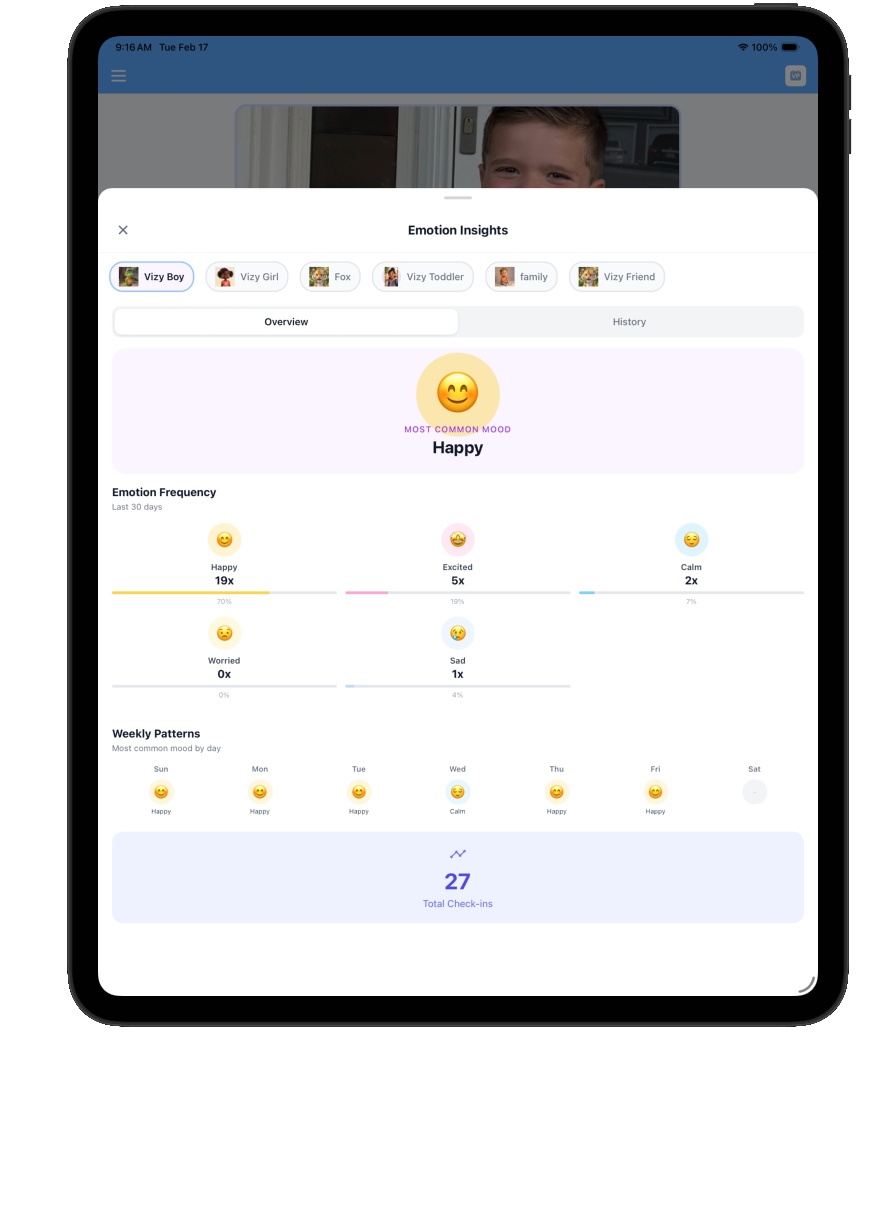
- Follow the routine. When you are with the child, follow the same visual schedule and strategies the parents use. Consistency across caregivers makes everything work better. VizyPlan makes this simple by letting parents share visual routines and daily schedules with family members, so grandparents and relatives can follow the exact same routine without guessing.
- Watch your language around the child. Children hear everything. Comments about their behavior, their diagnosis, or their parents' choices land harder than you think.
- Show up without judgment. You do not need to fully understand neurodivergence to be supportive. You just need to trust the parents, follow their lead, and love the child as they are.
You Are Advocating, Not Apologizing
If you are exhausted from explaining your child to the people who should understand them most, hear this: you are not asking for too much. You are not being "difficult" or "oversensitive." You are advocating for your child, and that is exactly what good parents do.
The conversations are hard. The boundaries feel uncomfortable. The grief of wanting family support and not getting it is real. But every time you stand up for your child's needs, you are teaching them something profound: that who they are is worth fighting for.
Some family members will come around. Some will surprise you. And some will not change no matter what you do. Your job is not to fix everyone's understanding. Your job is to protect your child, take care of yourself, and build a circle of support that actually supports.
Download VizyPlan and start your 7-day free trial today. Share visual routines with grandparents and caregivers so everyone follows the same plan, track your child's emotional patterns across different environments, and build the documentation that helps your family team stay on the same page. If it helps, keep going for $6.99/month or $59.99/year.