The group text arrives three weeks before the holiday. Your sister is hosting this year. Twenty-two people. A potluck. The cousins will be running around. There will be music. Someone will bring a dog. Dinner is at four but people start arriving at noon. It will be loud and chaotic and wonderful, everyone says.
You read the text and your stomach tightens. Not because you do not love your family. Because you are already calculating. How many hours can your child last? Where is the nearest quiet room? Will there be food they will eat? What happens when Aunt Linda tries to hug them and they pull away? What happens when your father-in-law asks, again, if they have "grown out of it yet"? What happens when your child melts down in front of twenty-two people and you feel every eye in the room land on you?
Almost 80% of parents of autistic children report that stigma has been extremely, very, or somewhat difficult in their lives, according to research from the Kennedy Krieger Institute. That statistic does not live in a vacuum. It lives in the dining room at Thanksgiving, the living room on Christmas morning, the backyard at the Fourth of July barbecue. It lives in every family gathering where your child's neurology meets the expectations of people who love you but do not understand your daily reality.
This article is not about decorating tips or gift-giving strategies. Those are covered in our guide to preparing your neurodivergent child for holidays and special events. This is about the harder stuff: the overstimulation your child cannot control, the relatives who think they know better, the guilt you carry when you leave early, and the exhaustion that follows you home.
Why Family Gatherings Are a Perfect Storm
Your child's daily environment has been carefully engineered. The lighting, the noise level, the schedule, the food, the people. You have spent months or years figuring out what works and building a world that accommodates their nervous system. A family gathering dismantles all of it in a single afternoon.
Sensory Environments You Cannot Control
At home, you control the volume. At Grandma's house, the TV is blaring football while six conversations happen simultaneously, children shriek in the other room, someone is blending something in the kitchen, and the house smells like a combination of every dish twenty-two people decided to bring.
Research confirms what you already know: lights, unusual noises, crowds, smells, unfamiliar places, and unfamiliar people can all bewilder and overwhelm children with autism. A study published in PMC found that parents consistently link their children's most challenging behaviors to sensory overload, with meltdowns representing intense, involuntary responses to overwhelming situations rather than willful displays of bad behavior.
The key word is involuntary. Your child is not choosing to fall apart. Their nervous system is responding to input that exceeds its processing capacity. It is a neurological event, not a behavioral choice. And it is happening in front of an audience that often cannot tell the difference.
Social Demands That Exceed Capacity
Family gatherings come with social expectations that are unspoken but enforced. Make eye contact with relatives. Accept hugs and kisses from people you see twice a year. Answer questions about school. Say thank you. Sit at the table. Use a fork. Smile for the camera. Participate in group prayer. Open gifts with appropriate enthusiasm.
Each of these demands requires social processing, sensory tolerance, and emotional regulation. For an autistic child, each one costs energy. Stacked together across four or five hours, they create an impossible debt that the child's nervous system will eventually collect, usually in the form of a meltdown, shutdown, or flight response.
Routine Disruption Multiplies Everything
Holiday gatherings do not just change one thing. They change everything. Wake time is different. The drive to the gathering is different. The food is different. The people are different. The environment is different. The schedule is unpredictable. There is no visual routine. There are no familiar anchors. Every element of the day that your child normally relies on for stability has been removed simultaneously.
Research on transition strategies for autistic children consistently shows that routine disruption is one of the strongest predictors of behavioral escalation. A holiday gathering is not one transition. It is a series of transitions across an entire day, with no recovery time between them.
The Relatives Problem
Here is the part of holidays that no sensory kit can fix. The people who love you the most can also hurt your family the most, not through malice but through ignorance, outdated beliefs, and the gap between what they think autism looks like and what it actually looks like in your child.
The Comments
You know them by heart because you hear versions of them at every gathering:
- "He seems fine to me." (Because you have spent three hours managing the environment to prevent a meltdown.)
- "Have you tried being more firm?" (Because your parenting must be the problem.)
- "She just needs more socialization." (Because clearly forcing a child into overwhelming situations will fix a neurological condition.)
- "We didn't have all this autism stuff when I was growing up." (Because undiagnosed children who suffered in silence apparently did not count.)
- "He'll grow out of it." (Because autism is a phase, like a preference for dinosaur nuggets.)
- "You are too easy on her." (Because accommodating a disability is apparently the same as spoiling.)
Research from the Kennedy Krieger Institute's Interactive Autism Network found that families consistently report that a lack of understanding by people outside of close family creates significant barriers to inclusion. The tension typically stems from generational differences, misunderstanding, or discomfort with the diagnosis itself.
These comments land differently at a holiday gathering than they do in a text message. In a crowded room full of family, every comment has an audience. Your response becomes a performance. And your child, who may be processing language on a delay, may be absorbing every word even when adults assume they are not listening.
The Unsolicited Advice
Extended family members often believe their experience with children, or their memory of you as a child, qualifies them to advise you on autism parenting. Research shows that while often well-intended, casual suggestions can invalidate the effort and research parents have already invested. Autism parenting requires advocacy, appointments, insurance navigation, therapy coordination, and daily implementation of evidence-based strategies. When someone offers a simple fix at the dinner table, it dismisses the complexity of what you manage every day.
The advice is hardest to absorb when it comes from people whose opinion you once valued. Your mother. Your favorite uncle. The sibling you always looked up to. Their words carry emotional weight that a stranger's judgment does not.
The Physical Expectations
People expect hugs, conversations, eye contact, and smiles for the camera. These expectations can pressure autistic children into masking or dysregulating. When Uncle Dave insists on a hug and your child recoils, the room gets uncomfortable. When your child refuses to look at Grandma while she talks to them, someone mutters about manners. When the group photo requires your child to stand still, smile, and tolerate being touched by several people simultaneously, the resulting refusal or meltdown becomes "the scene" everyone remembers.
Your child's body autonomy is not optional just because it is a holiday.

Before the Gathering: Preparation That Actually Works
The difference between a manageable gathering and a disastrous one is almost always preparation. Not hope. Not "maybe it will be fine this time." Actual, specific, communicated preparation.
Talk to the Host
This conversation is not optional. Before the gathering, tell whoever is hosting:
- Your child will need access to a quiet room throughout the event
- You may need to arrive late, leave early, or step out during the gathering
- Here are specific sensory triggers to be aware of (loud music, strong perfumes, barking dogs)
- Please do not insist on physical affection from your child
- If you see your child stimming, please do not comment on it or try to stop it
This is not asking for special treatment. This is communicating accessibility needs. If a family member used a wheelchair, you would confirm the venue was accessible before arriving. Sensory and social accommodations deserve the same respect.
Build a Visual Preview
Show your child what to expect using pictures and sequences. Whose house are we going to? Here is a photo. Who will be there? Here are their faces. What will happen? We will arrive, say hello, eat food, and then leave. How long will we stay? This many hours, and here is your timer.
VizyPlan lets you build a visual schedule for the gathering day that includes everything from the morning routine through the drive, the event itself, and the recovery time afterward. When your child can see the shape of the day, including when it ends, the unpredictability decreases and their sense of control increases.
Create a [Social Story](/blog/social-stories-autism-guide)
Build a simple story that walks through the gathering:
"Today we are going to Aunt Sarah's house. There will be many people there. It might be loud. If it is too loud, I can go to the quiet room. I do not have to hug anyone. I can wave hello instead. We will eat food. I can bring my own food if I want to. We will stay for two hours. Then we will go home."
Reviewing this story multiple times before the event embeds the expectations and, critically, the escape options into your child's mental framework.
Pack the Survival Kit
This should be a bag that goes to every gathering:
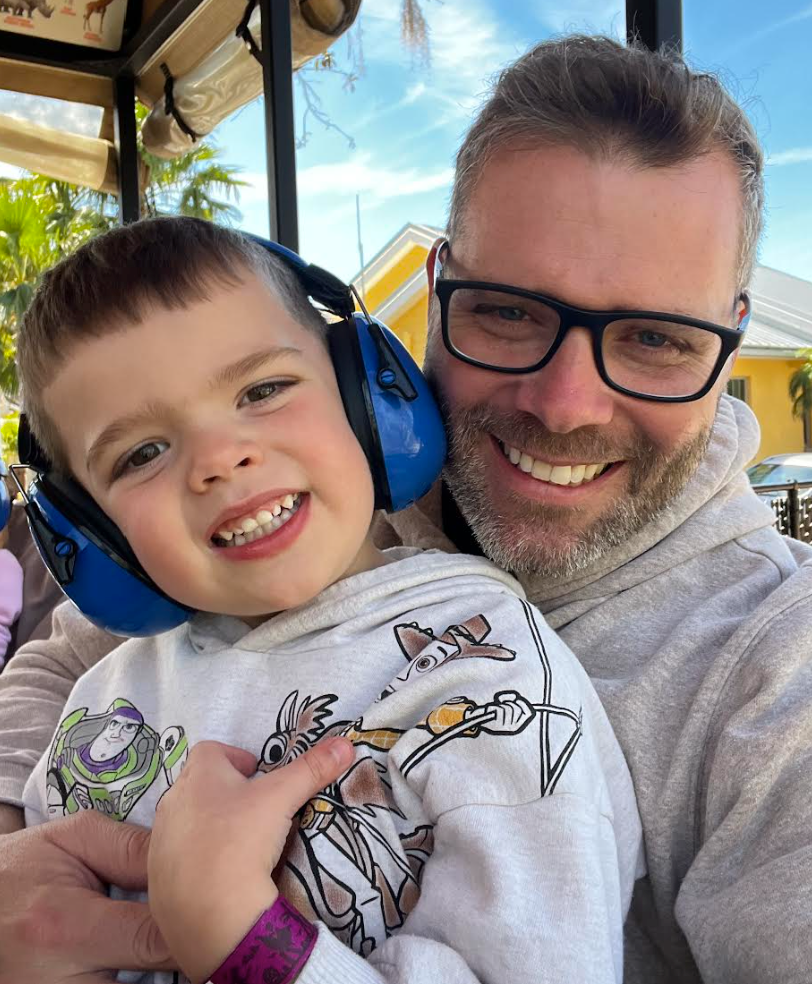
- Noise-cancelling headphones or earplugs
- Fidget tools or a comfort item
- Snacks your child will actually eat (enough for the whole event)
- A tablet or device loaded with calming content
- A change of comfortable clothes if the "nice outfit" becomes intolerable
- A visual timer
- Any medication they take on schedule
Do not rely on the host to have what your child needs. Bring your own environment with you.
Set Your Exit Plan
Before you walk in the door, know how you are leaving. Park where you will not be blocked in. Identify the quickest route out that does not go through the main gathering space. Decide what your code word is with your partner: when one of you says "I think we should head out," the other agrees without negotiation.
Tell your child before you arrive: "If it gets too hard, we will leave. You can tell me or squeeze my hand and we will go." Research confirms that knowing an escape exists often reduces the need to use it. The safety net makes the tightrope walkable.
Enjoying this article?
Get practical tips and insights delivered to your inbox — no spam, ever.
During the Gathering: Real-Time Management
Arrive Late and Leave Early
You do not owe anyone your child's wellbeing in exchange for attendance. Arriving after the initial chaos of greetings settles and leaving before your child hits their limit is not rude. It is strategic. A successful ninety minutes is worth more than a catastrophic four hours.
Station Yourselves Near the Exit
Choose a spot in the gathering space that is near the door, away from the loudest area, and close to the quiet room. Do not sit in the center of the action. Do not accept the seat that puts your child's back to a hallway where people will walk behind them unexpectedly. Position matters.
Rotate Breaks Before They Are Needed
Do not wait for signs of overwhelm. Build breaks into the gathering proactively. Every thirty to forty-five minutes, take your child to the quiet space for five to ten minutes. Go outside. Walk to the car. Sit in a bathroom. These micro-recoveries prevent the buildup that leads to meltdown.
Research on sensory regulation shows that proactive sensory breaks are significantly more effective than reactive ones. By the time your child is covering their ears and crying, their nervous system has already passed the point of easy recovery. Meltdown recovery can take twenty minutes or more after removing the stressor. Prevention costs five minutes.
Let Them Stim
Your child may stim more at a gathering than they do at home. That is their nervous system doing exactly what it needs to do. The rocking, the hand flapping, the humming, the pacing. These are regulation tools, not problems to solve. If a relative comments, a simple "that helps them stay calm" is sufficient. You do not owe a longer explanation at the dinner table.
Monitor Food Carefully
Holiday meals are sensory minefields. Unfamiliar dishes, strong smells, crowded tables, the expectation to eat what is served. If your child has food selectivity (which research shows affects up to 70% of autistic children), bring their safe foods without apology. A child who eats their own familiar food at the gathering is a child who stays regulated. A child who is hungry because nothing on the table was edible is a child approaching meltdown.
If someone comments on what your child is or is not eating, "Their doctor is aware of their dietary needs" ends the conversation.
When the Meltdown Happens Anyway
You prepared. You brought the kit. You took breaks. And your child still melted down. Because sometimes, even with every strategy in place, the load exceeds the capacity. Here is what to do:
Get them out of the room. Not as punishment. As rescue. Move to the quiet space, outside, or to the car. Remove the sensory input that is overwhelming them.
Do not try to talk them through it. During a meltdown, the brain's language processing center is offline. Words add stimulation. Be quiet. Be present. Offer deep pressure if they find that calming. Wait.
Ignore the audience. This is the hardest part. You can feel your family watching. Some are worried. Some are judging. Some are whispering. None of that matters right now. Your child matters right now. Deal with the relatives later.
Do not apologize to the room. Your child had a neurological event. You would not apologize if they had an asthma attack. You would not apologize if they had a seizure. A meltdown is not a behavior problem. It is a medical reality. Hold your head up and take care of your child.
After the Gathering: Recovery Is Not Optional
Plan a Recovery Day
The day after a major gathering should have zero demands. No errands. No playdates. No "since we are already out" additions to the schedule. Return to normal routines as quickly as possible. Familiar structure is the antidote to the disruption your child just experienced.
Process What Happened
After your child has recovered (not during the drive home, not that evening, but the next day or later), talk through the experience. What was hard? What was okay? Was there a part they liked? What would help next time? This reflection builds self-awareness and gives you data for future gatherings.
VizyPlan lets you track your child's emotional states before and after events, creating a record over time of how specific environments affect them. When you can show a therapist or your partner that every family gathering is followed by two days of emotional dysregulation, you have evidence for setting firmer boundaries.
Debrief With Your Partner
Talk honestly about what happened. What worked? What did not? Which relatives were supportive and which ones made things harder? What boundaries need to be set before the next gathering? This conversation is easier to have on a calm Tuesday evening than in the car on the way home while both of you are exhausted and your child is still dysregulated in the backseat.
Setting Boundaries With Family
This is the section most holiday articles avoid because it is uncomfortable. But it is the section that matters most for your long-term wellbeing and your child's.
You Are Allowed to Say No
You do not have to attend every gathering. You do not have to stay the entire time. You do not have to bring your child if the environment is genuinely harmful to them. Saying no to a gathering is not rejecting your family. It is protecting your child. Those are different things, even when relatives act as though they are the same.
You Are Allowed to Set Conditions
"We will come, but we need a quiet room available." "We will come, but please do not insist on hugging the kids." "We will come for two hours. Please do not pressure us to stay longer." "We will come, but if Uncle Mark makes comments about our parenting again, we will leave."
These are not demands. They are boundaries. And boundaries are not rude. They are necessary.
Have the Hard Conversation
If there is a specific family member whose behavior consistently makes gatherings worse for your child, talk to them directly. Not at the gathering. Before it. In private.
"I need to talk to you about something important. When you tell my child to stop flapping his hands, it causes him significant distress. His movement is how his body stays regulated, and asking him to stop is like asking you to hold your breath. I need you to stop commenting on his behaviors at family events. If you have questions about autism, I am happy to answer them privately, but not in front of him and not at a holiday dinner."
This conversation will be uncomfortable. It may cause temporary friction. But your child's nervous system is more important than a relative's comfort with being corrected. For more on navigating extended family who do not understand, our dedicated guide walks through these conversations in detail.
Redefine What Holidays Mean for Your Family
The holiday you imagined before you had a neurodivergent child and the holiday your family actually needs may be very different. And that is not a loss. It is an evolution.
Maybe your family's best holiday is a quiet morning at home with a predictable routine, a special meal with just the four of you, and a video call with extended family instead of an in-person gathering. Maybe it is a shorter visit with a smaller group. Maybe it is hosting on your terms, in your space, where you control the environment.
A holiday that works for your family is a successful holiday. Period. It does not have to look like anyone else's.
Your Child Deserves to Be Comfortable in Their Own Family
Here is what gets lost in all the planning, the survival kits, the exit strategies, and the boundary conversations: your child should not have to earn the right to be comfortable around the people who are supposed to love them unconditionally.
Your child should be able to attend a family gathering and be accepted exactly as they are. They should be able to stim without being stared at. They should be able to eat their safe food without commentary. They should be able to skip the hug and still be welcomed. They should be able to leave the room without it being "a thing." They should be able to exist in their family without performing neurotypicality for an audience.
That world does not exist yet for most families. But every boundary you set, every conversation you have, every time you advocate for your child's needs in a room full of people who do not understand, you are building it. One gathering at a time.
Your child will not remember the perfect holiday dinner. They will remember the parent who stood between them and the noise, who packed their favorite snacks, who said "we can leave whenever you need to," and who meant it.
Be that parent. Even when it is hard. Especially when it is hard.
VizyPlan helps you build visual schedules for holiday gatherings, create social stories that prepare your child for what to expect, and track emotional patterns before and after events so you can make informed decisions about future gatherings. Start your free trial and bring structure to the chaos so your family can actually enjoy being together.