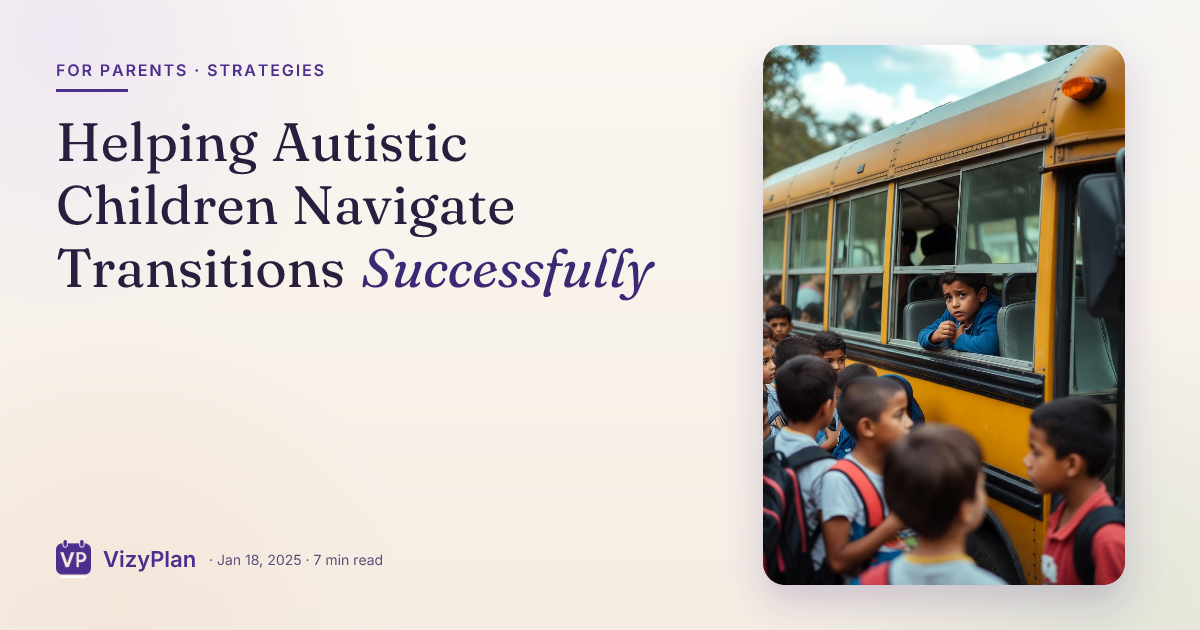
They were happily building with LEGOs. You gave a five-minute warning. You gave a two-minute warning. You said, "Time to clean up for dinner," and the room exploded. The LEGOs are now scattered across the floor, your child is sobbing, and dinner is getting cold. You did everything "right," and it still fell apart.
Transitions are the invisible landmines of neurodivergent family life. They happen dozens of times a day, and each one is a potential trigger. But here is what changes everything: when you understand why your child's brain fights transitions so hard, you can stop battling through them and start designing around them.
Why Transitions Are So Difficult
For neurotypical children, shifting between activities happens relatively automatically. For children with autism, transitions require significant cognitive and emotional effort.
Difficulty with cognitive flexibility makes it hard to mentally shift gears. When a child is engaged in an activity, their brain may become deeply focused, making disengagement feel jarring or even distressing.
Need for predictability means that changes, even expected ones, can trigger anxiety. The familiar activity feels safe; the next activity, even if known, feels uncertain.
Processing time differences mean autistic children often need more time to understand that a transition is coming and to prepare mentally for the change.
Visual Warnings and Countdowns
One of the most effective transition strategies is giving children advance warning in a format they can understand and reference.
Visual timers show time passing in a concrete way. When a child can watch the remaining time shrink, the transition becomes predictable rather than sudden.
Countdown warnings at consistent intervals help children prepare. Many families use a "5 minutes, 2 minutes, 1 minute, time to transition" sequence. The key is consistency, use the same intervals every time.
Visual schedules let children see what comes next. When the next activity is visible, it becomes less unknown and therefore less anxiety-provoking. Pointing to the schedule during warnings reinforces what is coming.
Transition Objects and Rituals
Many children benefit from having a consistent element that bridges activities and provides comfort during the change.
Transition objects are items a child carries from one activity to the next. This might be a small toy, a comfort item, or even a picture card representing the next activity.
Transition songs or phrases create auditory cues that signal change. When the same song plays before every transition, the child's brain begins associating that sound with "change is coming."
Physical rituals like a specific handshake, high-five sequence, or movement pattern can help mark the end of one activity and the beginning of another.
The Power of Choice Within Transitions
Offering limited choices during transitions gives children a sense of control without derailing the necessary change.
Let children choose the order when possible. "We need to clean up and wash hands before lunch. Which do you want to do first?"
Offer how, not whether. The transition is not negotiable, but how it happens can be. "Time to go to the car. Do you want to walk or hop?"
Allow bringing something along when appropriate. "Time to leave the playground. You can bring one rock to show me in the car."
Managing Transition Hotspots
Certain transitions are predictably more difficult. Identifying and proactively planning for these moments prevents many meltdowns.
Leaving preferred activities is often hardest. Extra warnings, visual supports, and clear information about when the preferred activity will happen again all help.
Arriving at new or less preferred places triggers anxiety about what will happen. Social stories, visual previews of the location, and clear schedules for the time there can reduce uncertainty.
Transitions involving sensory changes require attention to sensory needs. Moving from a quiet space to a loud one, or from indoors to outdoors, may need additional preparation and support.
.png)
Using Social Stories for Recurring Transitions
Social stories are short, personalized narratives that explain what will happen during a transition and how the child can respond.
Keep stories simple and accurate. Describe what will happen, why it happens, and what the child can do.
Include the child's perspective. "Sometimes I feel sad when playtime ends. That is okay. I can take a deep breath and look at my schedule."
Read the story regularly, not just during the difficult moment. Repeated exposure helps the information become familiar and accessible when needed.
Creating Transition-Friendly Environments
The physical environment can either support or hinder smooth transitions.
Clear visual boundaries help children understand when one activity space ends and another begins. Defined areas for different activities make transitions more concrete.
Reduced clutter and distractions during transition times help children focus on the change at hand rather than being pulled toward other stimuli.
Consistent physical locations for routine transitions help build automatic responses over time. When teeth-brushing always happens at the same sink, the location itself becomes a cue.
When Transitions Still Go Wrong
Even with excellent preparation, some transitions will be difficult. Having a plan for these moments helps everyone recover.
Stay calm yourself. Children pick up on adult stress, which amplifies their own. Your regulated presence is a powerful support.
Reduce verbal language. During moments of overwhelm, less talking is better. Point to the visual schedule, use simple words, and wait.
Allow recovery time after difficult transitions before expecting engagement in the new activity. Pushing too quickly often extends the distress.
Building Transition Tolerance Over Time
With consistent support, most children with autism can develop increased tolerance for transitions.
Start with easier transitions and build success before tackling harder ones. Confidence from mastering simpler changes supports tackling more challenging ones.
Gradually reduce supports as skills develop. The child who needs five warnings now may need only two in six months.
Celebrate progress consistently. Notice when transitions go well and acknowledge the effort involved.
VizyPlan helps you create visual supports for smoother transitions. Start your free trial and reduce transition stress.