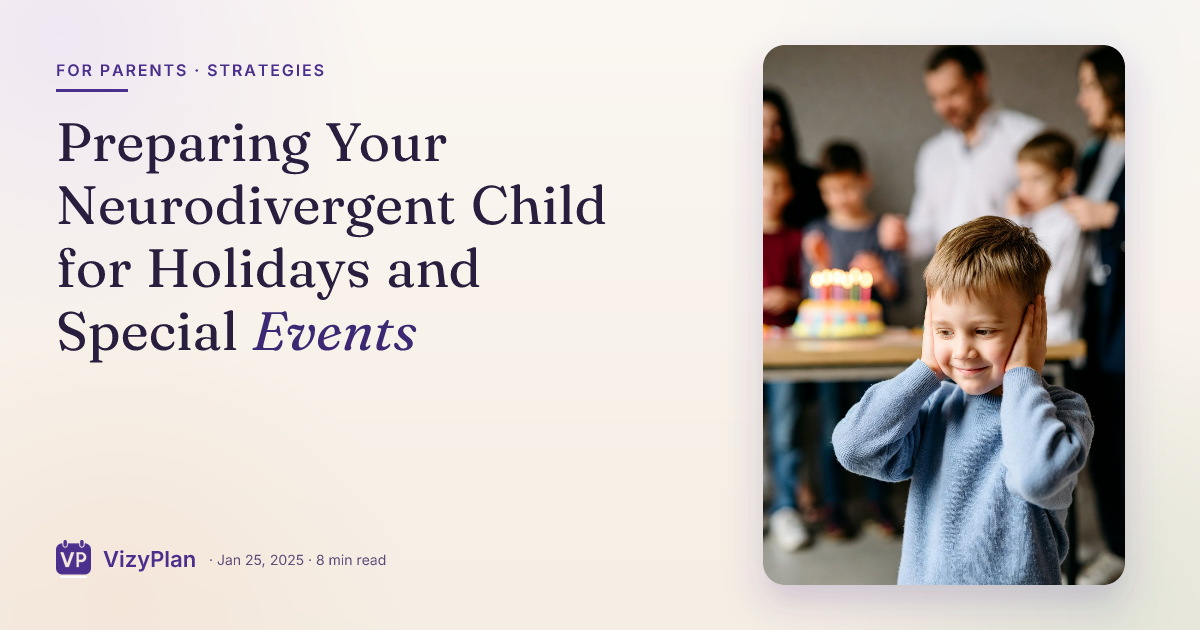
Holidays and special events are supposed to be joyful occasions. But for families with neurodivergent children, these celebrations often bring overwhelming sensory experiences, disrupted routines, social demands, and unexpected changes that lead to meltdowns instead of memories.
The good news is that with thoughtful preparation, holidays and special events can become more manageable, and even enjoyable. Understanding why these occasions are difficult and implementing targeted strategies makes all the difference.
Why Holidays and Special Events Are Challenging
Before diving into strategies, it helps to understand the specific difficulties these events present.
Routine disruption is significant. Holidays often mean different wake times, different meal schedules, different activities, and different people in the home. For children who depend on predictability, this wholesale change to normal life creates anxiety that manifests as challenging behavior.
Sensory environments intensify. Holiday gatherings assault multiple senses simultaneously. Flashing lights on decorations, loud music, strong food smells, crowded spaces with overlapping conversations, and unfamiliar textures in special clothing combine to overwhelm sensory systems quickly.
Social expectations increase. Special events often require greeting relatives, making conversation, accepting gifts gracefully, participating in group activities, and tolerating physical affection from people seen rarely. These social demands exhaust children who struggle with social interaction.
Anticipation builds anxiety. The buildup to holidays can be as difficult as the events themselves. Weeks of hearing about what is coming, seeing decorations appear, and feeling others' excitement creates mounting pressure that some children cannot manage.
Flexibility demands are high. Plans change during special events. The party runs late. A family member cancels. The restaurant is closed. The gift was not what was expected. Each change requires adaptation that depletes limited coping resources.
Preparing Weeks in Advance
Successful special events begin with early preparation.
Create visual calendars. Mark the event on a calendar your child can see daily. Count down the days together. Knowing when the event will happen, and seeing normal days between now and then, provides a sense of control.
Build social stories about the event. Write or create visual stories that walk through what will happen. Include who will be there, what activities will occur, what foods might be served, and what your child can do if they feel overwhelmed. Review these stories repeatedly before the event.
Preview the environment. If possible, visit the location beforehand when it is quiet. If the event is at a relative's house, show photos of their home and the people who will be there. Familiarity reduces anxiety about the unknown.
Practice specific skills. If the event requires particular behaviors, saying thank you for gifts, shaking hands with relatives, sitting through a long meal, practice these specific skills before the event. Role-play challenging scenarios.
Prepare for sensory experiences. If you know decorations will be bright, practice being around bright lights. If the food will be unfamiliar, introduce similar foods at home first. Gradual exposure to expected sensory elements reduces their impact.
Discuss what will be different. Be explicit about how this day will differ from normal days. Meals will be at different times. There will be more people. The schedule will be different. Naming these changes helps children prepare mentally.
Managing the Day of the Event
The day itself requires careful management and realistic expectations.
Maintain morning routines when possible. Even on special event days, keep morning routines as normal as possible. A predictable start to the day provides stability before the disruption begins.
Use visual schedules throughout. Create a visual schedule for the event day. Show what will happen and in what order. Update it as plans change. Having a visual anchor helps children understand where they are in the sequence.
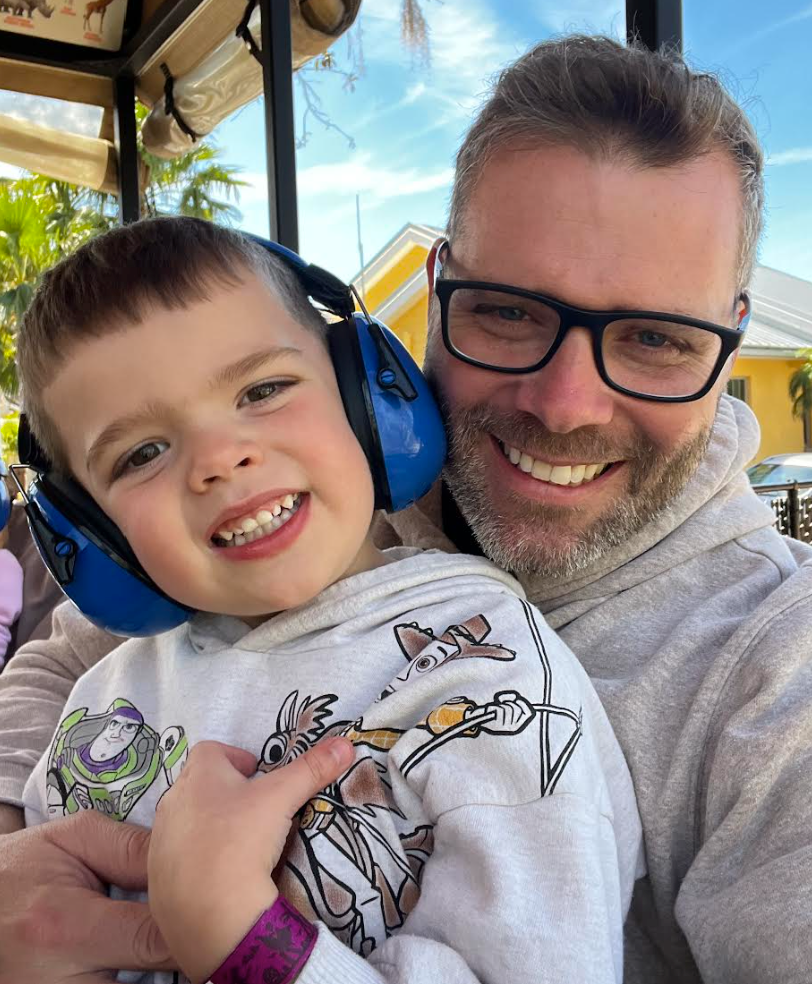
Arrive prepared with sensory supports. Bring noise-canceling headphones, fidget toys, sunglasses, and other sensory tools your child uses. Having these available prevents reaching the breaking point without options.
Identify a quiet space. Before the event begins, identify where your child can go to decompress. A bedroom, a quiet corner, or even the car can serve as a retreat when overwhelm builds. Make sure your child knows where this space is and that using it is acceptable.
Build in breaks proactively. Do not wait for signs of overwhelm. Schedule regular breaks into the event. A five-minute walk outside every half hour prevents escalation better than trying to recover after a meltdown has begun.
Bring familiar foods. If your child has food restrictions or preferences, bring safe foods to the event. Having something they can eat prevents food-related stress and ensures they stay fueled.
Set realistic expectations. Your child may not be able to participate in everything. They may need to leave early. They may need accommodations others do not understand. Setting expectations internally helps you respond calmly when adjustments are needed.
Navigating Social Demands
Social expectations during special events require particular attention.
Prep relatives in advance. Tell family members what to expect and what helps. Explain that your child may not make eye contact, may not want hugs, or may need to take breaks. Most people want to help, they just need to know how.
Create scripts for common interactions. Practice specific phrases your child can use. "Thank you for coming." "I need a break." "Nice to see you." Having rehearsed responses reduces the cognitive load of social interaction.
Allow alternative greetings. If hugs are overwhelming, offer alternatives. A high five, a wave, or a simple hello can replace physical affection. Giving your child control over their body during social interactions reduces stress.
Prepare for gift-giving situations. Practice appropriate responses to receiving gifts, even disappointing ones. Role-play scenarios: "What do you say when you get a gift?" "What if it is not what you wanted?" Having these scripts ready prevents awkward moments.
Have an exit strategy. Know how you will leave if needed. Have a code word or signal your child can use to communicate they need to go. Knowing escape is possible often makes staying easier.
.png)
Managing Sensory Overload
Sensory challenges require proactive strategies.
Layer clothing strategically. Dress your child in comfortable base layers under event-appropriate clothing. If the special outfit becomes unbearable, they can remove a layer while still being dressed appropriately.
Control exposure to decorations. If blinking lights or loud music are problematic, position your child away from these stimuli. Sit in quieter corners. Face away from flashing decorations. Small positioning changes reduce sensory input significantly.
Provide sensory input your child seeks. If your child needs movement, build in physical activity. If they need oral input, bring chewy snacks. If deep pressure helps, consider a compression shirt under their outfit. Meeting sensory needs proactively prevents seeking them inappropriately.
Watch for early warning signs. Learn your child's signals that sensory overload is building. Increased movement, covering ears, becoming very quiet, or getting silly can indicate overwhelm before meltdown. Respond to early signs before crisis hits.
Remove from stimulation when needed. When you see signs of overload, move to the quiet space without waiting. A short break to regulate often allows return to the event. Pushing through typically ends worse than a preventive break.
Handling Gift-Giving Occasions
Birthdays and holidays with gifts present unique challenges.
Prepare for anticipation. The excitement of waiting for gifts can be as difficult as opening them. Use visual timers or clear schedules so children know when gift time will happen and what comes before it.
Consider opening gifts privately. Some children do better opening gifts without an audience. Opening presents in a quiet space first, then showing them to relatives, removes performance pressure from an already overwhelming experience.
Practice disappointment tolerance. Not every gift will be wanted. Practice phrases like "Thank you, this is nice" even when it is not. Discuss privately afterward if a gift was unwanted, rather than expressing disappointment publicly.
Manage overstimulation from gifts. Multiple new items at once can overwhelm. Consider spacing out gift opening. Put some gifts away to explore later. Rotating through new items over days prevents the chaos of everything at once.
Prep relatives about gift preferences. If there are specific items your child cannot tolerate, certain textures, loud toys, things requiring assembly, let gift-givers know in advance. Providing a wish list with specific items prevents well-meaning but problematic gifts.
After the Event
Recovery after special events matters as much as preparation.
Expect recovery time. Plan for a quiet day after significant events. Neurodivergent children often need time to process and recover from overstimulating experiences. Do not schedule additional activities immediately following.
Return to routines immediately. Get back to normal schedules as quickly as possible. Familiar routines help children regulate after the disruption of special events. The sooner normalcy returns, the faster recovery happens.
Process the experience together. Talk about or review photos from the event. Discuss what was fun and what was hard. This processing helps children make sense of their experience and builds learning for future events.
Note what worked. After each special event, record what strategies helped and what to try differently next time. This information makes future events more successful. Patterns emerge over time that inform better preparation.
Celebrate successes. Acknowledge what your child managed, even if the event was not perfect. Attending for an hour is success. Saying thank you once is success. Each managed challenge builds confidence for future events.
Building Toward Better Events Over Time
Each special occasion teaches something.
Start with shorter events. If large gatherings are new or have been difficult, begin with brief attendance. Arriving late, leaving early, or attending for a short time builds tolerance gradually.
Increase complexity slowly. Master smaller gatherings before attempting larger ones. Success at a quiet birthday dinner prepares for a bigger party next time.
Adjust family expectations. Your family's holiday celebrations may look different from others'. Smaller gatherings, quieter environments, and more accommodations are not failures, they are smart adaptations that allow participation.
Involve your child in planning. As children grow, include them in decisions about events. What parts do they want to participate in? What do they need to feel comfortable? Building agency improves outcomes.
Keep trying. Difficult events do not mean you should avoid all celebrations. Each experience, even challenging ones, builds skills and understanding. Special occasions can become more manageable with practice and preparation.
VizyPlan helps you create visual schedules and social stories that prepare your child for holidays and special events. Start your free trial and make your next celebration more successful for the whole family.