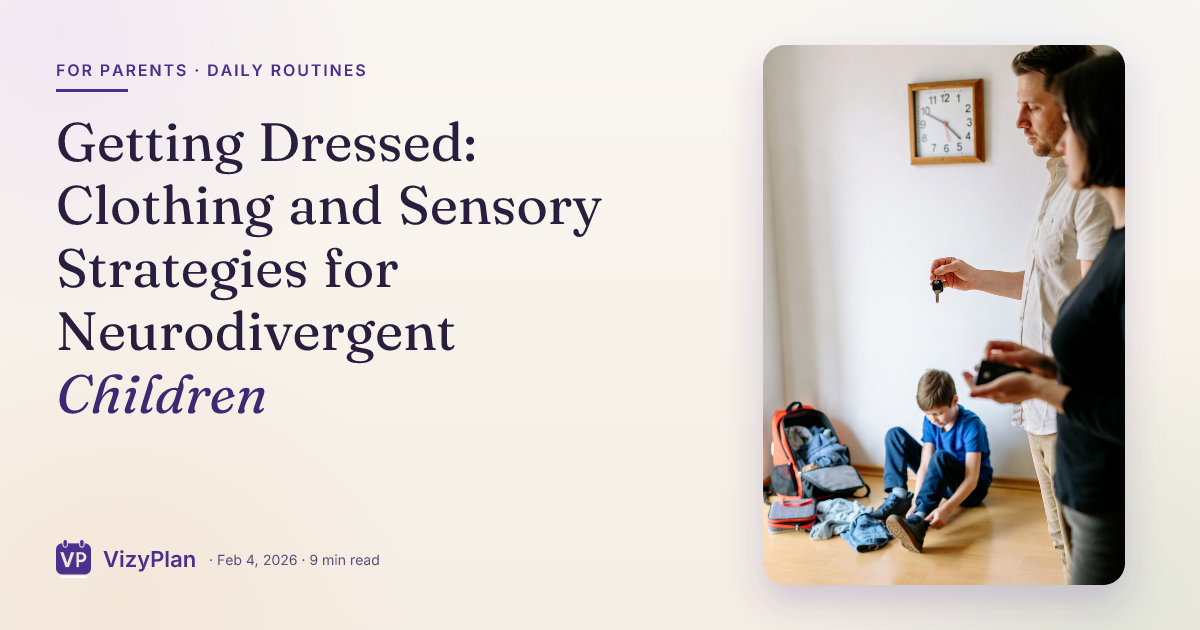
For many families of neurodivergent children, the morning dressing routine can feel like navigating a minefield. What seems like a simple task, putting on clothes, actually involves a complex interplay of sensory processing, executive function, decision-making, and motor planning. If your child has ever melted down over a "wrong" pair of socks, refused to wear jeans, or taken 45 minutes to get dressed while you watch the clock tick toward school time, you are not alone.
The good news is that with the right strategies, tools, and understanding, getting dressed can become a smoother, more independent part of your child's day. This guide will walk you through evidence-based approaches to transform your morning routine from a daily battle into an opportunity for growth and connection.
Why Getting Dressed Is So Challenging
Before we dive into solutions, it helps to understand why dressing presents such unique challenges for neurodivergent children. When we recognize the "why" behind the struggle, we can respond with empathy rather than frustration.
Sensory Sensitivities
Research shows that tactile sensitivities affect the majority of autistic children, and these sensitivities directly impact clothing tolerance. That tag your child insists feels like "needles" is not an exaggeration to them. Their nervous system is genuinely processing that sensation as painful or intolerable. Common sensory triggers include:
- Tags and labels that feel scratchy or poky
- Seams, especially in socks, that create uneven pressure
- Textures that feel "wrong" (too rough, too slippery, too fuzzy)
- Tightness around waists, wrists, or necks
- Temperature, either too warm or too cool against the skin
- The feel of new, unwashed fabric versus worn-in favorites
Executive Function Demands
Getting dressed is actually a multi-step sequence that requires planning, organization, and working memory. Your child needs to remember the order of steps, find each clothing item, manipulate buttons and zippers, and check that everything is on correctly. For children with ADHD, autism, or other conditions affecting executive function, this mental load can be overwhelming, especially first thing in the morning when their brain is still waking up.
Decision Fatigue
Opening a closet full of options can be paralyzing for a neurodivergent brain. Each choice, which shirt, which pants, which socks, requires mental energy. By the time your child has made several decisions, they may be depleted before they have even started actually getting dressed. This is why you might notice your child does better when choices are limited.
Understanding Your Child's Sensory Clothing Profile
Every child's sensory system is unique. Taking time to observe and understand your child's specific profile will help you make informed choices about clothing and strategies.
Tactile Defensive Children
These children are over-responsive to touch sensations. They may:
- Pull at clothing constantly
- Refuse anything that is not 100% cotton
- Insist on wearing the same few "safe" items repeatedly
- Have strong reactions to new clothes
- Prefer loose, soft clothing
Proprioceptive Seekers
Some children actually crave deep pressure input, which can be regulating for their nervous system. These children may:
- Prefer tight clothing like compression shirts or leggings
- Love heavy fabrics or weighted items
- Feel calmer in snug-fitting clothes
- Seek out hugs and squeezes throughout the day
Temperature Dysregulation
Temperature dysregulation is common in autism and can significantly affect clothing comfort. Your child might:
- Feel too hot when others are comfortable
- Not notice they are cold until they are shivering
- Refuse to wear weather-appropriate clothing
- Need layers they can add or remove easily
Understanding which category (or combination) fits your child helps you build a wardrobe that works with their nervous system, not against it.
Building a Sensory-Friendly Wardrobe
Once you understand your child's sensory profile, you can strategically build a wardrobe that sets them up for success.
For Tactile Defensive Children:
- Tagless clothing: Many brands now offer tagless options with printed labels instead of sewn-in tags. If tags remain an issue, carefully remove them with a seam ripper rather than scissors (which can leave scratchy remnants).
- Seamless socks: These are game-changers for many families. Look for socks specifically marketed as "sensory-friendly" with flat toe seams.
- Soft, natural fabrics: Cotton, bamboo, and modal tend to be well-tolerated. Pre-wash all new clothing several times to soften the fabric.
- Inside-out options: Sometimes wearing clothes inside-out eliminates seam discomfort. If your child prefers this, let them do it.
- Elastic waistbands: Skip buttons and zippers on pants when possible.
For Proprioceptive Seekers:
- Compression clothing: Undershirts, shorts, or full compression suits provide calming input throughout the day.
- Fitted base layers: Snug undershirts or leggings worn under regular clothes can provide the input they crave.
- Weighted vests: Some children benefit from weighted clothing, though consult an occupational therapist for proper use.
General Tips:
- When you find clothing that works, buy multiples in the same size and the next size up.
- Keep a "sensory-approved" section of the closet with only comfortable options.
- Involve your child in texture testing when shopping. Bring fabric swatches or let them feel items before purchasing.
Visual Dressing Sequences: A Game-Changer
Visual schedules significantly improve dressing independence for neurodivergent children. Breaking down the dressing routine into clear, visual steps removes the executive function burden of remembering what comes next.
A basic visual dressing sequence might include:
- Underwear (image of underwear)
- Pants or shorts (image of pants)
- Shirt (image of shirt)
- Socks (image of socks)
- Shoes (image of shoes)
Why Visual Sequences Work:
- They provide external structure for internal executive function challenges
- Children can reference the sequence independently without asking for help
- Progress becomes visible and motivating
- The same sequence used consistently builds automatic habits over time
Making It Personal:
Generic clip art can work, but personalized visuals are even more effective. When children see images of their actual clothes, or even images that look like them, they connect more deeply with the routine. With VizyPlan, you can create personalized visual dressing sequences using AI-generated images that reflect your child's real wardrobe and experience.
Reducing Decision Fatigue
Morning is not the time for unlimited choices. Here are strategies to minimize decision fatigue while still giving your child some autonomy:
Lay Out Clothes the Night Before
Make clothing selection part of the bedtime routine when your child's brain is not yet dealing with the pressure of getting out the door. This single change can transform mornings.
Offer Two Choices, Not Ten
Instead of "What do you want to wear?" try "Do you want the blue shirt or the green shirt?" Two options provide a sense of control without overwhelming decision-making.
Create a Capsule Wardrobe
Limit the active wardrobe to 7-10 complete outfits that all mix and match. Store out-of-season and backup clothes elsewhere. When everything in the drawer is an acceptable option, choosing becomes easier.
Use Visual Choice Boards
Take photos of approved outfit combinations and let your child pick from the board. This visual menu simplifies decision-making while ensuring all options are sensory-appropriate and weather-suitable.
Designate "Uniforms" for Certain Days
Some families assign specific outfits to certain days of the week. Monday is always the dinosaur shirt, Tuesday is stripes, and so on. Predictability reduces both decisions and arguments.
Handling Seasonal Clothing Transitions
Changes in season mean changes in clothing, which can be particularly challenging for neurodivergent children who thrive on sameness and may need time to adjust to new textures.
Introduce New Textures Gradually
Do not wait until the first cold day to pull out winter clothes. Weeks before the season changes:
- Let your child touch and explore new seasonal clothing
- Have them try items on briefly, without pressure to wear them out
- Wash new items multiple times to soften them
- Pair new items with familiar favorites (new pants with beloved shirt)
Use Social Stories About Weather-Appropriate Clothing
Social stories can help children understand why we change our clothing with the seasons. A story might explain how our bodies feel cold when the temperature drops and how jackets help keep us comfortable and healthy. VizyPlan's social story feature lets you create these narratives with personalized visuals that make the concept concrete and relatable.
Create Visual Weather Charts
Post a simple chart showing:
- Sunny and hot = shorts and t-shirt
- Cloudy and cool = long pants and long sleeves
- Rainy = jacket and rain boots
- Cold = warm layers
Check the weather together each morning and reference the chart to make clothing selection feel logical rather than arbitrary.
.png)
The "Wrong Socks" Meltdown and Other Common Battles
You have probably been there. Everything is going smoothly until suddenly, it is not. The socks are wrong. The shirt is itchy. The pants feel weird. What do you do?
First, Validate
Your child's distress is real. Even if you cannot see or feel what they are experiencing, their nervous system is sending genuine alarm signals. Saying "I can see those socks really bother you" goes further than "They are fine, just put them on."
Investigate the Specific Trigger
Is it the seam? The tightness? The texture? The way they are positioned on the foot? Understanding the precise issue helps you solve it and prevent future occurrences.
Have Backups Ready
Keep a stash of known-comfortable socks, underwear, and basic clothing items. When something feels "wrong," having an immediate alternative prevents escalation.
Consider What Else Might Be Going On
Sometimes sensory sensitivities increase when children are tired, hungry, stressed, or getting sick. A sock that was fine yesterday might be intolerable today because of these underlying factors. VizyPlan's emotion tracking feature can help you identify patterns over time, noticing when clothing battles correlate with other stressors.
Track Patterns
Notice which items cause repeated problems and which are always accepted. Over time, you will build a reliable wardrobe and be able to identify what specific sensory features your child can and cannot tolerate.
Using Reward Systems to Build Dressing Independence
Positive reinforcement can be a powerful motivator for building new habits. The key is making rewards meaningful to your child and connected to their effort and progress.
Effective Reward Strategies:
- Immediate feedback: A sticker on a chart right after getting dressed successfully
- Celebration of small steps: Reward putting on socks independently, even if other steps still need help
- Choice of rewards: Let your child help determine what they are working toward
- Visual progress tracking: Charts, token boards, or digital trackers make progress concrete
What to Reward:
- Completing steps independently
- Trying a new clothing item
- Getting dressed within a target time
- Following the visual sequence without reminders
- Handling a sensory discomfort calmly
VizyPlan's built-in reward system makes tracking and celebrating progress simple. Set up personalized goals and let your child see their achievements accumulate, building both the dressing habit and their confidence.
Important Notes:
- Focus on effort and progress, not perfection
- Adjust expectations based on your child's developmental level
- Phase out rewards gradually as habits become automatic
- Never take away earned rewards as punishment
Building Independence Over Time
Dressing independence develops gradually. Meeting your child where they are while gently encouraging growth creates lasting skills.
Age-Appropriate Expectations:
- Ages 2-3: Can help push arms through sleeves, pull up pants with help
- Ages 3-4: Can put on shirts with some help, pull up pants independently
- Ages 4-5: Can dress mostly independently with simple clothing, may need help with fasteners
- Ages 5-6: Can dress independently, including most fasteners
- Ages 6 and up: Can select weather-appropriate clothing and complete entire routine
Remember: These are general guidelines. Neurodivergent children may develop skills on different timelines, and that is okay.
Building Skills Gradually:
- Start by having your child complete the last step of each task (you pull up pants most of the way, they finish)
- Gradually have them complete more of each step
- Add new steps as current ones become automatic
- Use visual checklists to support independence
- Celebrate each new skill mastered
How VizyPlan Supports Dressing Routines
Transforming the dressing routine takes consistency, the right tools, and a lot of patience. VizyPlan was designed specifically to support neurodivergent children and their families through challenges exactly like this one.
With VizyPlan, you can:
- Create personalized visual dressing sequences with as many or as few steps as your child needs
- Use AI-generated images that look like your child, making the routine relatable and motivating
- Track emotions before, during, and after the dressing routine to spot patterns and identify what helps
- Set up reward systems to celebrate progress and build independence
- Create social stories about weather-appropriate clothing, trying new textures, or handling sensory discomfort
Morning routines set the tone for the entire day. When getting dressed goes smoothly, everyone starts the day calmer and more connected.
Download VizyPlan and start your 7-day free trial today. For $6.99/month or $59.99/year after your free week, you will have everything you need to transform dressing time from a daily struggle into an opportunity for independence and connection.
Your child can do this. And with the right support, mornings can become something your whole family looks forward to.