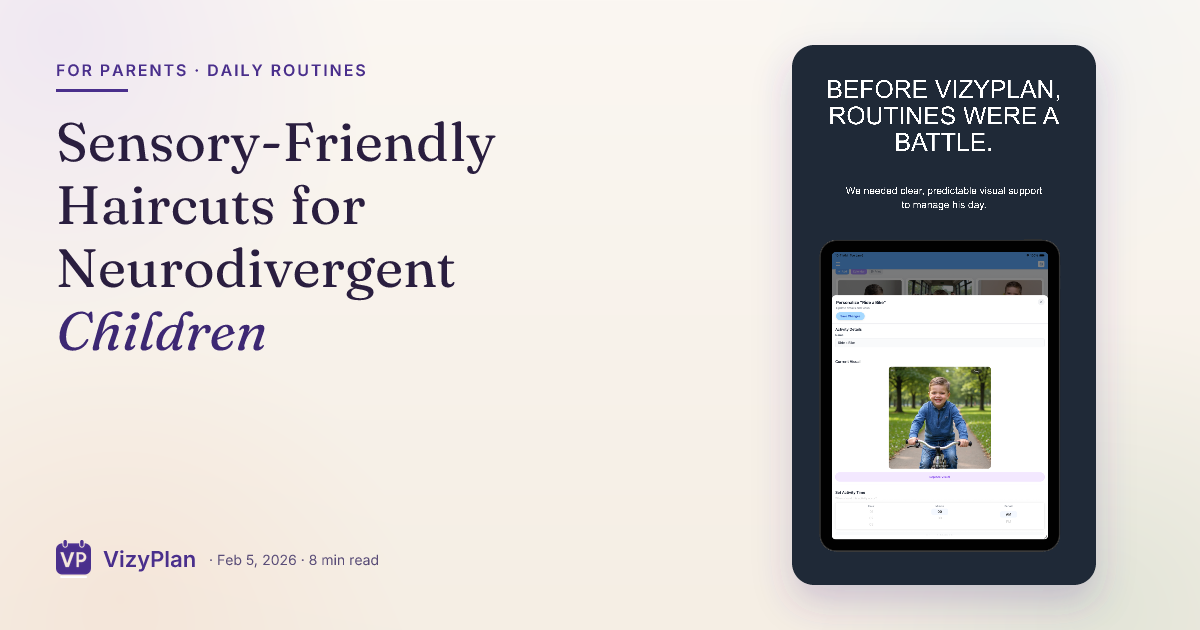
Few experiences capture the collision of sensory overload and loss of control quite like a haircut. The buzzing clippers, the cold spray bottle, the unfamiliar hands touching their head, the scratchy cape around their neck, and tiny hair clippings landing on skin. For neurodivergent children, what should be a routine grooming task can become a genuinely distressing experience that the whole family dreads.
If you have ever left a salon in tears, held your child through a meltdown in a barber chair, or simply given up and let their hair grow indefinitely, you are not alone. Haircut avoidance is one of the most commonly reported grooming challenges among families of neurodivergent children.
The good news is that with the right preparation, accommodations, and gradual exposure, haircuts can become manageable and even positive. It takes patience and a willingness to do things differently, but countless families have found their way through this challenge.
Why Haircuts Are So Difficult
Understanding the specific triggers helps you address them systematically rather than guessing.
Sensory overload is the primary barrier. Research consistently shows that over 90% of autistic children experience some form of sensory processing difference. During a haircut, multiple sensory systems are activated simultaneously: tactile (touch on the head, neck, and face), auditory (clippers, scissors, background salon noise), visual (bright lights, mirrors, unfamiliar environment), and even olfactory (hair products, cleaning solutions). This sensory bombardment can overwhelm a nervous system that is already working harder than typical to filter input.
Loss of control increases anxiety. Haircuts require sitting still while someone else does something to your body. For children who find safety in predictability and autonomy, this forced passivity is deeply uncomfortable. They cannot control when the stylist touches them, what tool comes next, or how long it will take.
Unpredictability compounds the stress. Even with preparation, each haircut unfolds slightly differently. The stylist may use a different technique, the salon may be louder than last time, or the water may be a different temperature. For children who depend on sameness, these small variations can feel enormous.
Past negative experiences create lasting associations. One bad haircut experience can establish a fear response that persists for months or years. The child's brain has learned that haircuts equal distress, and that association is difficult to override without intentional, positive counter-experiences.
Preparing Before the Haircut
Preparation is where most of the progress happens. The work you do in the days and weeks before the appointment matters far more than what happens in the chair.
Create a visual social story about haircuts. Walk through the entire experience step by step: driving to the salon, checking in, sitting in the chair, having a cape put on, hair getting wet, cutting with scissors or clippers, brushing off hair, and leaving. Use images your child can connect with. VizyPlan's social story feature lets you create personalized narratives with AI-generated images that look like your child in a salon setting, making the abstract idea of a haircut concrete and familiar.
Practice sensory exposures at home. Gradually introduce the sensations your child will encounter:
- Run a comb through their hair with gentle pressure
- Spray water from a spray bottle onto their arms, then neck, then hair
- Turn on an electric razor near them (without touching) to familiarize them with the sound and vibration
- Drape a towel or light blanket around their shoulders to simulate a cape
- Have them sit in a tall chair while you stand behind them
Visit the salon without getting a haircut. Take a trip just to look around. Let your child sit in the chair. Meet the stylist. Explore the space. This preview visit removes the novelty that contributes to anxiety on the actual appointment day.
Schedule strategically. Book the first appointment of the day when the salon is quietest. Ask for the last chair in the row, farthest from noise and foot traffic. Choose a time when your child is typically well-regulated, not hungry, tired, or already overstimulated.
Sensory Accommodations During the Haircut
Small adjustments to the sensory environment make a significant difference.
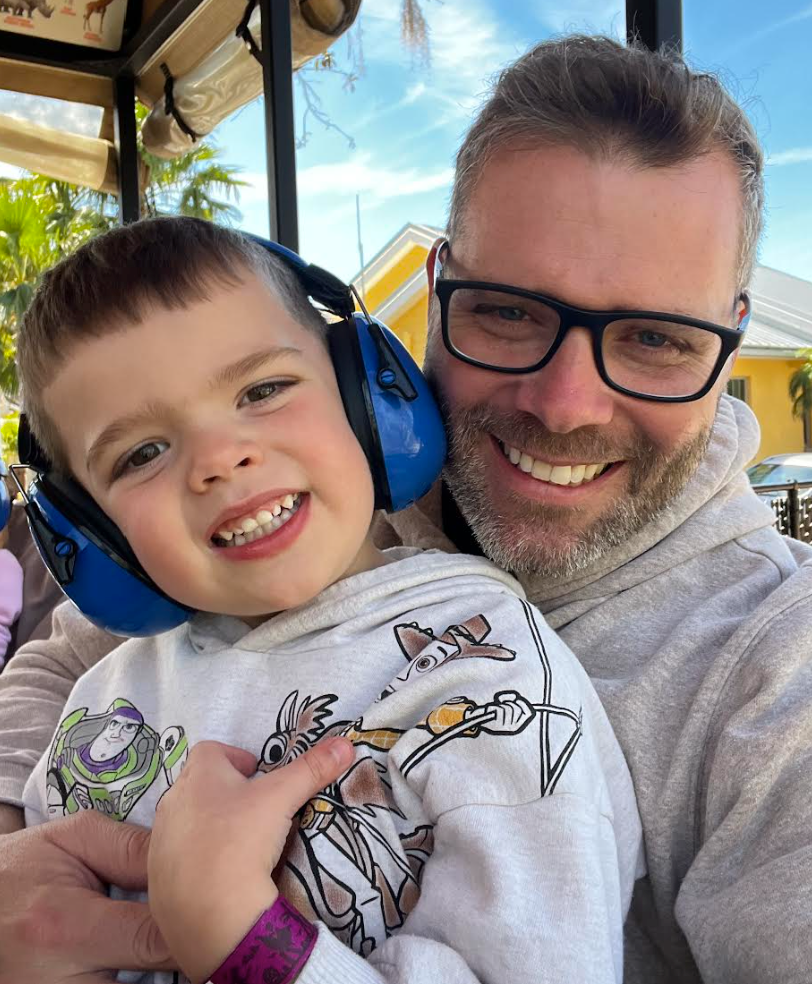
Noise management. Bring noise-canceling headphones or earplugs. If your child tolerates it, playing familiar music or a favorite show on a tablet with headphones can provide a comforting auditory focus that masks the salon sounds.
Tactile modifications. Ask the stylist to use a soft cloth rather than a standard cape. Some children do better without a cape at all, even if it means more cleanup. Bring a familiar comfort item, a stuffed animal, a fidget toy, or a stress ball for their hands.
Visual supports. A visual countdown showing how many snips or sections remain gives your child a sense of progress and an end point. You can hold up fingers or use a simple number chart. Knowing "three more sections and we are done" is far more tolerable than an open-ended unknown.
Minimize unnecessary touch. Talk with the stylist beforehand about keeping extra touches to a minimum. Skip the shampoo if your child can have clean hair before arriving. Avoid blow-drying if the noise and sensation are triggering. Every eliminated step reduces the sensory load.
Temperature matters. Ask for lukewarm water instead of cold. Warm a towel before placing it around their neck. Cold sensations are a common trigger that is easy to prevent.
Building a Positive Haircut Routine
Consistency and positive associations transform haircuts over time.
Use the same stylist every time. Familiarity with the person reduces anxiety significantly. Call ahead to explain your child's needs and find a stylist who is patient and willing to adapt. Many salons now have stylists trained in sensory-friendly techniques.
Create a reward system. A clear, visual reward that your child earns after the haircut provides motivation. VizyPlan's reward system lets you set up a specific goal connected to the haircut experience, and your child can see their progress building toward something they value.
Keep a consistent pre-haircut routine. The same breakfast, the same drive, the same visual story reviewed beforehand, the same comfort items packed. Predictability in the steps leading up to the haircut builds a framework of safety around the experience.
Celebrate every step. Even if you only accomplish sitting in the chair for thirty seconds on the first visit, that is progress worth acknowledging. Build gradually: sit in the chair, then sit with the cape, then tolerate one snip, then five snips. Each successful exposure rewires the anxiety response.
When to Consider Alternatives
Not every child will tolerate a traditional salon haircut, and that is completely okay.
Home haircuts offer a controlled environment where you manage every variable. You choose the lighting, the noise level, the timing, and the pace. Many parents learn basic cutting techniques to avoid the salon entirely.
Mobile stylists who come to your home combine professional skill with the comfort of a familiar environment. This option is increasingly available and worth exploring.
Gradual exposure over multiple visits works better than pushing through a single traumatic appointment. Five calm visits where very little cutting happens build more long-term tolerance than one visit where you hold your child down.
Occupational therapy support can help if sensory processing differences are severe. An OT can create a structured desensitization plan specific to haircut-related sensations and work with your child over weeks or months to build tolerance.
Tracking Progress Over Time
Haircut tolerance rarely improves in a straight line. Tracking your child's experience across appointments reveals patterns that inform your approach.
Note what works and what does not. Did the headphones help? Was the morning appointment better than the afternoon one? Did the social story reduce anxiety? VizyPlan's emotion tracking feature lets you log how your child feels before, during, and after haircut-related activities, surfacing patterns you might miss otherwise.
Adjust based on data, not assumptions. You might discover that your child's haircut anxiety peaks on the drive rather than in the chair, which tells you to focus preparation on the transition. Or you might find that afternoon appointments consistently go better because morning sensory sensitivity is higher.
Celebrate the trajectory. If the first haircut involved forty-five minutes of crying and the fifth involved ten minutes of mild discomfort, that is enormous progress. Keep the long view in mind.
Haircuts do not have to be a family crisis. With sensory accommodations, gradual exposure, and the right visual supports, your child can build tolerance and even confidence around this essential life skill.
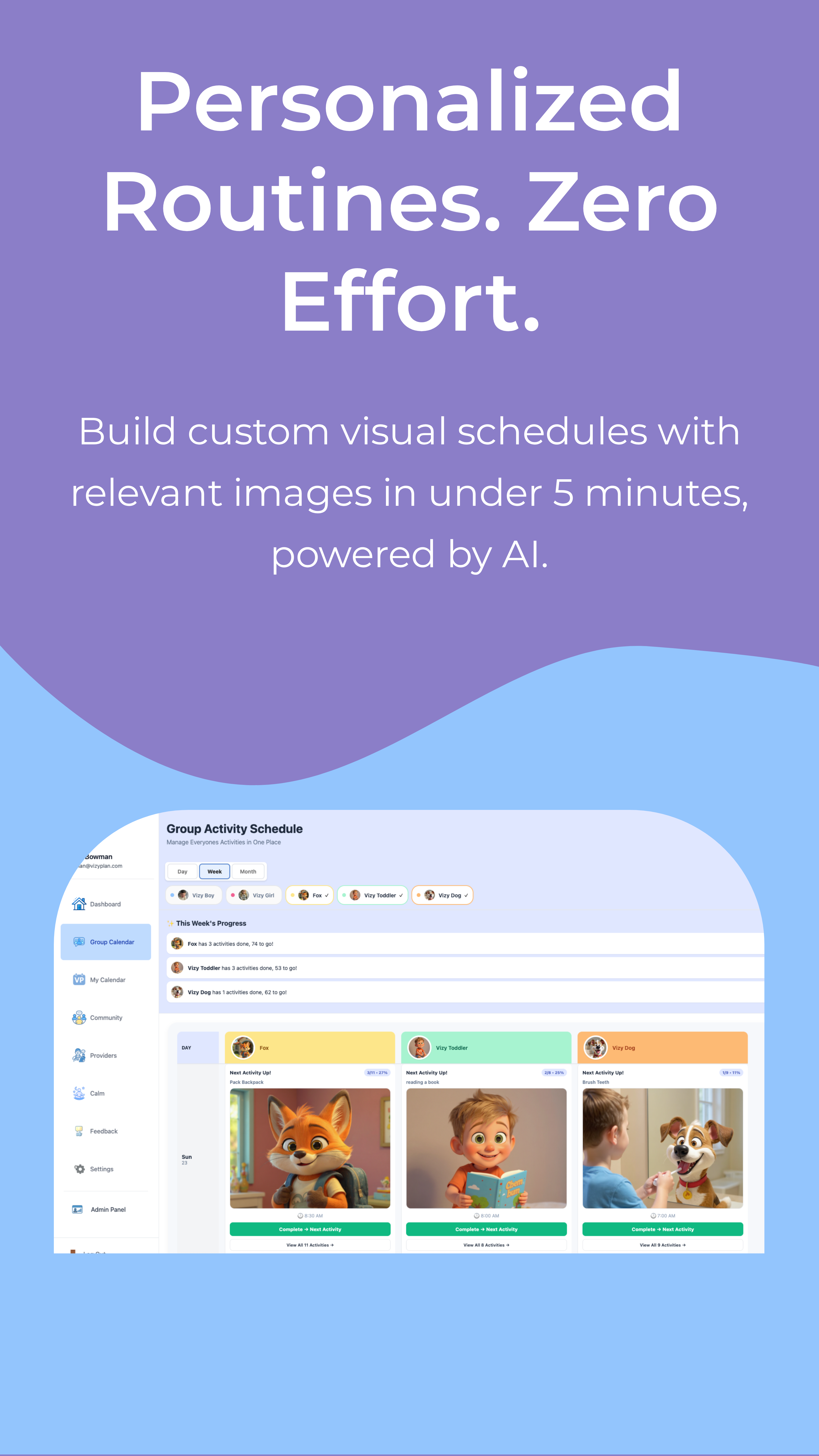
Download VizyPlan and start your 7-day free trial today. Create personalized social stories and visual routines that prepare your child for haircuts and other challenging sensory experiences. If it helps, keep going for $6.99/month or $59.99/year.