Teeth brushing is one of those daily tasks that sounds simple until you are standing in the bathroom with a screaming child who will not open their mouth. For families of neurodivergent children, this twice-daily routine can become one of the most dreaded parts of the day. The battles, the tears, and the guilt about whether you are doing enough for your child's dental health add up quickly.
Research reveals that children with autism and ADHD experience significantly higher rates of dental problems compared to neurotypical peers. Studies published in the Journal of Autism and Developmental Disorders have found that autistic children are more likely to have untreated cavities, partly because the sensory challenges of oral hygiene make consistent brushing so difficult. Understanding why brushing is hard is the first step toward making it easier.
The good news is that with the right accommodations, tools, and visual supports, most neurodivergent children can develop a functional teeth brushing routine. It may look different from what the dentist recommends in their standard pamphlet, and that is perfectly fine.
Why Teeth Brushing Is So Challenging
The mouth is one of the most sensory-dense areas of the body. For children with sensory processing differences, oral care activates multiple triggers simultaneously.
Tactile hypersensitivity in the mouth. The bristles of a toothbrush create intense tactile input on the gums, tongue, teeth, and inner cheeks. For a child with oral tactile defensiveness, this sensation can feel genuinely painful rather than mildly uncomfortable. The pressure, the scrubbing motion, and the texture of bristles can all trigger a defensive response.
Taste and texture of toothpaste. Mint flavoring, which dominates the toothpaste market, creates a burning or tingling sensation that many neurodivergent children find intolerable. The foaming action of standard toothpaste adds another unwanted texture. Even the grittiness of the paste can trigger gagging in sensitive children.
Vibration from electric toothbrushes. While electric toothbrushes clean more effectively, the vibration can be overwhelming for sensory-sensitive children. The buzzing feeling that travels through the jaw and into the skull is a unique sensory input that many children reject.
Executive function demands. Brushing requires a multi-step sequence: get the toothbrush, apply toothpaste, brush all quadrants of the mouth systematically, spit, rinse, and put everything away. For children with ADHD or executive function challenges, maintaining this sequence twice daily requires more cognitive effort than adults typically realize.
Interoception challenges. Some neurodivergent children do not experience the "dirty mouth" feeling that motivates most people to brush. Without that internal signal, there is no natural motivation driving the behavior.
Finding the Right Tools
The standard toothbrush and minty toothpaste combination is not the only option. Finding tools that work with your child's sensory profile makes everything easier.
Toothbrush options:
- Extra-soft bristle brushes reduce tactile intensity
- Finger brushes (silicone brushes that fit over your finger) give you more control and feel less invasive for younger children
- Three-sided toothbrushes clean all surfaces simultaneously, reducing the time spent brushing
- Vibrating toothbrushes with gentle settings may work for children who seek proprioceptive input
- Chewable toothbrushes allow biting rather than traditional brushing for children who resist having a brush placed in their mouth
Toothpaste alternatives:
- Unflavored toothpaste eliminates the taste barrier entirely
- Fruit-flavored children's toothpaste avoids the mint sensation
- Non-foaming formulas reduce the texture issue
- Training toothpaste without fluoride is safe to swallow, removing the spitting requirement for children who struggle with that step
- For some children, brushing with just water is better than not brushing at all
Let your child choose. Bring them to the store and let them touch different brush textures and smell different toothpaste flavors. Ownership over the tools increases willingness to use them.
Creating a Visual Brushing Routine
Visual supports transform teeth brushing from an abstract demand into a concrete, step-by-step process.
Break it down into manageable steps. A visual sequence posted at your child's eye level in the bathroom might include:
- Pick up toothbrush
- Put toothpaste on brush
- Brush top teeth
- Brush bottom teeth
- Brush tongue (optional for some children)
- Spit
- Rinse mouth
- Put toothbrush away
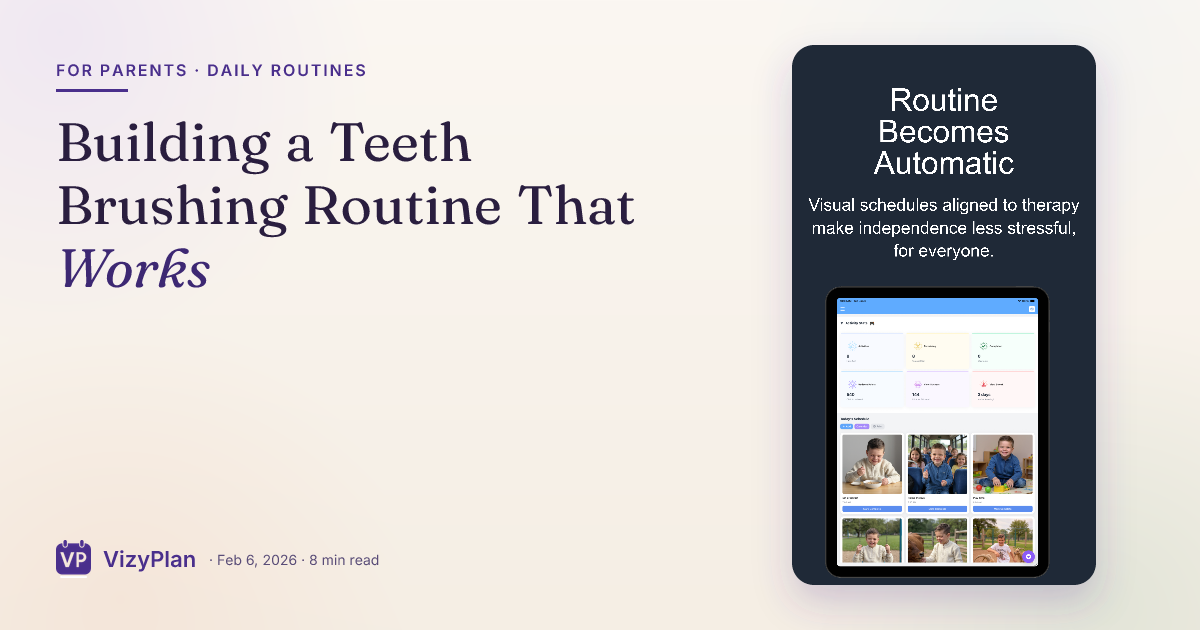
Use a visual timer. Dentists recommend two minutes of brushing. A visual timer, whether a sand timer, a phone app, or a visual countdown, shows your child exactly how much time remains. Open-ended brushing feels infinite. Two minutes with a visible countdown feels manageable. VizyPlan's visual schedule feature lets you create a personalized brushing sequence with timed steps, so your child knows exactly what comes next and how long each step lasts.
Add brushing to the daily routine visual. When teeth brushing appears as part of the morning and bedtime visual schedule, it becomes an expected part of the routine rather than a sudden demand. Predictability reduces resistance.
Desensitization Strategies
For children with significant oral sensitivity, gradual exposure builds tolerance over time.
Start outside the mouth. Let your child hold the toothbrush and explore it with their hands. Touch it to their lips. Run it along their cheek. Each step builds familiarity before introducing the brush inside the mouth.
Use oral massage as preparation. Gently rubbing the outside of the jaw, the cheeks, and the lips before brushing provides proprioceptive input that can calm the oral area and reduce defensiveness. Occupational therapists often recommend this technique as a pre-brushing routine.
Work in quadrants. Instead of expecting full brushing from day one, start with one section of the mouth. Add another section when the first becomes tolerable. Building gradually prevents the overwhelming sensation of having the entire mouth stimulated at once.
Pair brushing with preferred activities. Some children tolerate brushing better while watching a favorite video or listening to a preferred song. The competing positive sensory input can reduce the focus on the unpleasant oral sensation.
Consider timing within the routine. Some children handle brushing better right after a bath when their body is warm and relaxed. Others do better when brushing is the very first step of the routine, before any other demands have depleted their regulation capacity. Track what works for your child using VizyPlan's emotion tracking to identify optimal timing patterns.
Reward Systems for Brushing
Positive reinforcement builds the habit while reducing resistance.
Immediate visual rewards work best. A sticker on a chart right after brushing, a check mark on the visual schedule, or a token added to a jar provides instant positive feedback. VizyPlan's built-in reward system makes tracking brushing success simple and visually motivating for your child.
Reward effort and tolerance, not perfection. In the early stages, reward any engagement with the toothbrush. Holding it. Touching it to their lips. Allowing one stroke. The goal is building positive associations, not achieving dental perfection immediately.
Let your child see progress accumulating. Visual trackers showing consecutive days of brushing, even partial brushing, build momentum. Children who can see their streak growing often become motivated to maintain it.
Working With Your Dentist
A supportive dental team makes an enormous difference.
Find a pediatric dentist experienced with neurodivergent children. These practitioners understand sensory accommodations, can modify their approach, and will not shame your child or your family for imperfect oral hygiene.
Share your visual tools with the dental team. If your child uses a visual brushing sequence at home, bringing it to dental appointments creates continuity that reduces anxiety in the clinical setting.
Be honest about your child's current routine. A dentist who knows your child can only tolerate thirty seconds of brushing can provide targeted advice that meets your family where you are, rather than reciting the standard two-minute recommendation that feels impossible to achieve.
Ask about sealants and other preventive measures. If brushing remains extremely limited, dental sealants and fluoride varnish provide additional cavity protection while you continue working on building the brushing routine.
Progress with teeth brushing is often slow, and that is completely normal. A child who currently refuses to open their mouth will not transform into an enthusiastic brusher overnight. But with consistent, gentle exposure and the right visual supports, most children make meaningful progress over weeks and months.
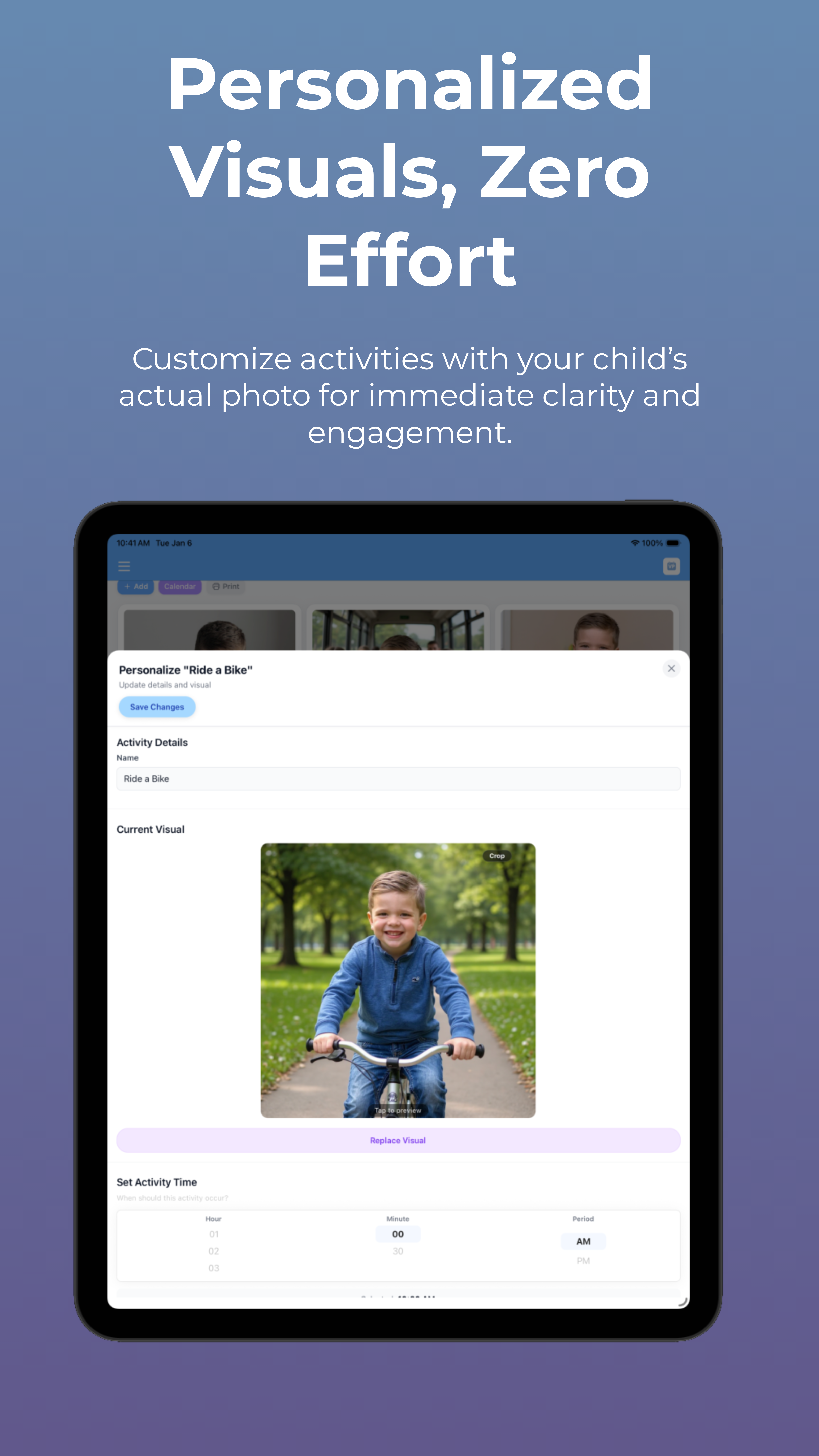
Download VizyPlan and start your 7-day free trial today. Build personalized brushing routines with visual sequences, timers, and reward tracking that make oral hygiene achievable for your neurodivergent child. If it helps, keep going for $6.99/month or $59.99/year.