
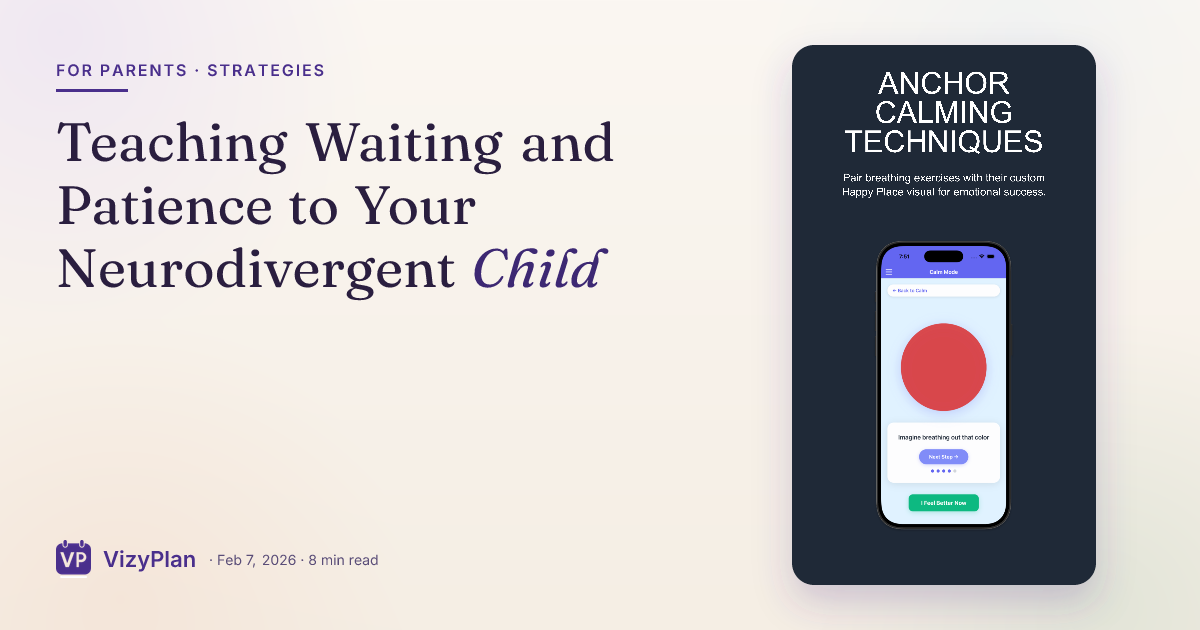
"Just wait a minute." For most children, this is a mildly frustrating instruction. For neurodivergent children, it can feel like being asked to hold their breath underwater with no idea when they will be allowed to come up for air. The concept of waiting, with its inherent uncertainty and invisible timeline, is one of the most fundamentally difficult skills for children with ADHD, autism, and other forms of neurodivergence.
If your child melts down in checkout lines, cannot wait for their turn in a game, or falls apart when dinner is not ready the moment they feel hungry, you are experiencing the real-world impact of neurological differences in time perception, impulse control, and tolerance for uncertainty. These are not behavioral choices. They are brain-based challenges that require specific strategies to address.
The good news is that waiting can be taught. Not through repeated lectures about patience, but through concrete, visual tools that make the invisible passage of time something your child can see, understand, and manage.
Why Waiting Is So Hard
Understanding the neurology behind waiting difficulties changes how you respond to them.
Time blindness is real. Research on ADHD and time perception consistently shows that children with ADHD experience time differently than neurotypical peers. Studies published in neuropsychological journals have found that children with ADHD significantly overestimate how much time has passed during waiting periods. A two-minute wait can feel like ten minutes to a child with time processing differences. This is not impatience. It is a genuine perceptual difference.
Impulse control develops on a different timeline. The prefrontal cortex, which manages impulse control and delayed gratification, develops more slowly in children with ADHD. Research suggests that executive function development in ADHD may lag three to five years behind chronological age. A seven-year-old with ADHD may have the impulse control capacity of a four-year-old, which reframes their "impatient" behavior as developmentally appropriate for their executive function level.
Uncertainty is intolerable for many autistic children. When an autistic child asks "How long?" and receives a vague answer like "Soon" or "In a little bit," the lack of concrete information creates anxiety. Autistic brains often process information in concrete, specific terms. An undefined wait period is an unresolved variable that generates ongoing stress until it resolves.
Emotional regulation is depleted by waiting. Waiting requires sustained self-regulation, holding back an impulse or tolerating an unpleasant state over time. For children whose regulation capacity is already taxed by navigating a sensory and social world that was not designed for their neurology, the additional demand of waiting can exceed their available resources.
Making Time Visible
The most powerful strategy for teaching waiting is making the invisible visible.
Visual timers change the game. A timer that shows time as a shrinking colored section, a sand timer with visible particles flowing, or a digital countdown with numbers all transform "wait" from an abstract concept into a concrete, observable process. Research on visual timer interventions for autistic children has shown significant reductions in challenging behavior during waiting periods when visual timers are used consistently.
Choose the right timer for your child. Sand timers work well for short waits (one to five minutes) and are satisfying to watch. Red-disk timers (like the Time Timer) show the passage of time as a shrinking colored segment. Digital countdowns work for children comfortable with numbers. VizyPlan's visual schedule feature can incorporate timed waiting steps into your child's daily routine, making anticipated waits part of the predictable structure.
Use specific time language. Replace vague time words with concrete ones. Instead of "Soon," say "In five minutes." Instead of "Later," say "After lunch." Instead of "Not now," say "When the timer reaches zero." Every specific time reference reduces uncertainty and gives your child something concrete to anchor to.
Create visual wait sequences. For longer waits, like waiting for a special event, a visual countdown calendar showing how many days remain gives your child a way to track progress toward the goal. Crossing off each day makes the passage of time tangible.
The Wait Card Strategy
Wait cards are a simple, powerful tool from behavioral research.
How they work. A wait card is a visual cue, often a card with a hand signal or the word "wait" with a picture, that you show your child when they need to wait. The card serves as an external signal that replaces the verbal instruction, which can be harder for some children to process during moments of heightened emotion.
Pair with a visual timer. Show the wait card and simultaneously start a visual timer. This combination tells your child both what to do (wait) and how long they need to do it. The timer removes the uncertainty that makes waiting so aversive.
Start with very short waits. Begin with ten-second waits and reward success immediately. Gradually extend the duration as your child builds tolerance. Going from ten seconds to thirty seconds to one minute to three minutes over weeks of practice builds genuine capacity.
Reward waiting successfully. When the timer ends and your child has waited, provide immediate positive reinforcement. A verbal acknowledgment, a sticker, a token toward a larger reward, or access to the desired activity all strengthen the connection between waiting and positive outcomes. VizyPlan's reward system makes this tracking visual and motivating.
Structured Practice in Low-Stakes Moments
Waiting skills are best learned during calm, controlled situations, not during the meltdown in the grocery checkout line.
Practice at home first. Set up deliberate waiting practice during relaxed moments. "I am going to set the timer for one minute. When it goes off, you can have your snack." Start when your child is regulated and motivated, not when they are already stressed.
Use preferred activities as motivation. "First we wait for two minutes, then we play your favorite game." When the reward on the other side of the wait is highly motivating, tolerance for the wait increases. Visual first-then boards make this structure clear and concrete.
Build waiting into daily routines. Embed small waiting moments throughout the day: waiting thirty seconds before screen time starts, waiting one minute between requesting a snack and receiving it, waiting for a sibling to finish before taking a turn. These micro-practices accumulate into genuine skill.
Play games that involve waiting. Board games with turn-taking, freeze dance, red-light-green-light, and other structured games provide fun contexts for practicing the skill of waiting. The game format makes the practice enjoyable rather than clinical.
Managing Waiting in Public
Real-world waits are less predictable than practice sessions, but preparation helps.
Bring a waiting toolkit. A small bag with fidget toys, a favorite book, a drawing pad, or a handheld game gives your child something to do during unexpected waits. Occupied hands and an engaged mind make waiting far more tolerable.
Preview expected waits. Before going to the doctor's office, restaurant, or store, tell your child there will be waiting and show them approximately how long. Use VizyPlan's social story feature to walk through the outing, including the waiting parts, so your child knows what to expect.
Acknowledge the difficulty. Saying "I know waiting is really hard for your brain, and you are doing a great job" validates your child's experience while reinforcing their effort. Dismissing the difficulty with "It is not that long" invalidates a genuine neurological experience.
Have an exit plan. For situations where waiting becomes genuinely intolerable, having a plan to step outside, take a movement break, or leave and return reduces the pressure on both you and your child.
Tracking Progress
Waiting tolerance develops gradually, and tracking helps you see the growth.
Log successful waits. Note the duration, the context, and what strategies helped. Over time, you will see patterns: your child waits better in the morning, or with the sand timer, or when they have a fidget available. This data guides your approach.
Use VizyPlan's emotion tracking. Recording how your child feels during and after waiting periods reveals whether their tolerance is genuinely growing or whether they are simply complying while becoming increasingly distressed. Both pieces of information matter.
Celebrate milestones. The first time your child waits a full minute without distress, the first successful restaurant wait, the first time they independently use a coping strategy during a wait. These moments deserve recognition.
Patience is not a personality trait your child is lacking. It is a skill that can be built, one visible timer and one successful wait at a time.
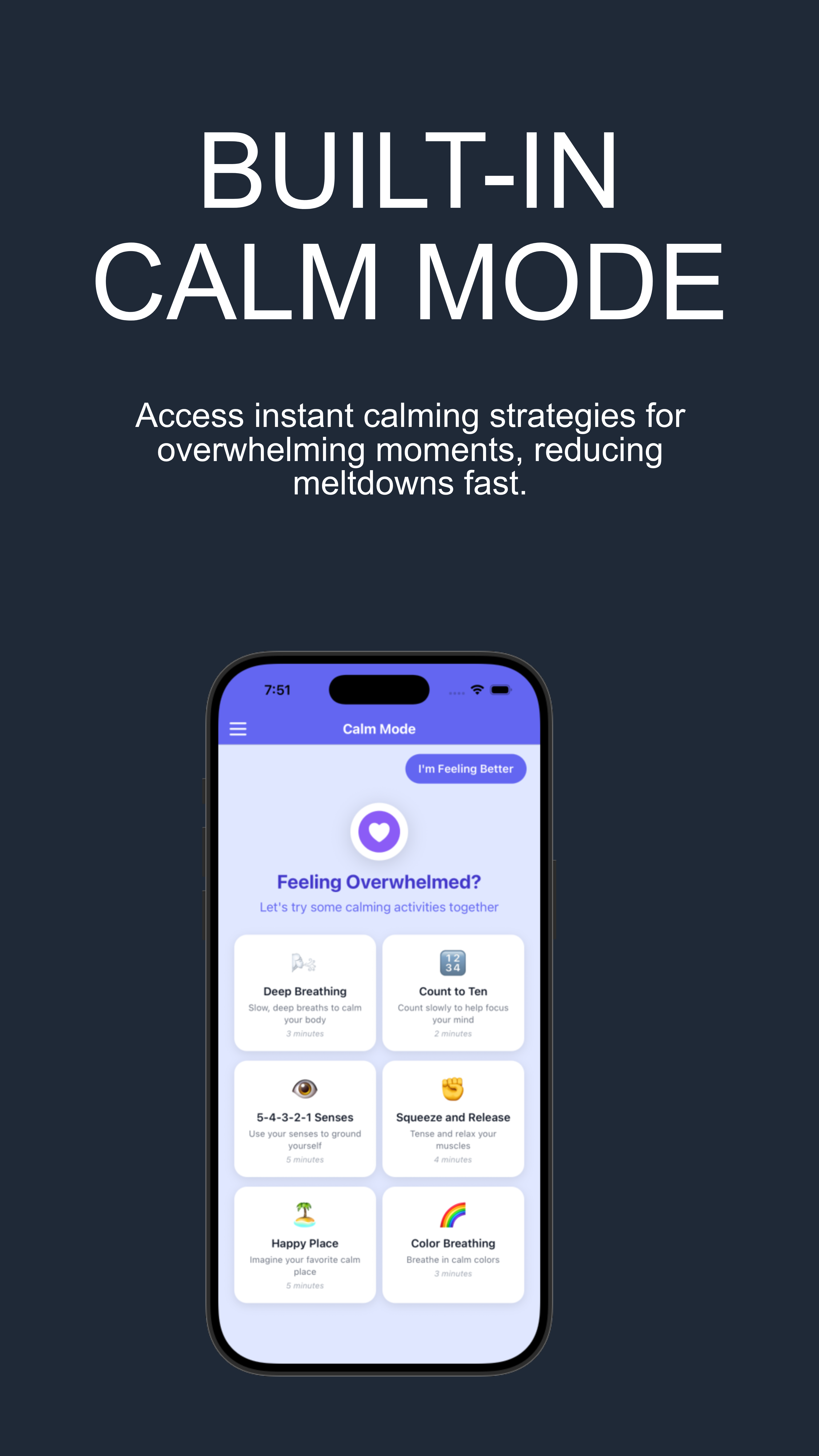
Download VizyPlan and start your 7-day free trial today. Build visual schedules with timed steps, reward systems that motivate, and social stories that prepare your child for waiting situations. If it helps, keep going for $6.99/month or $59.99/year.