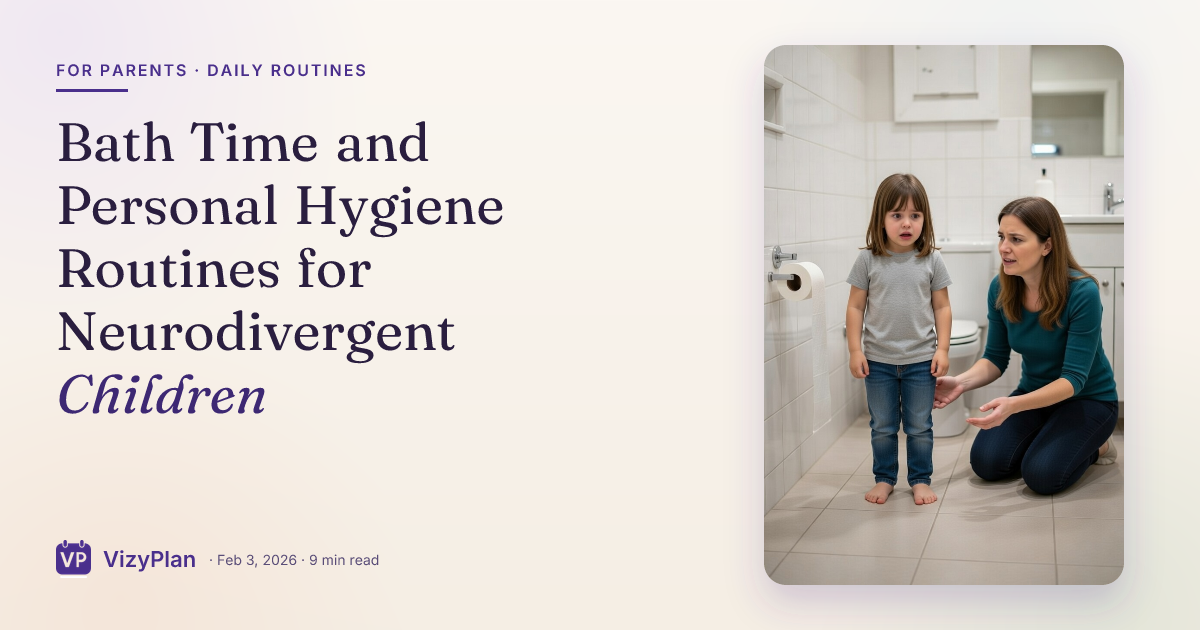
If bath time in your home involves tears, negotiations, or full-on meltdowns, you are not alone. For many families raising neurodivergent children, personal hygiene routines rank among the most stressful parts of the day. What seems like a simple task to most people, lathering up some soap, rinsing off, brushing teeth, can feel genuinely overwhelming for a child whose nervous system processes sensory input differently.
The good news? With the right strategies, tools, and a whole lot of patience, hygiene routines can become manageable and even enjoyable. This guide is written parent-to-parent, drawing from evidence-based approaches and real-world experience to help you build bath time and hygiene routines that work for your unique child.
Why Hygiene Routines Are Uniquely Challenging
Before we dive into solutions, it helps to understand why these routines are so hard in the first place. For neurodivergent children, particularly those with autism, ADHD, or sensory processing differences, hygiene tasks involve a perfect storm of challenges.
Sensory overload is everywhere. The bathroom is one of the most sensory-intense rooms in the house. Water temperature shifts, the sound of running faucets, the echo of tiles, slippery surfaces, bright overhead lights, and strong-smelling soaps all compete for your child's attention and can easily tip them into overwhelm.
Vulnerability and loss of control. Being undressed is an inherently vulnerable state. Many children feel a deep sense of unease when they lose the comforting pressure of their clothing. Add to that the unpredictability of water splashing on their face or someone else controlling the washcloth, and it is easy to see why bath time triggers a fight-or-flight response.
Tactile defensiveness plays a major role. Research suggests that tactile defensiveness affects up to 60% of autistic children, directly impacting their tolerance for hygiene-related sensations. The feeling of shampoo in hair, a toothbrush on gums, or a towel rubbing against skin can register as genuinely painful rather than merely uncomfortable.
Executive function demands. Hygiene routines involve multiple sequential steps, and for children with ADHD or executive function challenges, holding that sequence in mind while also managing sensory input is incredibly taxing.
Understanding these root causes is the first step toward compassion-driven problem solving. Your child is not being "difficult." Their nervous system is working overtime.
Understanding the Sensory Landscape of the Bathroom
To build better routines, it helps to think like an occupational therapist and map out the sensory landscape your child is navigating.
Tactile input includes the feel of water (its pressure, temperature, and movement), soap and shampoo textures, washcloth or sponge roughness, towel fabric, and the sensation of wet skin meeting cool air. Each of these can be a trigger point.
Proprioceptive input refers to your child's awareness of their body in space. Bathrooms often have slippery surfaces, making children feel physically unstable. This lack of grounding can increase anxiety. On the flip side, proprioceptive input like deep pressure or heavy work before bath time can actually help regulate the nervous system.
Interoception, the sense of internal body signals, also plays a role. Some children struggle to gauge water temperature accurately or may not recognize when they are clean. This can lead to resistance ("I don't need a bath!") or difficulty knowing when a task is complete.
Auditory input in the bathroom is amplified by hard surfaces. Running water, the whir of an electric toothbrush, or even the echo of a parent's voice can be overwhelming in a small, tiled space.
A practical starting point: Before changing anything about your routine, spend a few days observing. Which specific moments cause the most distress? Is it the sound of the water filling the tub? The feeling of shampoo? The transition from dressed to undressed? Pinpointing the exact triggers will help you target your strategies effectively.
Breaking Hygiene Into Manageable Visual Steps
One of the most evidence-based strategies for supporting neurodivergent children through hygiene routines is using visual schedules. Research consistently shows that visual schedules reduce anxiety by making sequences predictable. When a child can see exactly what is coming next, the uncertainty that fuels resistance melts away.
Rather than treating "bath time" as one large event, break it into smaller, distinct sequences.
A bath time visual schedule might look like this:
- Get towel and pajamas ready
- Undress and put clothes in hamper
- Get into the tub (or shower)
- Wet body
- Soap up with washcloth
- Rinse off
- Wash face
- Hair washing (if tonight is a hair wash night)
- Rinse hair
- Drain water and stand up
- Dry off with towel
- Put on pajamas
A toothbrushing visual schedule:
- Pick up toothbrush
- Put toothpaste on brush
- Brush top teeth
- Brush bottom teeth
- Brush tongue (if tolerated)
- Spit and rinse
- Put toothbrush away
The key is that each step is simple, concrete, and paired with a visual image your child can reference. With VizyPlan, you can create personalized visual schedules using AI-generated images that actually look like your child and your bathroom. This level of personalization makes the schedule feel familiar and relevant, which significantly increases buy-in from kids who might ignore generic clipart-style visuals.
Pro tip: Separate hair washing from the regular bath routine. Many children do much better when they know "tonight is NOT a hair wash night." Having a predictable schedule (for example, hair washing on Tuesdays and Saturdays) gives children a sense of control and reduces the nightly anxiety of wondering if tonight will involve the dreaded hair wash.
Hair Washing Strategies: Tackling the Most Dreaded Task
Let's be honest. Hair washing is often the single biggest hygiene battle for sensory-sensitive children. Water running over the face and head can trigger an intense fight-or-flight response, and the sensation of fingers scrubbing the scalp can feel deeply uncomfortable.
Here are strategies that occupational therapists recommend:
Start with dry runs. Before introducing water, practice the motions. Let your child feel your fingers gently massaging their dry scalp. Use a dry washcloth on their forehead. Practice tilting their head back. This gradual desensitization builds tolerance over time.
Rinse cups versus shower heads. Many children do better with a rinse cup because it provides more predictable, controlled water flow. Others prefer a handheld shower head because the steady stream feels less shocking than poured water. Let your child experiment to find their preference.
Visor shields are a game changer. A simple shampoo visor (a soft silicone ring that sits on the forehead) keeps water from running into the eyes and face. For many children, this single tool transforms hair washing from unbearable to tolerable.
Give your child the washcloth. Allowing your child to hold a dry washcloth over their eyes during rinsing gives them a sense of control and protects the most sensitive area.
Consider alternatives. Dry shampoo, no-rinse cleansing caps, or even just rinsing without shampoo on some nights can reduce the frequency of full hair washes while keeping hair reasonably clean.
Use gradual desensitization. Start with just wetting the hair. Next time, add a tiny bit of shampoo. Build up slowly over weeks or even months. Progress is progress, no matter how small.
Social stories can help prepare your child emotionally. A social story about hair washing, walking through why we do it, what it will feel like, and what comes after, reduces the fear of the unknown. VizyPlan's social stories feature lets you create these narratives with personalized visuals, making them far more relatable for your child.
Toothbrushing Solutions That Actually Work
Toothbrushing presents its own unique sensory challenges. The taste of toothpaste, the texture of bristles, the pressure on gums, and the sensation of foaming inside the mouth can all be problematic.
Experiment with toothbrush types. Electric toothbrushes provide proprioceptive input (vibration and deep pressure) that some children actually find regulating and calming. However, other children find the vibration overwhelming. There is no universal answer here. Try both manual and electric, and let your child's response guide you.
Offer flavor choices. Many children are sensitive to the strong mint flavor of standard toothpaste. Unflavored toothpaste, mild fruit flavors, or even brushing with just water initially can make the experience more tolerable. The goal is to build the habit first and optimize the toothpaste later.
Use a visual timer. A two-minute sand timer or a timer app gives toothbrushing a clear endpoint. Knowing exactly when it will be over helps children tolerate discomfort. VizyPlan's visual schedules can include built-in timing cues so your child always knows how long each step will take.
Let your child lead. Whenever possible, let your child brush their own teeth first. Even if their technique is not perfect, the sense of control reduces resistance. You can do a quick "parent check" brushing afterward if needed, but framing it as teamwork rather than something being done to them makes a real difference.
Positioning matters. Some children do better standing, others sitting. Some prefer to look in the mirror while brushing, while others find it distracting. A few even prefer lying down with their head in a parent's lap, which provides the added comfort of deep pressure and physical closeness.
Nail Clipping and Grooming: Small Tasks, Big Reactions
Nail clipping is a task that many parents dread almost as much as their children do. The sharp, sudden sensation of clippers and the sound of the clip can be genuinely distressing.
Timing is everything. Clip nails right after bath time when they are soft and pliable. This makes the process quicker and less physically intense.
Try filing instead. For children who cannot tolerate clippers at all, a nail file (or even an electric nail file designed for children) is a gentle alternative. It takes longer, but it eliminates the sharp sensation entirely.
Deep pressure before grooming. Occupational therapists often recommend providing proprioceptive input before grooming tasks. Firm squeezes to the hands, hand massages, or letting your child squeeze a stress ball can help regulate their nervous system before you begin.
Distraction can be your friend. Allow your child to watch a favorite show, listen to a story, or engage with a preferred toy during nail clipping. Pairing a non-preferred task with a preferred activity reduces overall distress.
One nail at a time is okay. If your child can only tolerate one or two nails per sitting, that is absolutely fine. It might take a few days to get through all ten fingers, and that is a perfectly valid approach.
.png)
Building a Sensory-Friendly Bathroom
Small environmental changes to your bathroom can make a surprisingly big difference in your child's comfort and cooperation.
Lighting. Harsh overhead fluorescent lights are a common trigger. Consider a dimmer switch, warm-toned LED bulbs, or even battery-powered LED candles to create a softer atmosphere. Some children do well with color-changing lights that let them pick the hue.
Temperature. Warm up the bathroom before your child enters. A small space heater running for five minutes before bath time can eliminate the shock of cold tile and cold air. Have a warm towel ready (straight from the dryer is a wonderful sensory experience for many kids).
Non-slip surfaces. Feeling physically unstable on wet, slippery surfaces increases anxiety. Non-slip mats inside the tub and on the bathroom floor provide physical security and proprioceptive grounding.
Sound. Playing your child's favorite music, an audiobook, or a familiar podcast can mask the echoing sounds of the bathroom and create a more pleasant atmosphere. Some children prefer complete silence, so follow your child's lead.
Predictable environment. Keep bath supplies in the same place every time. Use the same towel, the same cup, the same order. Predictability is profoundly calming for neurodivergent children. A visual checklist posted on the bathroom wall (at your child's eye level) reinforces this consistency.
Preferred items. Let your child choose their own towel color, soap scent, or bath toys. These small choices build ownership of the routine and increase willingness to participate.
Using Reward Systems to Build Hygiene Habits
Positive reinforcement is one of the most effective tools for building new habits, and hygiene routines are a perfect place to use it.
Celebrate small wins. Did your child let you pour one cup of water over their hair without crying? That is worth celebrating. Did they brush for thirty seconds instead of refusing entirely? Progress. Acknowledging small steps forward keeps motivation alive.
Visual progress tracking. Children respond powerfully to seeing their progress. A sticker chart, a marble jar, or a digital tracker where they can watch their achievements accumulate creates tangible motivation.
VizyPlan's built-in reward system makes this seamless. As your child completes each step of their hygiene routine, they earn rewards that are tracked visually within the app. Combined with emotion tracking, you can also see patterns over time. Maybe your child's mood is consistently better on nights when bath time includes their favorite music, or maybe shorter showers lead to less distress than longer baths. These insights help you continuously refine the routine.
Keep rewards proportional and immediate. For younger children, a small reward right after the routine (a favorite story, five minutes of screen time, a special sticker) is more effective than a distant reward promised for the end of the week.
Fade rewards gradually. The goal is for the routine itself to become familiar and tolerable. Over time, as your child builds comfort, you can gradually reduce external rewards as the routine becomes simply "what we do."
Building Independence Over Time
The ultimate goal of any hygiene routine is for your child to eventually manage it independently, or as independently as their abilities allow.
Set age-appropriate expectations. A four-year-old might simply stand in the tub while you do everything. A seven-year-old might soap up their own body while you handle hair washing. A twelve-year-old might manage the entire shower independently with a visual checklist on the wall. Meet your child where they are.
Visual checklists for self-care. As children grow, transition from parent-led visual schedules to self-directed checklists. A laminated card hanging in the shower that your child can check off with a dry-erase marker builds executive function skills alongside hygiene independence.
With VizyPlan, you can evolve your child's visual schedules as they grow. Start with highly detailed, step-by-step routines with AI-generated images for younger children. As your child matures, simplify the schedules to serve as quick-reference checklists that support independence rather than directing every action. The flexibility to customize and update routines means the tool grows with your child.
Practice during calm times. Teach new hygiene skills when everyone is relaxed, not in the heat of a difficult bath time. Role-playing with dolls, watching video models, or reading social stories about hygiene during the day can prepare your child for nighttime success.
Expect regression. Illness, schedule changes, growth spurts, and transitions (like starting a new school year) can all cause regression in hygiene tolerance. This is normal. When it happens, temporarily scale back expectations, increase support, and slowly rebuild.
How VizyPlan Supports Your Family's Hygiene Routines
Building consistent, calm hygiene routines for a neurodivergent child is one of the most challenging aspects of daily parenting. It requires patience, creativity, and the right tools.
VizyPlan was designed with exactly these challenges in mind. Here is how it can help:
- Personalized visual schedules let you break down bath time, toothbrushing, hair washing, and grooming into clear, predictable steps with AI-generated images tailored to your child.
- Social stories help prepare your child emotionally for challenging hygiene tasks, reducing fear and resistance before the routine even begins.
- Emotion tracking helps you identify patterns, discovering which strategies improve your child's experience and which need adjusting.
- Reward systems celebrate every small win and keep your child motivated as they build new habits.
- Flexible, evolving routines grow with your child, supporting detailed guidance for younger kids and promoting independence for older ones.
You know your child best. VizyPlan simply gives you the tools to turn that knowledge into structured, visual support that meets your child where they are.
Start your 7-day free trial today. If it helps, keep going for $6.99/month or $59.99/year. Because every child deserves a hygiene routine that feels safe, predictable, and maybe even a little bit fun.