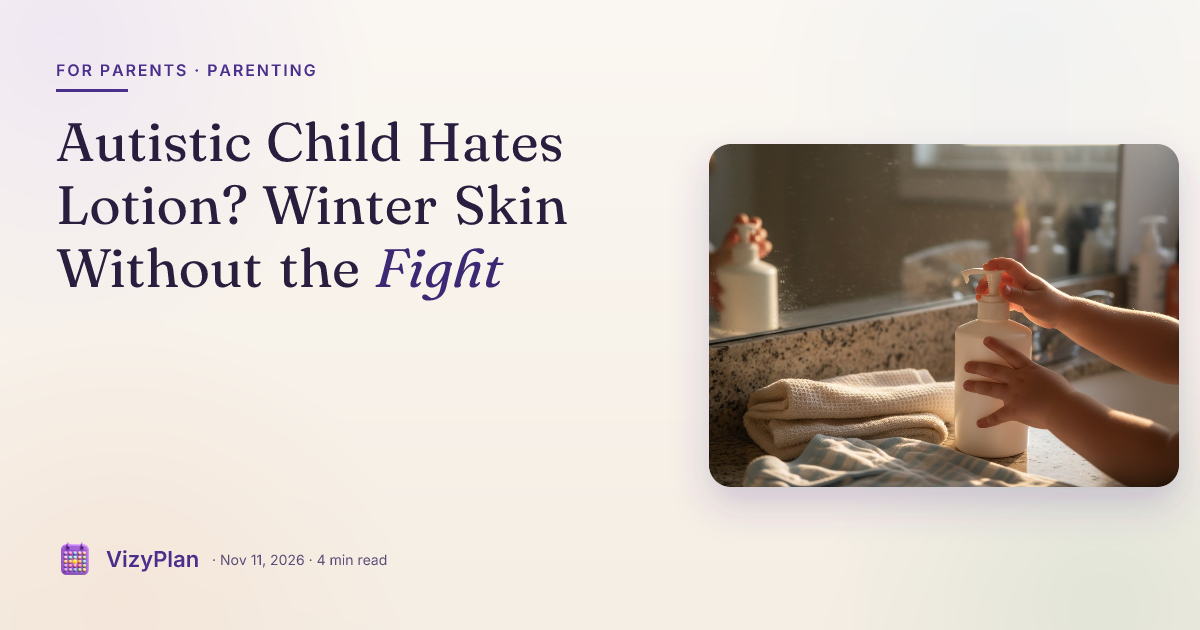
The heat kicks on, the air goes dry, and by mid-November my son's hands look like sandpaper and his lips are cracked at the corners. The fix sounds simple: put on lotion. But if your autistic child hates lotion, you already know the bottle is not the hard part. The cold, wet, slippery feeling on the skin is.
Lotion asks a lot of a sensory system. A cold squirt, a strong smell, light stroking touch and a sticky feeling that lingers for minutes afterward, all at once. The good news is that each of those pieces can be changed, and the skin care that dermatologists recommend for winter actually lines up well with what sensory-sensitive kids tolerate.
Why an autistic child hates lotion
Touch is one of the senses where many autistic kids feel the world more intensely. A 2018 review in Developmental Cognitive Neuroscience by Mikkelsen and colleagues notes that up to 95% of parents report some differences in how their autistic child processes sensory input, and it gives tags in shirts as an everyday example of touch that feels like too much. The CDC lists unusual reactions to the way things feel among the signs of autism.
So when your autistic child hates lotion, the refusal is information, not defiance. Light, unpredictable touch on bare skin is often the hardest kind of touch for a child with tactile sensitivity. Lotion delivers exactly that, usually right when a child is wet, cold and tired after a bath.
What winter does to skin
According to the American Academy of Pediatrics, children's skin is thinner than adult skin and loses moisture more easily, and forced-air heat dries out indoor air. The AAP suggests short, lukewarm baths, fragrance-free cleansers, patting skin dry instead of rubbing, and moisturizing right after the bath while skin is still damp, at least twice a day.
The American Academy of Dermatology adds that thicker products such as creams and ointments work well, that plain petroleum jelly is an affordable fragrance-free option, and that some trial and error with different products may help you find the right one.
Here is the encouraging part for families whose autistic child hates lotion: thick, unscented ointments often go on in smaller amounts than runny lotion, with no smell and no cold splash.
Make the product easier to tolerate
- Go unscented. Smell is a sense too. Look for "fragrance free," which the AAD recommends for sensitive skin anyway.
- Try thicker, not thinner. An ointment or cream may feel less wet and drippy than lotion. Let your child touch a few samples with one fingertip and pick a favorite.
- Warm it first. Rub the cream between your palms for a few seconds so the first touch isn't cold.
- Pump versus jar. Some kids like the predictability of a pump: one push, one amount, every time. Other kids prefer a jar they can dip a finger into. Try both and follow your child's lead.
- Lips get their own plan. The AAD suggests a fragrance-free, non-irritating lip balm several times a day and before bed, a thick ointment such as white petroleum jelly for very dry, cracked lips, and stopping lip licking, which makes lips drier. A stick balm your child swipes on independently is often easier than a parent's finger near the mouth.
Enjoying this article?
Get practical tips and insights delivered to your inbox — no spam, ever.
A calmer routine for when your autistic child hates lotion
- Show the steps first. Use the same short picture sequence every time: bath, towel, lotion, pajamas, favorite thing. Knowing what comes next makes the hard part shorter.
- Let your child apply it. Put a dot of cream on the back of their hand and let them spread it. Control often turns "no" into "I'll do it."
- Use firm, steady pressure. Many kids who flinch at light stroking tolerate firm, flat-palm pressure much better. Press and hold rather than rub, and ask your child's occupational therapist what kind of touch works best for them.
- Time it right after the bath. Pat skin dry, then moisturize within a few minutes while skin is still damp, as both the AAP and AAD recommend. Doing lotion at the same point every night makes it predictable.
- Start small. Begin with just hands and lips, the spots that crack first. Add arms or legs once the routine feels routine.
- Count it out. "Ten presses on this arm, then done" gives a clear ending. Counting down out loud helps the time feel finite.
- Pajamas on right away. Soft cotton pajamas straight after moisturizing cover the sticky feeling fast. The AAP recommends cotton clothing next to dry skin.
If bath time itself is the battle, our guide to bath time and hygiene routines breaks that part down, and the winter coat sensory guide covers the other big texture fight of the season.
When to see the pediatrician or dermatologist
Dry skin and eczema can look alike, and only a doctor can tell you which one your child has. Call your pediatrician if dry, itchy skin doesn't get better after a few weeks of these changes, if there are red, rough or weepy patches, if itching keeps your child up at night, or if skin looks cracked, bleeding or infected. The AAP has a helpful overview of eczema in children, and the AAD suggests seeing a board-certified dermatologist if chapped lips do not heal after two to three weeks of good care.
When you go, tell the doctor plainly that your autistic child hates lotion. Your child's sensory needs are part of the treatment plan, and a doctor can suggest a product or schedule your family can actually stick with. Our guide to sensory processing and daily routines is a good companion for that conversation.
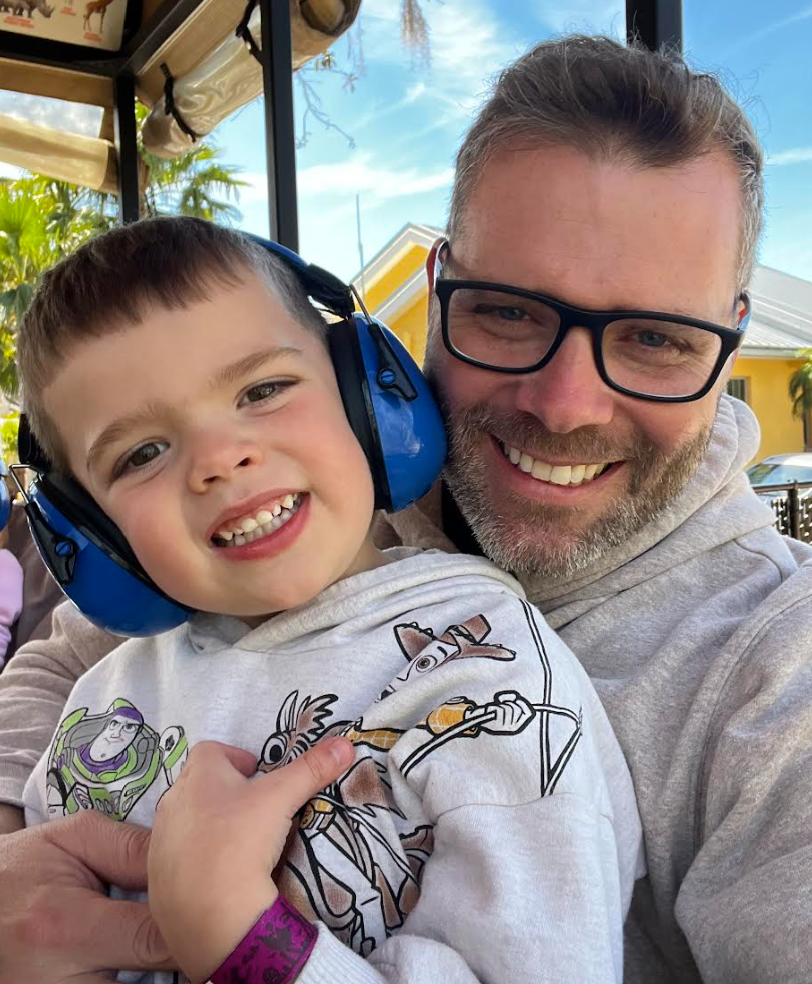
VizyPlan was built by an autism dad and an autism mom who is a licensed speech-language pathologist so the bath, the lotion and the favorite thing at the end can be a picture routine your child already knows before the first cold snap.
Download VizyPlan and start your 7-day free trial today. Build the after-bath routine tonight. If it helps, keep going for $6.99/month or $59.99/year.
VizyPlan was built by an autism dad and an autism mom who is a licensed speech-language pathologist who needed something that did not exist. Start your free trial.