Families raising bilingual autistic children often arrive at your clinic having already heard the same advice from someone: pick one language, usually English, and stop using the other at home. The advice sounds cautious. The research does not support it, and following it can cost a family the language a grandmother uses at dinner, the songs a parent knows by heart and the easiest way that parent has to connect.
Your caseload likely includes more of these families every year. Here is what the evidence says, and a practical plan for SLPs, OTs and BCBAs.
What the research says about bilingual autistic children
The question has been studied for more than a decade, and the findings point the same way.
A 2012 study in the Journal of Autism and Developmental Disorders by Hambly and Fombonne compared 45 autistic children raised in bilingual homes with 30 raised in monolingual homes, at an average age of about four and a half. The bilingually exposed children did not show additional delays in language development.
A systematic review by Drysdale, van der Meer and Kagohara in the Review Journal of Autism and Developmental Disorders pulled together eight studies covering 182 autistic children and 62 parents. The studies did not suggest that bilingualism harms language development, yet many parents reported that professionals had advised them against a bilingual home.
A larger 2023 systematic review in the journal Autism by Gilhuber, Raulston and Galley looked at 22 group-comparison studies of multilingual autistic children aged 1 to 12. The authors found no indication that exposure to more than one language had adverse effects, and they wrote that no scientific evidence supports the clinical recommendation of a monolingual environment. Parents again reported being told to use only one language, advice the authors noted could strain family interactions.
Some research even hints at an upside. In a small 2019 study in Child Development, Gonzalez-Barrero and Nadig found that bilingual autistic children aged 6 to 9 did better than monolingual autistic peers on the harder part of a task-switching test (ScienceDaily summary). With only ten children per group, treat that finding as promising, not proven.
One honest caveat: most of these studies excluded children with intellectual disability or complex communication needs, so the evidence is thinnest for those clients. Even there, no study shows that dropping the home language helps.
What ASHA says to providers
The ASHA Practice Portal on multilingual service delivery asks clinicians to advocate for the benefits of multilingualism, especially for families who have been told to avoid a language with their children. The portal also says the language of intervention should be decided with the client and family, based on language history, how often each language is used and the family's goals. Being multilingual is not itself a communication disorder.
OTs and BCBAs can borrow the same principle. A morning routine, a calming strategy or a toilet training plan works best in the language the family actually speaks at 7 a.m.
Enjoying this article?
Get practical tips and insights delivered to your inbox — no spam, ever.
A provider plan for bilingual autistic children
- Ask about language at intake, in detail. Which languages are spoken at home, by whom, and in which routines? Who reads which written language? Some families speak one language and read another, and some spoken languages have no common written form.
- Book a trained interpreter, not a family member. ASHA's page on collaborating with interpreters recommends trained interpreters whenever possible and limits family or friends to occasional use, such as when the family prefers it or other options are exhausted. Siblings and other minors should not interpret, because the role asks for emotional maturity and puts a child in the middle of hard conversations.
- Brief and debrief the interpreter. Share the session goals, names, key words and any visuals ahead of time. Afterward, ask what the interpreter noticed and whether a response looked like a language difference rather than a skill gap.
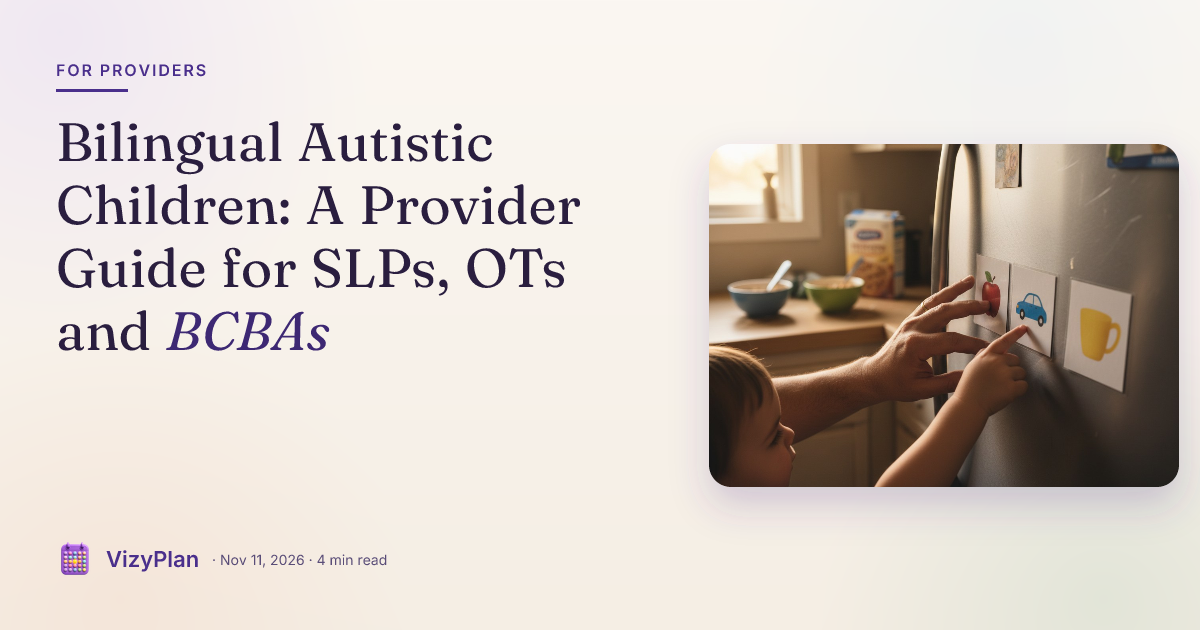
- Make visual supports bilingual. Label each picture in both languages, or in the language the parent reads best. ASHA also notes that machine translation does not replace qualified human translation, so ask the family or interpreter to check the words.
- Set goals with the family, not for them. Ask what a good day looks like in their home. A goal like "asks for help during dinner" may matter more in the home language than any target in English.
- Coach carryover in the home language. Parents coach best in the language they think in. Give them strategies they can use in that language rather than English scripts they will not use.
Visual supports carry well across languages because a picture of a toothbrush means the same thing at grandma's house and in your clinic. Our guide to AAC and visual schedules for home carryover shows how to set those up.
Culturally responsive goals for bilingual autistic children
Routines look different from family to family. Mealtimes, sleep arrangements, who helps with dressing and how independence is valued all vary. Before writing a self-care goal, ask whether the family wants the goal at all, and when. Our guides on parent-friendly therapy goals and neurodiversity-affirming practice go deeper on building goals that families recognize as their own.
The bottom line for bilingual autistic children: support both languages, stop recommending families drop one, and build every home plan in the language the family lives in.
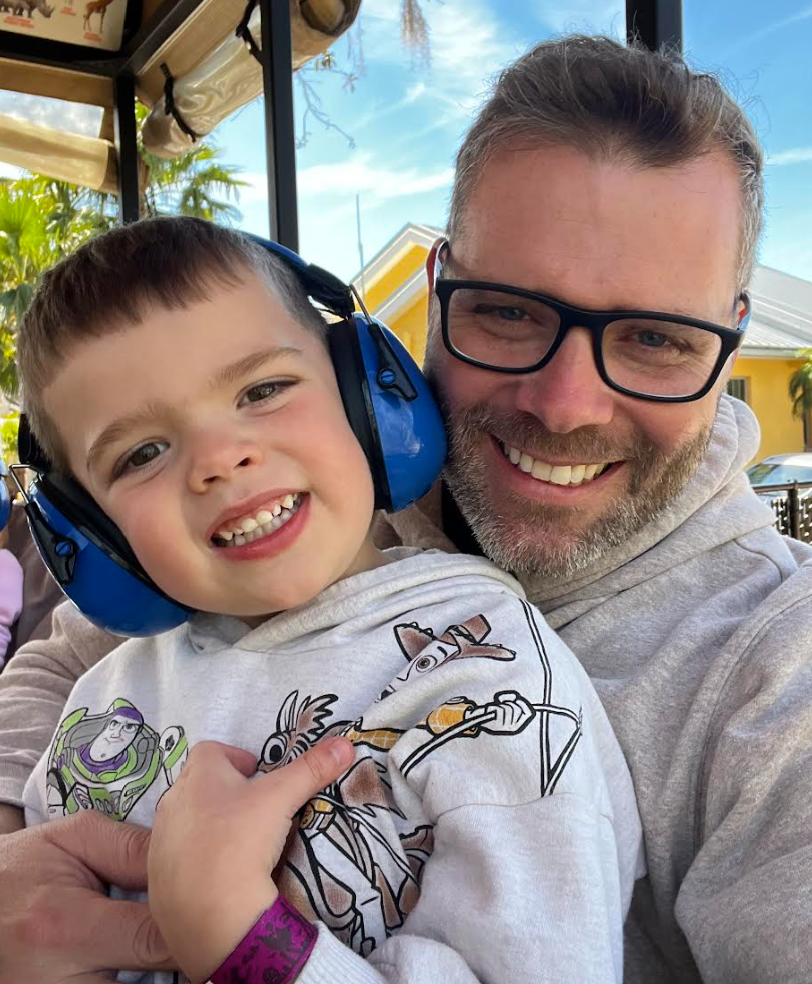
VizyPlan was built by an autism dad and an autism mom who is a licensed speech-language pathologist so a family can build picture routines with their own words and pictures, the same ones they use at home.
Share VizyPlan with your families so the routines you build with bilingual autistic children keep going at home, in the family's language. The 7-day free trial lets a family try it first. If it helps, keep going for $6.99/month or $59.99/year.
VizyPlan was built by an autism dad and an autism mom who is a licensed speech-language pathologist who needed something that did not exist. Explore VizyPlan.