
You wrote a good goal. Given a visual prompt, the client will independently initiate a three-step morning sequence with 80 percent accuracy across three consecutive sessions. It is measurable, defensible at authorization review, and exactly what the funder wants. And the parent holding that page still does not know what to do on Tuesday morning. Parent-friendly therapy goals are not a softer version of clinical rigor. They are the difference between a plan that lives in a chart and a plan that runs at home.
The readability gap has not moved in thirty years
The problem is bigger than autism therapy. A 2025 systematic review of systematic reviews in Patient Education and Counseling pooled 24 reviews covering 29,424 written patient materials across 438 studies and found most exceeded the recommended sixth to eighth grade reading level, with no measurable improvement between 2001 and 2022. That is a default clinicians have to actively work against.
The audience is not reading at graduate level either. In the National Assessment of Adult Literacy, only 12 percent of U.S. adults scored proficient in health literacy (Orthopaedic Nursing, 2009). Those figures come from 2003 data, so treat the number as dated. The direction is not in dispute.
Jargon fails parents at every education level
A cognitive-interview study found parents across all education and literacy levels stumbled over routine clinical terms. Small sample, prenatal rather than autism therapy, so read it as illustration rather than prevalence. A parent with a graduate degree can still be stopped cold by antecedent, mand, or latency to initiation.
Vocabulary is only part of it. A systematic review of 79 publications in Implementation Science found the top barrier to shared decision making in pediatrics was the emotional state of the parent and child, followed by power imbalance and, on the clinician side, not enough time. A family absorbing a hard week does not need more words. They need fewer, clearer ones.
Enjoying this article?
Get practical tips and insights delivered to your inbox — no spam, ever.
How to write parent-friendly therapy goals
- Write the clinical goal, then write the Tuesday version. Keep the measurable goal for the chart and add one plain sentence underneath describing what the parent does and when.
- Name the routine, not the construct. Getting shoes on before the bus travels further than improving task initiation.
- Move the percentages off the family copy. Mastery criteria belong on your data sheet, not in the hands of a parent trying to get out the door.
- Show the goal instead of spelling it. A short sequence of photos of the actual child communicates a target faster than a paragraph.
- Ask the parent to say it back. If they cannot repeat the goal in their own words, the goal is not written yet.
Share the measuring, not just the wording
A 2024 review in the Journal of Patient-Reported Outcomes found that while 76 percent of goal-attainment trials set goals collaboratively with caregivers, it was clinicians, not caregivers, who almost always judged whether the goal had been met. Families get invited to choose the destination and then left out of reading the map. Our post on a shared visual system across settings goes deeper.
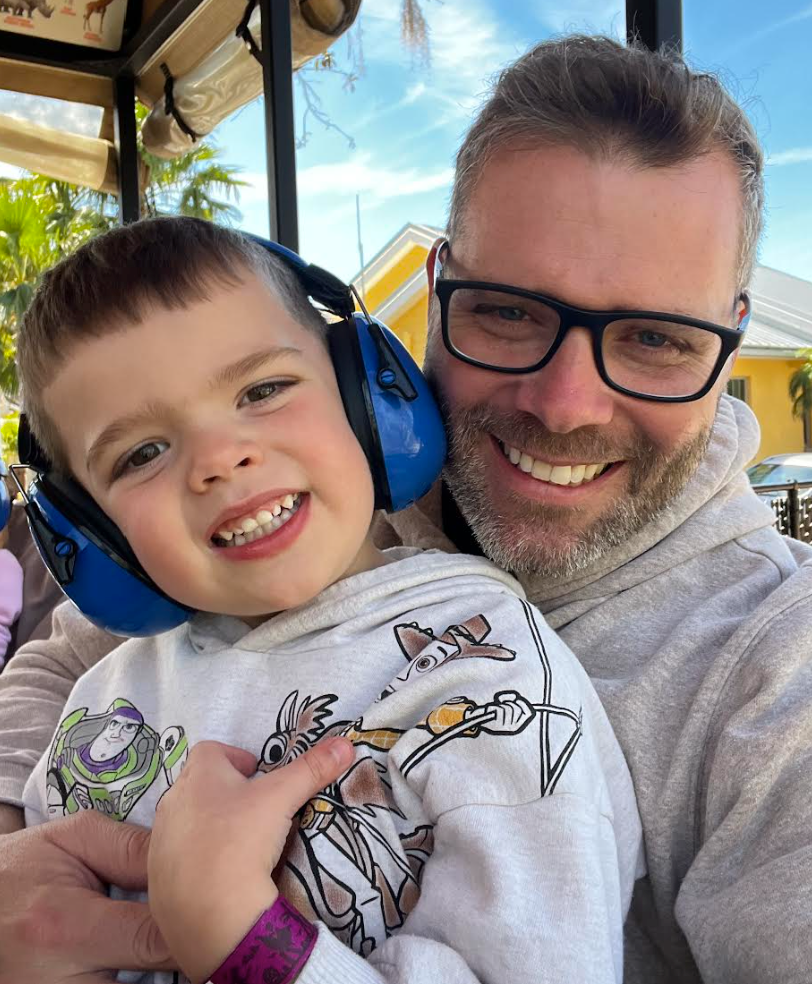
VizyPlan was built by an autism dad and a licensed speech-language pathologist so a goal you write in session shows up at home as a visual routine, in photos of the real child rather than clinical language.
Share VizyPlan with your families so your goals travel home in a form parents can use. The 7-day free trial lets a family try it first. Just $6.99/month after, no credit card required upfront.
VizyPlan was built by an autism dad and a licensed speech-language pathologist who needed something that did not exist. Explore VizyPlan.