It is April, which means your social media feed is full of infinity symbols, red hashtags, and posts about Autism Acceptance Month. Celebrities are sharing infographics. Brands are turning their logos gold. Everyone, it seems, has something to say about acceptance.
And then you close your phone and walk into your kitchen, where your child is screaming because the toast broke in half and now the whole morning is ruined.
That is the gap this post is about. Not the public performance of acceptance, but the private, unglamorous, Tuesday-at-7 a.m. version. The one that happens when nobody is watching and there is no hashtag for what you are feeling.
The Gap Between the Feed and the Floor
Here is what autism acceptance looks like on Instagram: a smiling child in a graphic tee that says "different not less." A parent holding a sign at a walk. A beautifully designed quote about neurodiversity being a superpower.
Here is what autism acceptance looks like in your house: sitting on the bathroom floor at 9 p.m. because your child cannot brush their teeth without gagging and you are trying to figure out if you should push through or let it go. Canceling plans again because today is not a "going places" day. Watching other four-year-olds have conversations at the playground while your child lines up wood chips in a row, alone, and you feel something you cannot name.
The gap between those two versions is where most parents actually live. And it is in that gap where real acceptance has to be built, if it is going to mean anything at all.
What Acceptance Is Not
Before we talk about what acceptance is, let me be honest about what it is not. Because there is a version of "acceptance" floating around that makes parents feel worse, not better.
Acceptance is not pretending everything is fine. If your child is struggling, you do not have to smile and call it beautiful. Struggle is struggle. It can coexist with love and acceptance, but you do not have to perform joy about the hard parts.
Acceptance is not ignoring challenges. Your child may need speech therapy, occupational therapy, behavioral support, or all three. Seeking help for your child is not a rejection of who they are. It is an investment in giving them tools to navigate a world that was not built for their brain.
Acceptance is not toxic positivity. "Everything happens for a reason." "God gives special children to special parents." "They will grow out of it." These phrases are not acceptance. They are avoidance dressed up in a greeting card font.
Acceptance is not the absence of grief. This is the one that trips up the most parents, so I want to be very clear: you can grieve and accept at the same time. They are not opposites. Grief is not a sign that you have failed at acceptance. It is a sign that you are human, that you love your child, and that some of this is genuinely hard.
What Acceptance Actually Is
So if acceptance is not a hashtag and it is not toxic positivity, what is it?
It is a series of small, daily decisions that change how you see your child and how your child sees themselves.
Adjusting Expectations to Match Your Child's Neurology
This is the foundation. Your child's brain is wired differently. Not worse, not broken, but differently. And that means the milestones, timelines, and benchmarks you absorbed from parenting books, pediatrician charts, and other families may not apply.
Acceptance means stopping the mental comparison and asking instead: what is realistic for this child, with this brain, at this moment?
Maybe your five-year-old cannot sit through a restaurant meal. That is not a failure of parenting or a behavior problem. It is a sensory and executive function reality. Acceptance looks like eating at home more often, choosing restaurants with outdoor seating, or going during off-peak hours instead of forcing your child into an environment that overwhelms them and then being frustrated when they cannot cope.
Stopping the Comparison Game
You know the game. You play it at the playground, at birthday parties, at school pickup. You watch the neurotypical kids and you measure the distance between them and your child.
Acceptance is choosing, over and over, to stop measuring that distance. Not because it does not exist, but because it tells you nothing useful. Your child is not on the same path as those children. They are on their own path, with their own pace.
Letting Go of the Timeline
"They should be talking by now." "They should be potty trained by now." "They should be able to handle this by now."
Should, according to whom?
Acceptance means releasing the "by now" and replacing it with "not yet" or even "maybe never, and that is okay too." Some milestones will come late. Some will come in unexpected forms. Some may not come at all, and your child will find their own way to navigate those spaces.
Celebrating Different Kinds of Progress
When you let go of the standard milestones, you start to see the ones that actually matter for your child.
Today they tolerated the hand dryer in the bathroom without covering their ears. Today they pointed at something they wanted instead of screaming. Today they let their sibling sit next to them on the couch.
These are enormous victories. They do not show up on any developmental chart, but they represent real neurological growth, real emotional work, real bravery from a small person navigating a world that is too loud, too bright, and too unpredictable.
Tracking these moments matters. Not for data, but for perspective. On the hard days, and there will be many, you need evidence that progress is happening.
Accommodating Instead of Forcing Compliance
This is where acceptance gets practical, and sometimes controversial.
The old model of autism parenting was built on compliance: make the child fit the environment. Sit still. Make eye contact. Use your words. Stop flapping. Be quiet. Act normal.
Acceptance flips this. Instead of asking "how do I make my child behave in this situation?" you ask "what does my child need to function in this situation?"
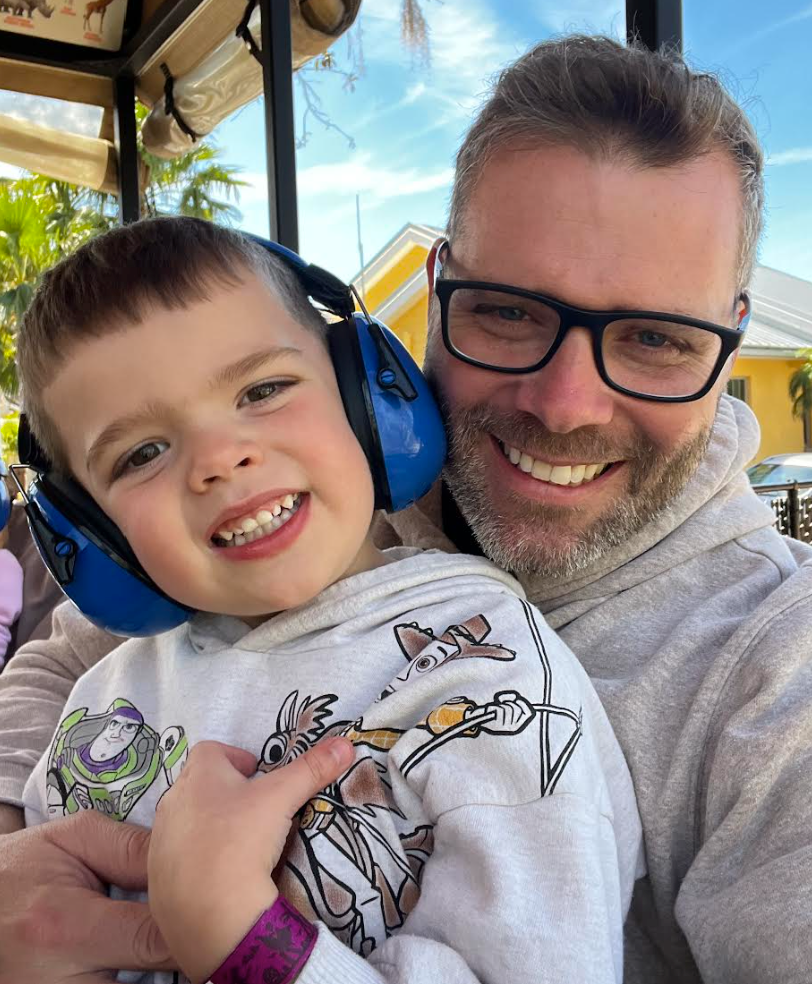
Maybe they need noise-canceling headphones at the grocery store. Maybe they need a visual schedule so they know what is coming next. Maybe they need to leave the birthday party after thirty minutes. Maybe they need to stim during class because it helps them focus.
These are not accommodations that spoil your child. They are accommodations that respect your child's neurology.
Enjoying this article?
Get practical tips and insights delivered to your inbox — no spam, ever.
How Acceptance Changes Your Parenting
When you move from "fix the behavior" to "understand the need," everything shifts.
Your child is not giving you a hard time. They are having a hard time. That reframing, which you have probably heard before, is acceptance in a single sentence.
A meltdown is not defiance. It is dysregulation. Rigidity is not stubbornness. It is a coping mechanism for a world that feels chaotic. Avoidance is not laziness. It is anxiety.
When you parent from acceptance, you stop fighting the behavior and start addressing the root cause. You move from consequences to co-regulation. You move from punishment to problem-solving. You move from "what is wrong with you?" to "what do you need?"
Acceptance and Your Child's Self-Image
Here is the part that makes this urgent and not just philosophical: your child is watching how you respond to their neurodivergence. And from your response, they are building their understanding of themselves.
If they see frustration every time they struggle, they learn: I am a problem. If they see disappointment when they cannot do what other kids do, they learn: I am not enough.
But if they see patience when things are hard, they learn: hard things are okay. If they see accommodation instead of forced compliance, they learn: my needs matter. If they see you celebrating their strengths, they learn: I have value exactly as I am.
This is why telling your child about their diagnosis matters, when the time is right. Because a child who understands their own brain is a child who can advocate for themselves. And self-advocacy starts with self-acceptance. And self-acceptance starts with you.
Teaching Your Child to Accept Themselves
You cannot hand your child a pamphlet on self-acceptance. But you can model it in how you talk about their brain.
"Your brain works differently, and that is why loud sounds feel so big to you. Let us figure out what helps."
"Some kids can sit still for a long time. Your body needs to move. That is okay. Let us find ways to move that work at school."
"You are not bad at making friends. You make friends differently. Let us practice some ways to say hello that feel comfortable for you."
Language matters. The words you use become the words they use inside their own head. Make those words kind. Make them honest. Make them accepting.
You can also build acceptance into daily routines. VizyPlan lets you create visual routines that are designed around your child's actual needs, not around what a "typical" child's day should look like. When a child follows a routine that was built for their brain, the implicit message is: your way of doing things is valid.
The Grief That Coexists
I said we would come back to this, so here it is, the honest part.
You can accept your child completely and still grieve sometimes. Grief does not mean you wish your child were different. It can mean you wish the world were easier for them. It can mean you are mourning the parenting experience you imagined before you had the parenting experience you got. It can mean you are exhausted and scared and wondering if you are doing enough.
That grief does not disqualify you from acceptance. It qualifies you. Because acceptance that has never been tested by hard feelings is just theory. Acceptance that survives the grief, that coexists with the tears and the fear and the 2 a.m. worry, that is the real thing.
You do not need to resolve the grief to be an accepting parent. You just need to keep choosing your child, as they are, in the middle of it.
Acceptance Is Not a Destination
You will not wake up one Tuesday and think, "I have arrived at acceptance." It is not a place you get to. It is a practice you return to, over and over, on good days and terrible ones.
Some days acceptance will feel easy and natural. Your child will do something extraordinary in their own way, and your heart will crack open with pride, and you will not need anyone to tell you that your kid is amazing.
Other days acceptance will feel like a discipline. You will be tired. You will be frustrated. You will catch yourself thinking thoughts you are not proud of. And then you will take a breath, and you will come back. You will come back to the child on the floor, the child who needs you to see them, not the version of them you imagined, but the version of them who is right here, right now, real and whole and yours.
That is what acceptance looks like at home. Not a hashtag. Not a bumper sticker. Not a perfect parent who never struggles.
Just a parent who keeps showing up, keeps adjusting, keeps learning, and keeps choosing their child exactly as they are.
That is enough. You are enough.
Download VizyPlan and start your 7-day free trial today. Build visual routines designed around your child's actual needs, track emotional patterns and celebrate real progress, and support self-advocacy and self-acceptance one day at a time. Just $6.99/month after your trial, no credit card required upfront.
VizyPlan was built by an autism dad who sat on his living room floor and needed something that did not exist. Now it does. Start your free trial and give your child the tools to see their day and navigate it with confidence.