
Belonging should not require a costume. Homecoming spirit weeks land in late September and October, and for most of your class they are the best week of the fall. Spirit week for autistic students is often three things at once: a sensory test, a week of unknowns, and a social exam with a partner requirement. None of that is a reason to cancel crazy hair day. All of it is a reason to plan it.
What the research says about dress-up days
Sensory over-responsivity is not a preference. A meta-analysis of 55 studies covering more than 4,600 autistic people found large differences in over-responsivity compared with peers, and it was the one sensory pattern that also separated autism from other clinical groups. A hat that itches, a pajama waistband, hair gel drying on the scalp: these register as real discomfort, not fussiness, and they last all day.
The second layer is uncertainty. Boulter and colleagues found that intolerance of uncertainty explains much of the anxiety autistic children carry, and a 2020 meta-analysis confirmed the link is strong. Five days where the rules change daily is a week built out of the exact thing that fuels that anxiety. The third layer is social. Twin day requires a twin, and a student who does not have one learns that publicly.
Visual supports remain one of the best-evidenced practices for exactly this situation. The National Clearinghouse on Autism Evidence and Practice counts more than 100 studies behind them, across every school age.
How to plan spirit week for autistic students
- Send the week home ten days early, with a photo for each day. A picture of what "wacky Wednesday" looks like on a real kid replaces a week of guessing. Families can build it into the morning routine at home; the one-page profile you collected in August tells you which families need it most.
- Give every theme a quiet version. Pajama day can be soft pants and a hoodie. Crazy hair can be a hat. Team colors can be one sock. Say the quiet version out loud when you announce the day, so choosing it is not a confession.
- Keep the actual schedule unchanged. Spirit week is about clothes, not the timetable. If the pep rally moves specials, that is a schedule change with its own warning; classroom transition warnings covers how to give it.
- Arrange the pairs before twin day. Assign partners or make it "twin with your table." Do not let the pairing happen in the hallway.
- Never tie participation to points, prizes, or a class competition. Opting out should cost nothing and require no note.
- Debrief with the family after. Which day worked and which one did not is the plan for picture day, Halloween, and the next spirit week.
The goal is not for every student to wear the hat. The goal is for every student to end the week still feeling like part of the class.
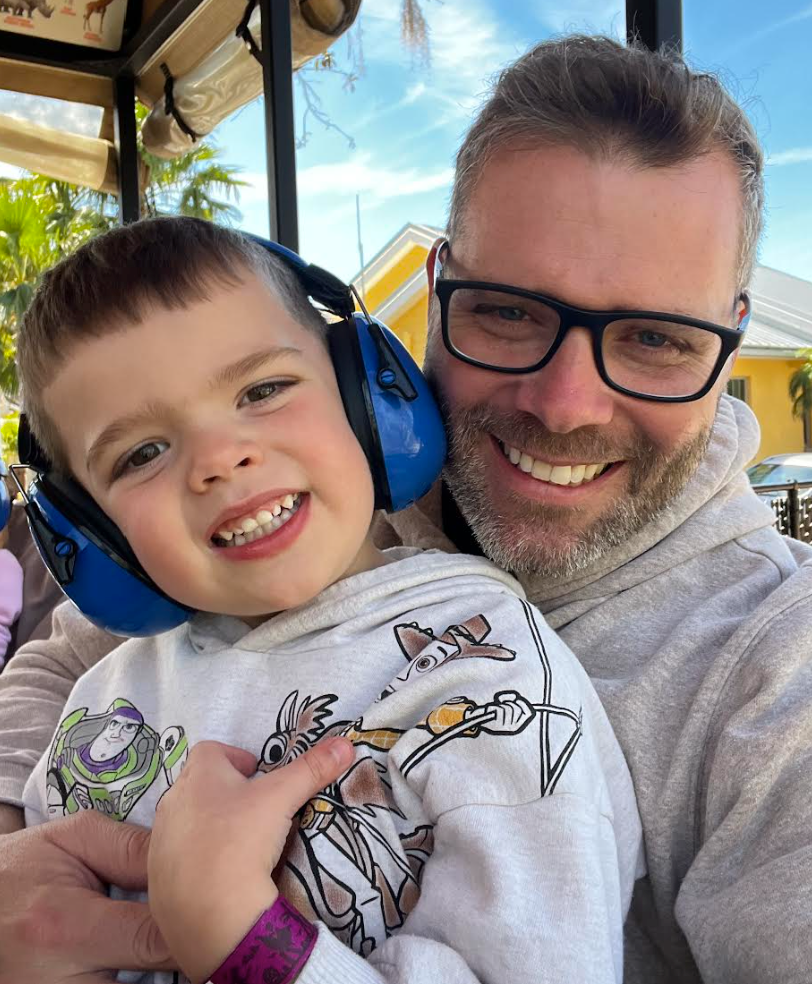
VizyPlan was built by an autism dad and an autism mom who is a licensed speech-language pathologist so a family can build each spirit day into the morning routine at home, with a photo of the outfit, before the school bus arrives.
Enjoying this article?
Get practical tips and insights delivered to your inbox — no spam, ever.
Share VizyPlan with your families so the spirit week calendar you send home becomes a routine the student has already seen. The 7-day free trial lets a family try it first. Just $6.99/month after, no credit card required upfront.
VizyPlan was built by an autism dad and an autism mom who is a licensed speech-language pathologist who needed something that did not exist. Explore VizyPlan.