Every K-8 teacher has met this student: the one who reads a page aloud with perfect fluency, then cannot say why the character was upset. Reading comprehension for autistic students often looks uneven like that. The words come easily. The meaning underneath the words takes more support, and the right support is very teachable.
A student who reads accurately is not automatically a student who understands. Seeing the difference early saves months of frustration for everyone.
What the research says about reading comprehension for autistic students
A 2006 study by Nation, Clarke, Wright and Williams tested 41 autistic children aged 6 to 15. On average, word reading, nonword decoding and reading accuracy were in the typical range, but reading comprehension was lower. Some children read accurately yet understood very little, a pattern often called a hyperlexic profile. Others struggled with decoding too. The authors described the group as heterogeneous, which is the first lesson for teachers: assess each student, do not assume.
A 2013 meta-analysis by Brown, Oram-Cardy and Johnson pooled 36 studies and found autistic readers scored lower on comprehension than comparison groups overall. Two findings matter most in a classroom. First, vocabulary and word knowledge, along with decoding, were the strongest predictors of comprehension. Second, autistic readers had more difficulty with highly social texts than with less social ones. The authors also concluded that an autism diagnosis alone does not predict a comprehension difficulty, so many autistic students are strong comprehenders.
Social texts are hard for a clear reason. Stories ask readers to guess what a character thinks, feels or wants, often without saying so. A nonfiction passage about volcanoes states its facts on the page.
What works: graphic organizers, explicit teaching and visual questions
Two research reviews point in the same direction. El Zein, Solis, Vaughn and McCulley (2014) synthesized K-12 reading comprehension studies with autistic students and found promise for graphic organizers, explicit strategy instruction, question generation and anaphoric cuing, which means teaching students to link a pronoun like "she" back to the right name.
Finnegan and Mazin (2016) reviewed 15 studies and found direct instruction, cooperative learning such as peer tutoring, and graphic organizers had strong effects, with graphic organizers the most effective of the group. Both reviews note the evidence base is still small, so pair these strategies with your own progress checks.
The common thread in reading comprehension for autistic students is simple. Make the invisible parts of a story visible, then teach the thinking steps out loud instead of hoping a student absorbs them.
Enjoying this article?
Get practical tips and insights delivered to your inbox — no spam, ever.
A teacher plan for reading comprehension for autistic students
- Check comprehension separately from fluency. After a student reads, ask two or three questions about the passage. A student who reads smoothly but cannot retell the main event needs comprehension support, not more fluency practice.
- Pre-teach key vocabulary. Because word knowledge predicts comprehension so strongly, pick three to five words before the reading and pair each with a picture or a quick example.
- Use a story map for every narrative. A simple organizer with boxes for characters, setting, problem, events and solution turns a story into a structure the student can see. Fill it in together at first, then fade your help.
- Give visual question cards. Who, what, where, when and why cards, each with a small picture, help a student know what kind of answer to look for. Start with who, what and where, because those answers are usually right on the page.
- Teach inference explicitly. Model the formula out loud: "The text says... I know... so I think..." Point to the clue in the book, name what you already know, then state the guess. Practice with short passages before full chapters.
- Map character feelings with a visual. Add a feelings row to the story map: what happened, what the character did, how the character probably felt. Social texts are where many autistic readers need the most scaffolding.
- Use special interests as the doorway. A student who loves trains will practice main idea and inference far longer with a passage about trains. Once the strategy is solid, carry it to grade-level texts.
- Teach pronoun tracking. Have students circle a pronoun and draw a line back to the name it stands for. The small habit clears up a surprising amount of confusion in multi-character stories.
Special interests make the work feel worth it
Motivation matters in reading comprehension for autistic students. A text about a favorite topic lowers the effort of decoding new vocabulary and frees up attention for the harder thinking. Our post on special interests as a skill-building engine covers how to use a passion without letting it take over the lesson.
Keep the supports consistent
The same organizer used every day works better than a new worksheet every week. Post the story map and question cards where students can find them, the same way a classroom visual schedule stays in the same spot. If a student has an IEP, check whether graphic organizers or visual question prompts are already listed as accommodations. Our guide to IEP accommodations in week one covers how to put them in place quickly.
Reading comprehension for autistic students grows when the hidden parts of a story are put on paper and the thinking is taught step by step. Families can use the same who, what and where questions at bedtime, which gives the strategy a second place to practice.
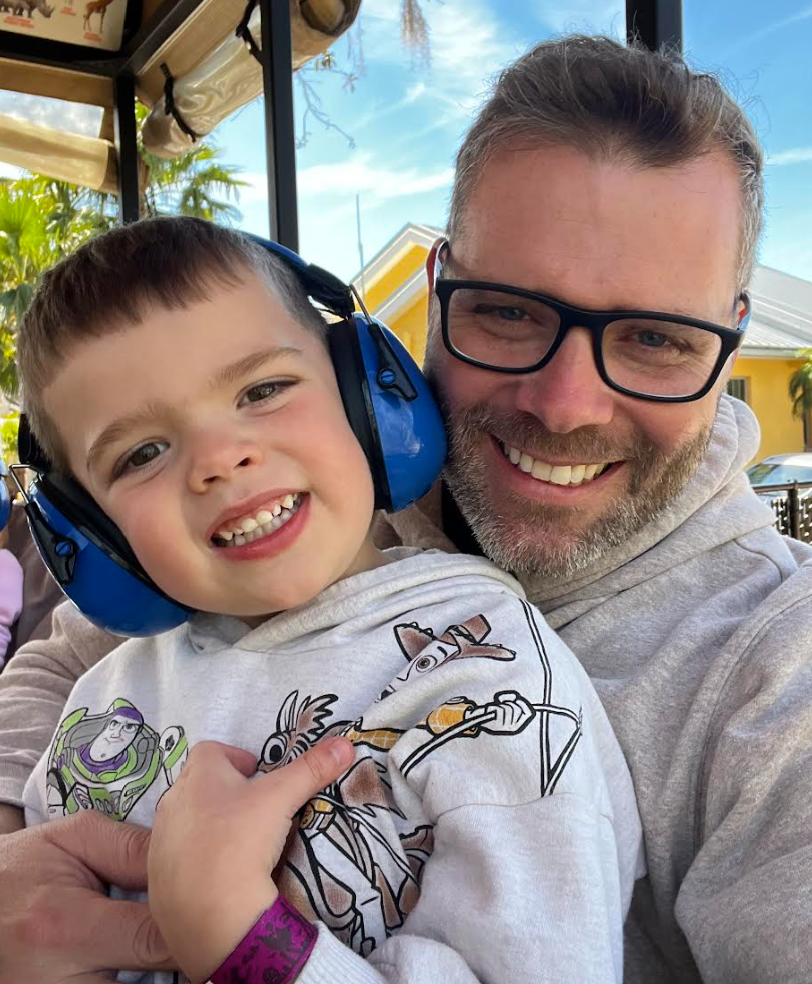
VizyPlan was built by an autism dad and an autism mom who is a licensed speech-language pathologist so the visual supports a student uses at school can look the same at home.
Share VizyPlan with your families so the visual supports from your reading block carry over to home. The 7-day free trial lets a family try it first. If it helps, keep going for $6.99/month or $59.99/year.
VizyPlan was built by an autism dad and an autism mom who is a licensed speech-language pathologist who needed something that did not exist. Explore VizyPlan.