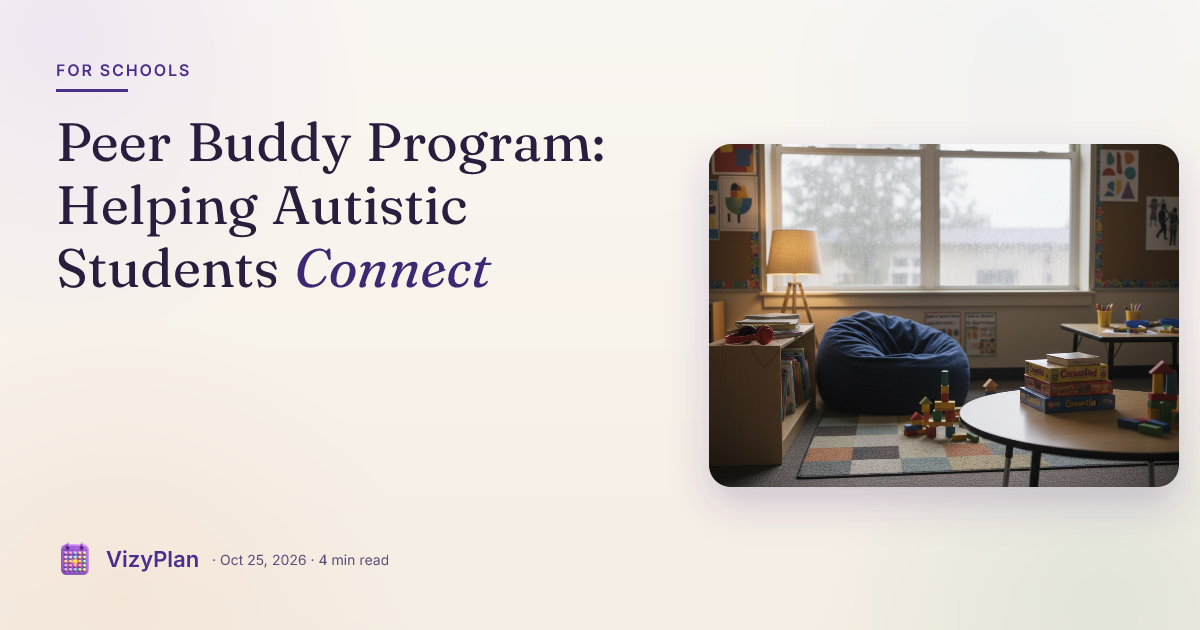
December is the most social month of the school year: holiday parties, class gift swaps, and indoor recess on cold and rainy days when the playground is closed. For many autistic students, all of that unstructured social time is where the day gets hardest. A peer buddy program gives those open stretches a little structure, with classmates who know how to invite, wait, and share, so connection does not depend on an adult hovering nearby.
What the research says about peer support
Peer support is one of the better studied tools in a teacher's kit. The 2020 report from the National Clearinghouse on Autism Evidence and Practice lists Peer-Based Instruction and Intervention among its evidence-based practices. According to the AFIRM module on the practice from the same UNC team, the practice met the criteria with 36 single case design studies and 8 group design studies, and was effective for learners from preschool through high school. Formats include peer modeling, peer networks that meet at lunch or recess, structured play groups, and peer supports such as tutoring.
One classroom trial stands out. In a randomized controlled trial by Kasari and colleagues, sixty autistic children from 56 general education classrooms took part. Researchers taught three classmates of each child strategies for engaging peers who had social difficulties on the playground. Children in the peer-mediated groups were more central in classroom social networks, received more friendship nominations, and spent less time isolated on the playground. Training the peers worked better than only coaching the autistic child.
The same research group also found limits. In a later playground trial, peer engagement went up, but skills like turn-taking in games and conversation did not change across the board. A peer buddy program is a support for connection, not a fix for everything.
How to start a peer buddy program before winter break
- Start with the student's own goals. Ask the autistic student, and the family, what the student wants from recess and parties. Some want a partner for a game. Some want a quiet companion. Some want to be left alone with a book, and that answer counts.
- Pick the time that is hardest. Indoor recess, the holiday party, and the lunch line are natural fits. Our guide to unstructured time at school explains why open time is so demanding.
- Choose two or three peers, not one. A small group spreads the role, so no single child carries it, and the friendship has room to grow beyond one person. Look for classmates who are kind, reliable, and actually share an interest with the student.
- Train peers in plain, concrete moves. Teach peers to invite once and accept a no, to wait longer for an answer, to join in on the student's interest, and to keep an activity going. Short role plays work better than long talks.
- Give the activity a shape. A clear start, a clear end, and a short menu of choices (a card game, a building challenge, drawing together) reduces guesswork for everyone. Our indoor recess plan has station ideas that pair well with peer groups.
- Check in and fade back. Meet with the peers for a few minutes each week, ask what worked, and step back as soon as the peer buddy program runs on its own. Kasari's team noted gains may need ongoing support to last, so plan a refresher after break.
Keep the peer buddy program equal
A peer buddy program goes wrong when one child is always the helper and the other is always the helped. Students notice that hierarchy quickly, and nobody wants to be a classmate's project.
- Frame the group around a shared interest. "The Lego club" lands differently than "Maya's buddies."
- Let the autistic student lead. Give the student a turn as the expert: explaining a game, teaching a fact, running the timer.
- Invite every student into the role. Rotating partners across the class signals that working together is a classroom norm, not a special arrangement.
- Keep private details private. Peers do not need a diagnosis to learn how to be a good partner.
Enjoying this article?
Get practical tips and insights delivered to your inbox — no spam, ever.
Respect how autistic students want to connect
Not everyone agrees on what social goals should look like. Many autistic adults and self-advocates argue that social programs should never require students to hide autistic traits, such as stimming or avoiding eye contact, in order to fit in. In a study of 92 autistic adults, participants described camouflaging mainly to fit in and connect with others, and reported exhaustion and threats to their sense of self as consequences. Researchers and families who support peer programs point to gains like the friendship and playground results above.
Both views can shape a good peer buddy program. Measure success by whether the student enjoys the time and has someone to sit with, not by how typical the interaction looks. Teach peers to adjust too, which fits the idea of the double empathy problem: social misunderstandings run in both directions.
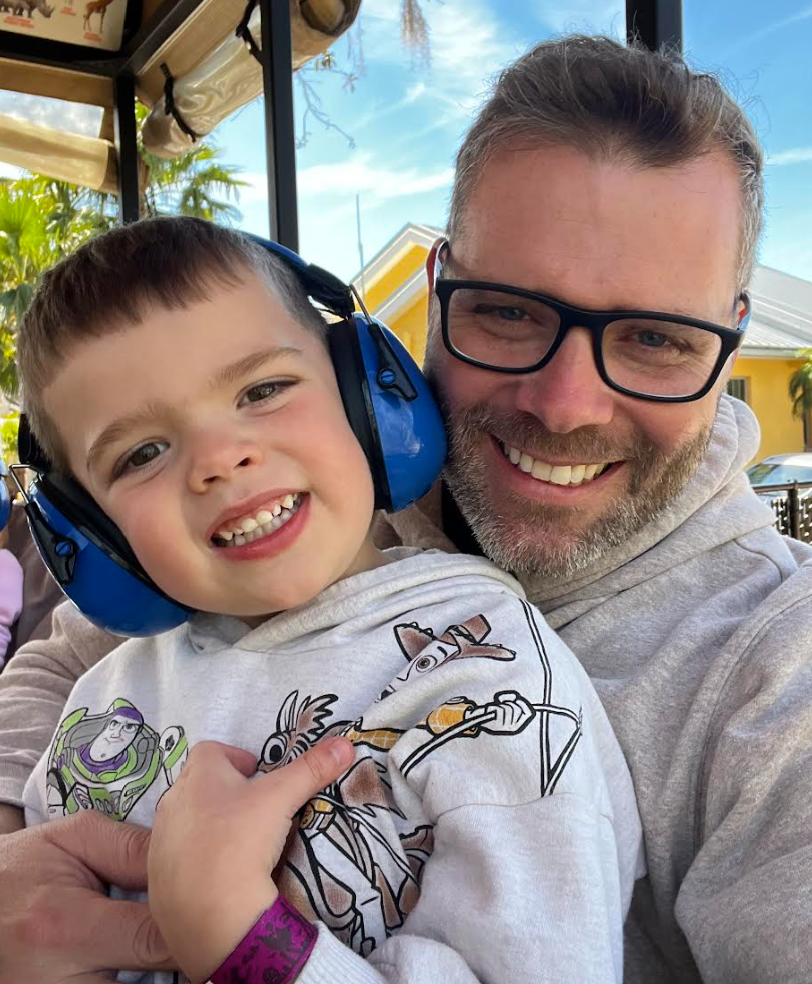
VizyPlan was built by an autism dad and an autism mom who is a licensed speech-language pathologist so an unstructured day can come with a picture plan a student can check, at school and at home.
Share VizyPlan with your families so holiday party days look predictable before they arrive. Families can try it free for a week. If it helps, they can keep going for $6.99/month or $59.99/year.
VizyPlan was built by an autism dad and an autism mom who is a licensed speech-language pathologist who needed something that did not exist. Explore VizyPlan.