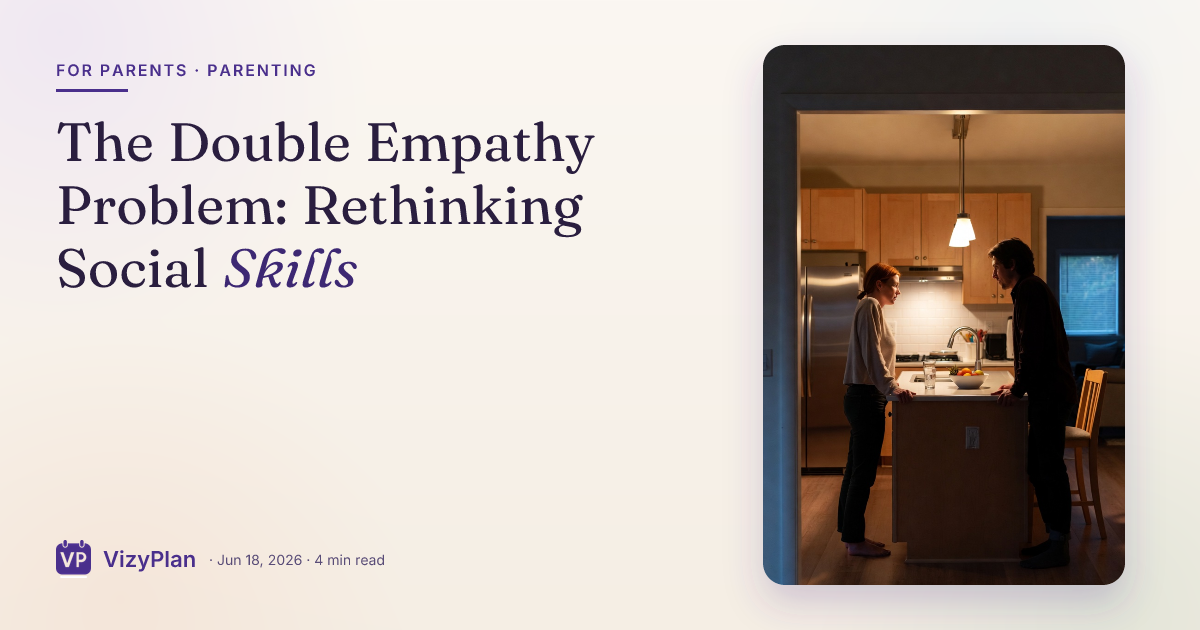
For a long time, the story about autistic children went one direction. Your child struggles socially, so your child needs fixing. The double empathy problem rewrites that sentence. It proposes that the breakdown between autistic and non-autistic people is mutual, a two-way gap in understanding rather than a one-sided deficit sitting inside your child. The idea is changing how researchers, therapists, and parents think about what social support should even aim for.
What the double empathy problem says
The concept comes from autistic researcher Damian Milton, who argued that autistic and non-autistic people simply experience the world differently, so they misread each other in both directions. The non-autistic person misses the autistic person's cues just as often as the reverse. A 2025 review of neuro-affirmative support frames the double empathy problem as a mismatch between two valid styles, not a flaw in one of them. Studies have found that autistic people often communicate clearly and comfortably with other autistic people, which is hard to explain if the deficit lived entirely in them.
Why this matters for your child
Traditional social skills training puts the whole burden on the autistic child to mask, decode, and perform neurotypical behavior. The double empathy problem suggests that approach is solving half the equation while exhausting your child. When a child is constantly translating into a language that is not their own, the cost shows up as burnout, anxiety, and the painful sense of not fitting in.
How to support both sides of the gap
- Find your child their people. Autistic kids often click instantly with other neurodivergent kids. Shared-style friendship is not a consolation prize, it is connection without the translation tax.
- Teach mutual understanding, not just compliance. Help your child name their own needs and communication style, and coach the people around them to meet it halfway.
- Value their way of relating. Parallel play, info-dumping about a passion, and side-by-side time are real social connection, not failed versions of it.
- Drop the goal of looking typical. Aim for a child who is understood and comfortable, which matters far more than a child who passes.
The double empathy problem does not mean social support has no place. It means the support works best when it runs both ways. This is the heart of what acceptance looks like at home.
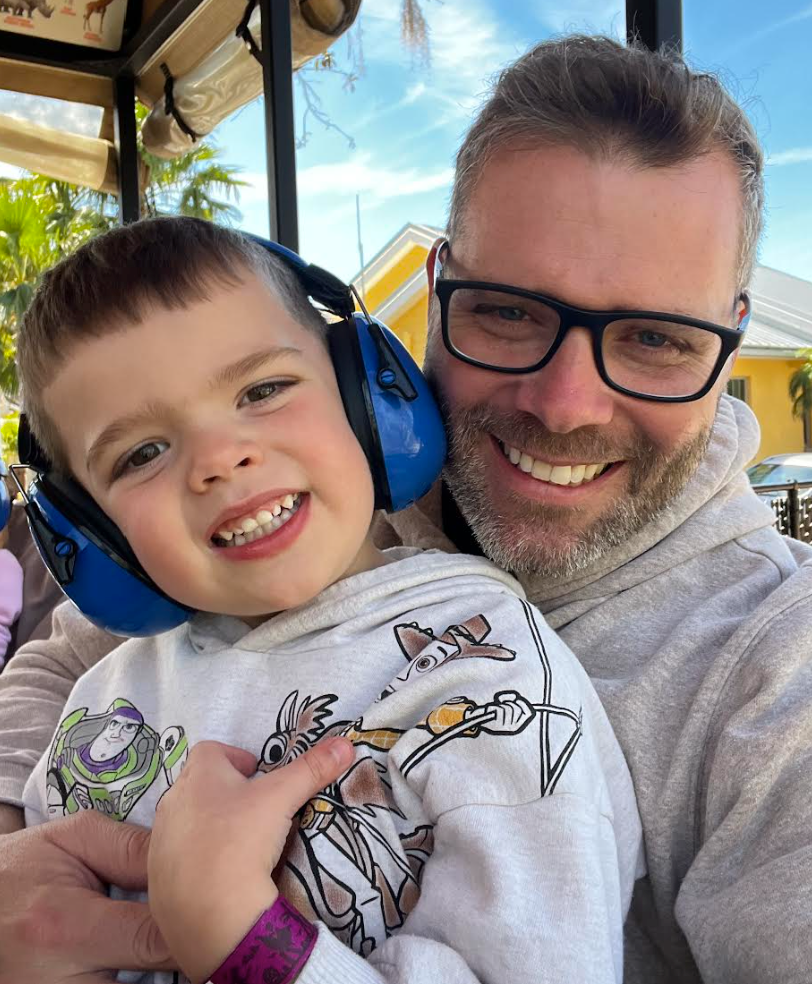
VizyPlan was built by an autism dad who wanted his son understood, not corrected. The day is built around how your child actually experiences it, so the goal is connection on their terms.
Enjoying this article?
Get practical tips and insights delivered to your inbox — no spam, ever.
Download VizyPlan and start your 7-day free trial today. Build a day that meets your child halfway. Just $6.99/month after your trial, no credit card required upfront.
VizyPlan was built by an autism dad who needed something that did not exist. Start your free trial.