Ask any BCBA, SLP, or OT what eats their week and the answer is rarely the kids. It is the notes. Clinicians spend an estimated 30 to 40 percent of their working hours on documentation, charting after every session until the paperwork outweighs the practice. AI ambient documentation is the first tool in years that meaningfully gives that time back, and 2026 is the year it went from novelty to standard. Used well, it changes the math of your day. Used carelessly, it introduces risk. The difference is in how you treat it.
What AI ambient documentation actually does
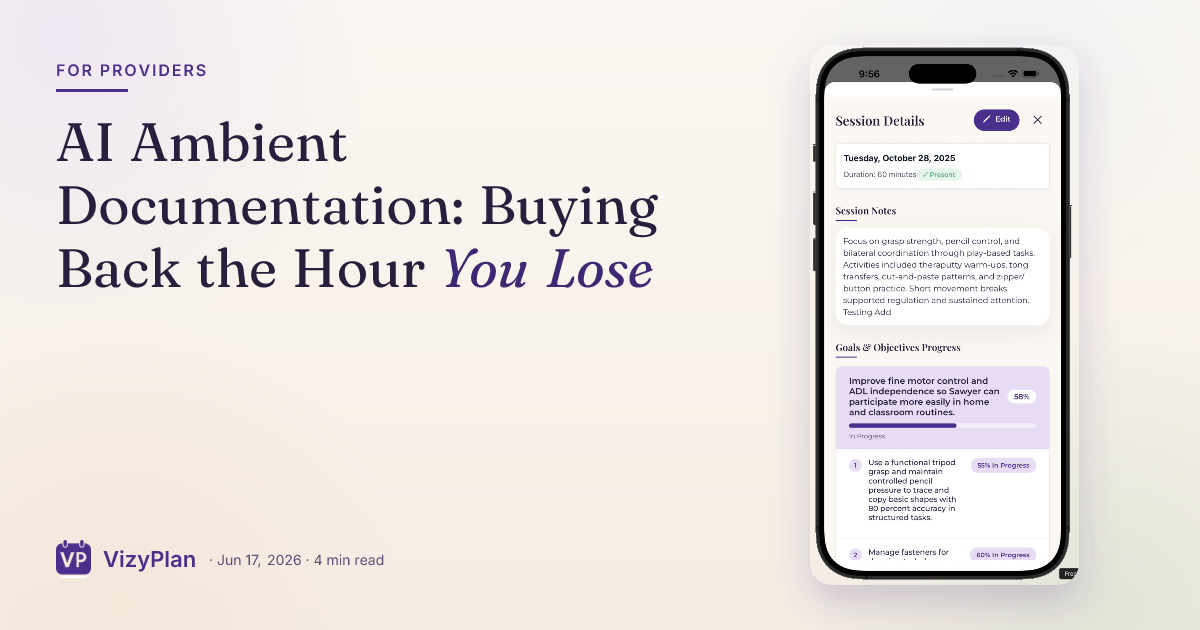
An ambient AI scribe listens quietly in the background during a session, captures what happens, and drafts a structured note for you to review. The Expressable team describes it as technology that turns the natural flow of a session into a draft clinical note. For ABA specifically, tools like Session Note AI generate audit-ready summaries from real session data, HIPAA-compliant by design. The reported result is charting time dropping from a long evening to a few minutes per session.
Where the line is
The technology drafts. You are still the clinician. A recurring theme in the clinician research on ambient AI scribes is that these tools reduce charting fatigue but never replace judgment. The note is your legal and clinical record, so the workflow has to include you reviewing, correcting, and signing every draft. Three guardrails worth keeping.
- Verify before you sign. AI drafts can smooth over or invent detail. Read every note as if you wrote it, because in the end you did.
- Protect consent and privacy. Families deserve to know a tool is capturing the session, and the platform must be genuinely HIPAA-compliant, not just marketed that way.
- Keep your clinical voice. The note should reflect your reasoning and the goal, not a generic template the model defaulted to.
Enjoying this article?
Get practical tips and insights delivered to your inbox — no spam, ever.
What to do with the time you reclaim
The real payoff is not a tidier inbox. It is the hour you get back. The highest-leverage place to spend it is the gap families fall into between sessions, building the home carryover that actually moves goals. Documentation should serve outcomes, a theme we explore in our post on proving outcomes in value-based care.
VizyPlan was built by an autism dad and an autism mom SLP for exactly that reclaimed hour. Turn a session goal into a visual routine the family runs at home, so the time AI gives back goes straight into the part of care that compounds.
Download VizyPlan and start your 7-day free trial today. Put the reclaimed hour into carryover that moves goals. Just $6.99/month after your trial, no credit card required upfront.
VizyPlan was built by an autism dad and an autism mom who is a licensed speech-language pathologist who needed something that did not exist. Start your free trial.