Vizy Timer

Trying a New Food without it becoming a battle.

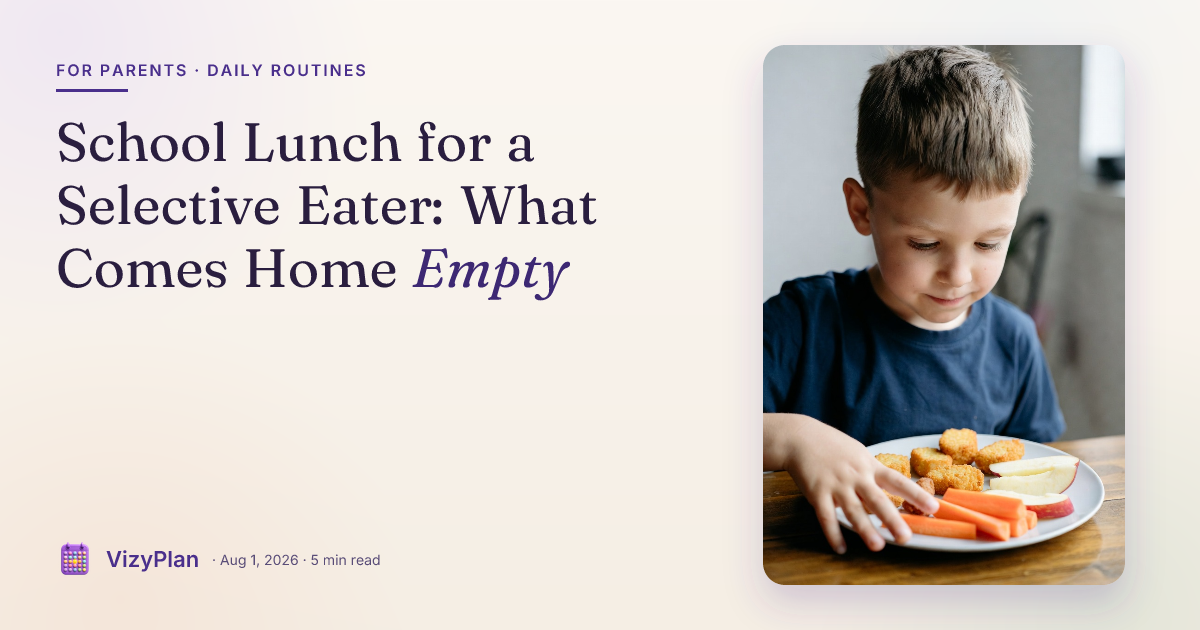
The new food has been on the plate for ten minutes and the negotiation has escalated to threats nobody meant. Everyone at this table is now upset about a piece of broccoli.

Free 7-day trial · No email or credit card to start · Built by an autism dad and a licensed SLP

Why it works here

Why a visual timer helps with trying a new food

Food exposure works best in tiny, predictable doses with a guaranteed ending. A timer defines the exposure so your child knows exactly how long the food will be near them, which lowers the anxiety that drives most refusal.

You will recognize this if

  • A new food on the plate ruins the rest of the meal.
  • Your child eats a very short list and the list is shrinking.
  • Pressure produces more refusal rather than less.
What the research says

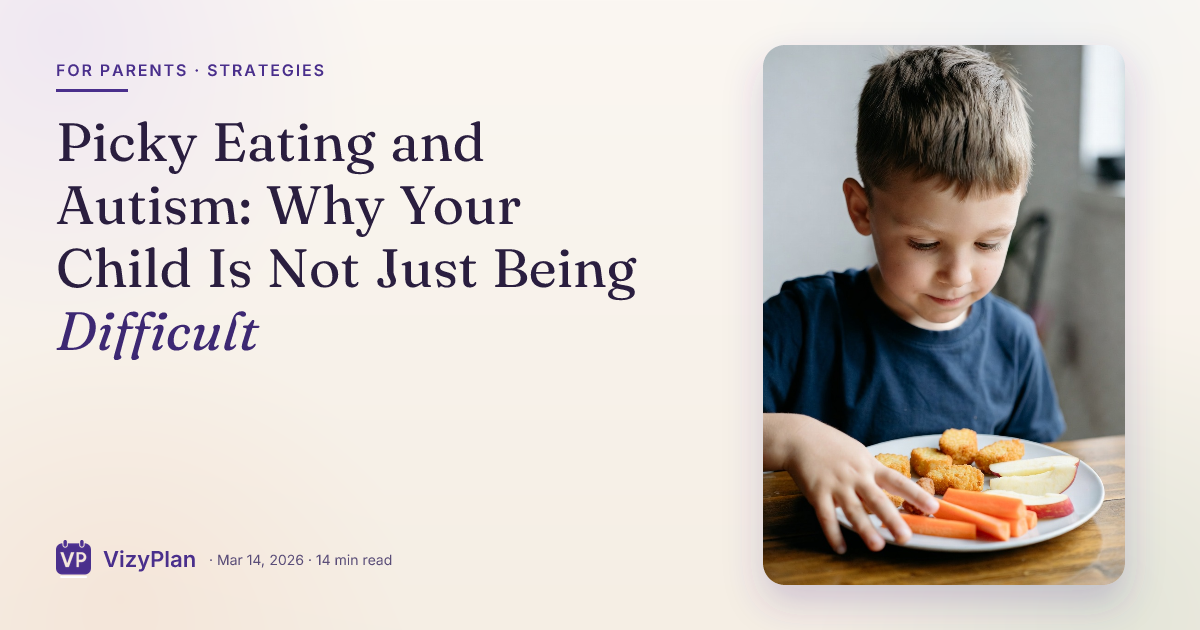
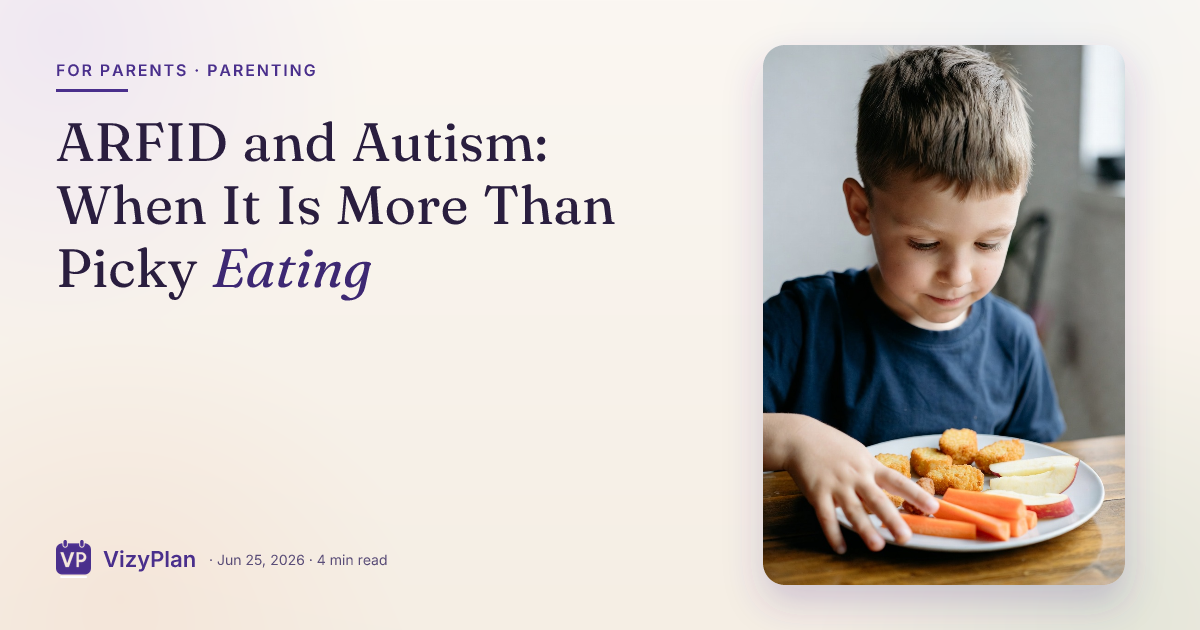
A meta-analysis pooling 21 publications and 7,442 participants found avoidant restrictive food intake disorder present in 11.41 percent of autistic groups, so restricted eating is often more than preference.

Sader et al., International Journal of Eating Disorders, 2025
The setup

How to set it up for trying a new food

Takes about five minutes. Use it as written, or keep only the steps your family needs. A short setup that gets used beats a complete one that gets abandoned in week two.

  1. 1 Put the new food on a separate small plate, never touching preferred food
  2. 2 Set a short timer for how long it stays on the table
  3. 3 Ask for something below eating, looking at it or touching it
  4. 4 Remove it the moment the timer ends, without comment
  5. 5 Repeat the same food across many short exposures rather than one long one
  6. 6 Keep a preferred food available at every meal so the meal is never at risk
The mistake most families make

Requiring a bite as the goal usually ends exposure work altogether. Tolerating the food nearby is a real step and it is the one that makes later steps possible.

In the app

Built into the routine, not bolted onto it.

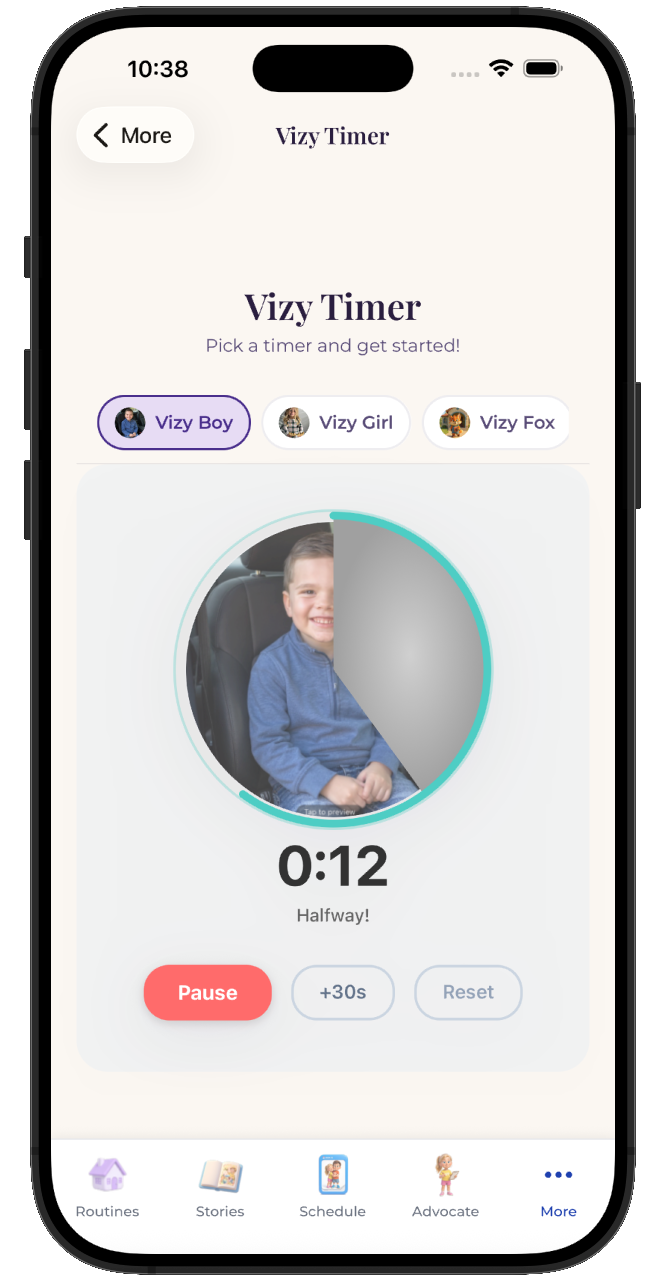
The Vizy Timer lives inside the same routine your child already follows, so trying a new food is a step with a visible length rather than a separate tool somebody has to remember to open.
  • Attach it to any step in any routine
  • Works for pre-readers, gestalt language processors, and AAC users
  • Same setup at home, at school, and in therapy
See the step-by-step guide →
The VizyPlan Vizy Timer set up for trying a new food

Set this up for your child.

Five minutes to build, and your child sees it every time trying a new food comes around.

$6.99/month after the free trial · Cancel anytime · Also at app.vizyplan.com

Common questions

About trying a new food

How many exposures does a new food usually take?
Far more than most advice suggests, and the count matters less than the lack of pressure. Short repeated neutral exposures do the work that one high-stakes attempt cannot.
When should we involve a feeding therapist?
When the accepted list is short and shrinking, when there is weight or nutrition concern, or when mealtimes are consistently distressing. Those are signals rather than failures.
Should trying a food earn a reward?
Rewards can help early on, but they work best attached to the small step you actually asked for, like tolerating the plate, rather than to eating.

VizyPlan supports routines and communication at home and school. It is not a medical device and does not diagnose or treat any condition. Talk to your child's care team about clinical questions.