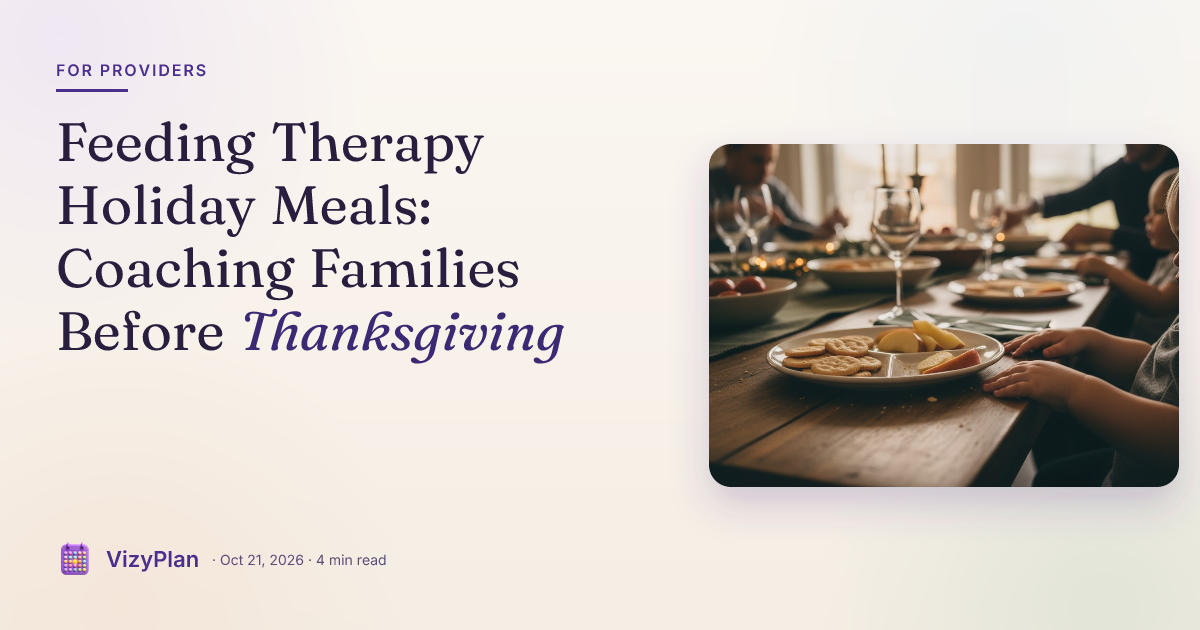
Over the next two months, the kids on your feeding caseload will sit down at tables you have never seen. A grandparent will slide a spoonful of stuffing onto a plate, a cousin will ask why the child only eats crackers, and six weeks of careful progress can feel shaky by dessert. Coaching families through feeding therapy holiday meals in early November gives them a plan before the pressure starts.
Why holiday tables are hard for selective eaters
Feeding differences are common in autism. A 2013 meta-analysis led by William Sharp at Emory pooled 17 studies and found that autistic children were about five times more likely to have a feeding problem than their peers, including severe food selectivity and ritualistic mealtime behaviors. Holiday meals stack nearly every hard thing in one place: unfamiliar foods, mixed textures, strong smells, a long table, a late dinner and a crowd of well-meaning adults watching.
Families on your caseload already know the daily version. What changes in November and December is the audience. Relatives who have not seen the child in a year often see the plate as a problem to fix in one meal.
What the research says about pressure
Pressure tends to backfire. In a Penn State experiment by Galloway and colleagues, preschoolers ate significantly more soup when no one told them to finish it, and made far fewer negative comments about the food. Pressure can also be coached down. In a 2012 randomized trial by Agras and colleagues, parents taught the Division of Responsibility, where adults decide what and when food is offered and the child decides whether and how much to eat, reduced pressure on their toddlers more than a control group. The sample was small and the families were not autistic, so treat the trial as a direction rather than a rule.
The ASHA Practice Portal on pediatric feeding describes caregiver coaching toward child-led, responsive feeding as part of treatment. Feeding therapy holiday meals are a natural place to put that coaching to work.
A feeding therapy holiday meals plan for families
Walk families through these steps in the last sessions before Thanksgiving:
- Pack safe foods. Families bring two or three foods the child reliably eats, in familiar containers. A full plate of safe foods is the goal for the day, not a fallback.
- Set the house rule in advance. One sentence, agreed on before the trip: nobody asks the child to taste, finish or try anything at this meal.
- Give families a script for relatives. A short, friendly line works best, for example: "We are working with a feeding therapist, and the plan for today is no pressure. Thanks for helping." Parents can text the script to hosts ahead of time.
- Preview the meal. Photos of the host's table, the dishes and the seating help the child know what is coming. Families can practice the routine at home with one holiday dish nearby on a separate plate.
- Plan the exits. A seat near the end of the table, permission to eat first and leave early, and a quiet room nearby keep a long meal manageable.
- Feed before the feast. A familiar snack an hour before a late dinner keeps hunger from turning into a meltdown.
Enjoying this article?
Get practical tips and insights delivered to your inbox — no spam, ever.
Keep exposure work low stakes during feeding therapy holiday meals
Exposure work does not need to stop for the holidays, but the bar should drop. A holiday food on a side plate, passing the cranberry sauce or helping stir the potatoes all count as contact with a food. Families can celebrate smelling, touching or simply sitting near a new dish. Save structured tasting goals for sessions after the break, when the child is back in a predictable routine.
Remind families that a holiday meal with only safe foods is not a setback. Protecting the child's trust at the table protects the progress you have built together.
Protect progress after the break
Build a short check-in into the first session back. Ask what the child ate, what the relatives did and what felt hard, then adjust goals rather than restarting them. Our holiday break regression plan covers how to set expectations for the time away, and our guide to Thanksgiving travel prep pairs well with feeding therapy holiday meals coaching.
Families looking for more can read our parent posts on Thanksgiving with an autistic child and ARFID and autism. A one-page handout with the six steps and the relative script is often the most useful thing you send home for feeding therapy holiday meals.
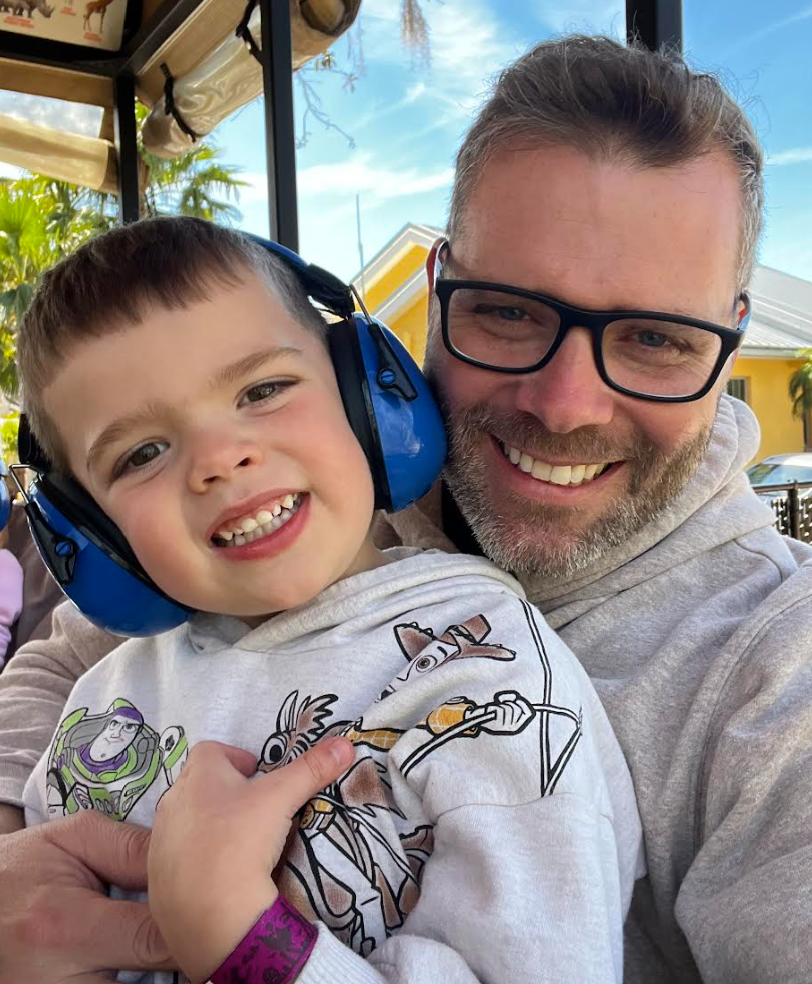
VizyPlan was built by an autism dad and an autism mom who is a licensed speech-language pathologist so families can show the holiday meal, the safe foods and the quiet break as picture steps before the day arrives.
Share VizyPlan with your families so the holiday table feels familiar before they sit down. Families can try it free for a week. If it helps, they can keep going for $6.99/month or $59.99/year.
VizyPlan was built by an autism dad and an autism mom who is a licensed speech-language pathologist who needed something that did not exist. Explore VizyPlan.