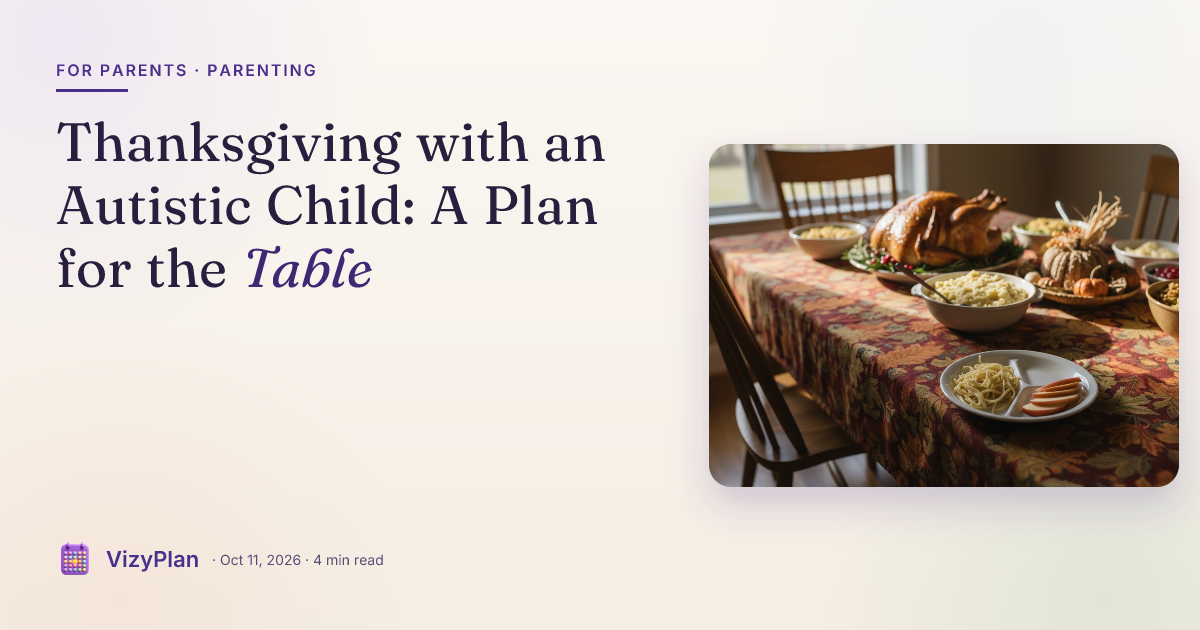
Thanksgiving is built around the exact things that are hardest for many autistic kids: a long meal at a table, a house full of people, unfamiliar food arriving in serving dishes, and the expectation that everyone will sit, eat, and talk at the same time. Thanksgiving with an autistic child can still be a good day. It just needs a plan that starts weeks before Thursday, November 26.
The first Thanksgiving after our son's diagnosis, we spent most of the meal in the hallway. We had planned the menu. We had not planned the day.
What Thanksgiving with an autistic child asks of them
Feeding challenges are common in autism. A widely cited 2013 meta-analysis by Sharp and colleagues found autistic children were about five times more likely to have feeding problems than their peers. Estimates of food selectivity specifically vary widely depending on how it is defined, from roughly 13 to 87 percent across studies, but most families do not need a study to know their child will not eat the stuffing.
The food is only one demand. Relatives who expect hugs, cousins who play loud, a TV running the game in the next room, and a meal with no clear end can stack up well before dessert. Our post on family gatherings and overstimulation covers the sensory side in more depth.
Seven steps to plan the day
- Show the day before the day. In the weeks before, look at photos of the house, the relatives, and last year's table. A child who has seen where they are going can save their energy for being there.
- Bring the safe foods. Pack the foods your child reliably eats and put them on their Thanksgiving plate. A plate with chicken nuggets next to a spoonful of mashed potatoes is still Thanksgiving dinner. Our guide to safe foods and the science of food refusal explains why pressure backfires.
- Offer, never require, the new foods. A small taste on a separate plate, with no rule attached, is an invitation. Holiday meals are a poor time to work on new foods and a fine time to be near them.
- Decide the sitting time in advance. Ten minutes at the table, then free to go, is a realistic target for many kids. Name it out loud so your child knows the meal has an end.
- Set up a quiet room on arrival. Ask the host for a bedroom or a corner with headphones, a tablet, and a familiar blanket. Show your child where it is before the house fills up.
- Prepare the relatives, kindly. A short message beforehand about greetings, food, and the quiet room saves your child from having to explain themselves, and saves you from explaining at the table.
- Plan the exit as part of the day. Leaving before dessert is a plan, not a failure. A day that ends while your child is still regulated is a day they will want to repeat next year.
Enjoying this article?
Get practical tips and insights delivered to your inbox — no spam, ever.
The version that counts
Some years Thanksgiving with an autistic child looks like a full table and a long afternoon. Some years it looks like a plate of familiar food, an hour at Grandma's, and pie at home in pajamas. Both count, and the second one is often the one that builds a tradition your child is glad to come back to.
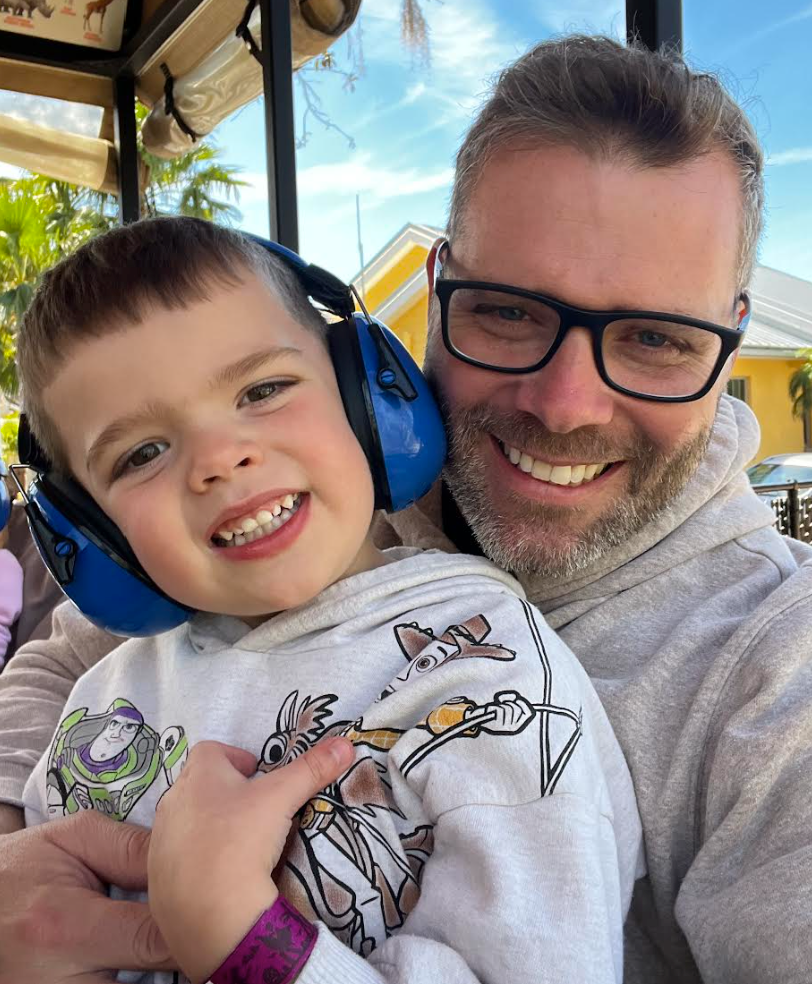
VizyPlan was built by an autism dad and an autism mom who is a licensed speech-language pathologist so the drive, the table, the quiet room and the ride home can be a picture plan your child sees all week.
Download VizyPlan and show Thanksgiving before Thanksgiving. Try it free for a week. If it helps, keep going for $6.99/month or $59.99/year.
VizyPlan was built by an autism dad and an autism mom who is a licensed speech-language pathologist who needed something that did not exist. Start your free trial.