A holiday built entirely around eating unfamiliar food in the dark was never going to be simple. Halloween candy and autism collide in a way nobody plans for, usually at the kitchen table at 7:30pm when a child who collected two pounds of candy will not eat any of it.
The reflex is to treat that as ingratitude or stubbornness. It is neither, and the research is unusually clear about why.
Why Halloween candy and autism are a hard match
Feeding difficulties are reported in 46% to 89% of autistic children, and the driver is usually not taste. Texture is the most commonly reported reason food gets refused, cited in around 78% of cases, with color second at roughly 53%. Atypical sensory processing occurs in up to 97% of autistic people, which makes an unfamiliar mouthfeel a genuine sensory event rather than a preference.
Avoidant restrictive food intake disorder, or ARFID, co-occurs meaningfully too: a prevalence meta-analysis found ARFID in about 11.4% of autistic groups, and autism in about 16.3% of people diagnosed with ARFID.
Now look at a Halloween haul through that lens. Chewy, sticky, gritty, filled, layered, melting, unpredictable. A single candy bar can change texture three times in one bite. The pile is a sensory minefield wrapped in cartoon foil, and the expectation that a child will be delighted by it is the part that does not survive contact with reality.
Run the night so the candy is not the point
- Say out loud that nobody has to eat any of it. The pressure is what turns a fun night into a standoff. Collecting is the activity; eating is optional and separate.
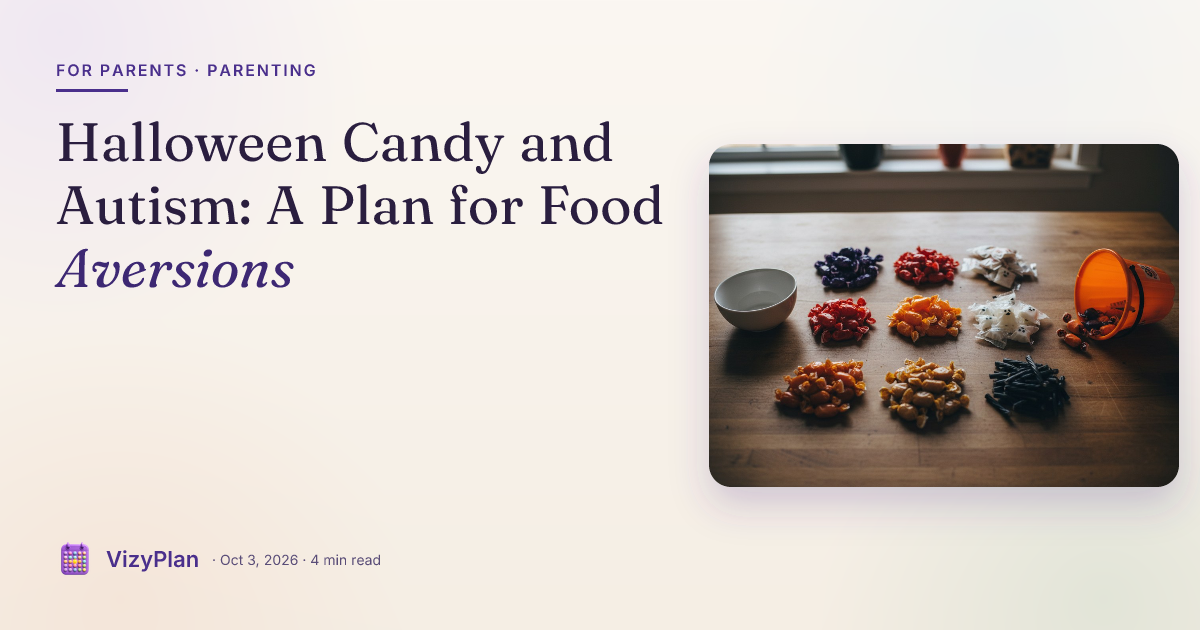
- Make sorting the main event. Sorting by color, by wrapper, by size or by yes-and-no piles is genuinely enjoyable for a lot of kids, and it is the part they will remember.
- Set up a trade. Trading unwanted candy for a preferred item, a toy, or a few dollars gives the haul a purpose that does not require chewing anything. Many dentists run buy-back programs for exactly this.
- Keep one safe food in the bucket from home. A known item in the bag means there is always something edible in there, which takes the stakes out of every door.
- Offer a new texture only on a non-Halloween day. Food exploration goes badly when a child is tired and overstimulated. If you want to try something, try it on a Tuesday afternoon.
- Let the leftovers go without a fight. A bowl of candy nobody eats is not a failure of the holiday. Put it out for the adults and move on.
Enjoying this article?
Get practical tips and insights delivered to your inbox — no spam, ever.
When to ask for help
Food selectivity that narrows over time, causes weight or growth concerns, or leaves fewer than roughly twenty accepted foods is worth raising with your pediatrician or a feeding-trained speech-language pathologist or occupational therapist. Halloween does not create that pattern, but it does make it visible, and October is a reasonable moment to mention it to someone.
What Halloween should not become is a referendum on your child's eating. They went out, they wore the costume, they knocked on the doors, and they came home with a bag. The contents of the bag were never the achievement.
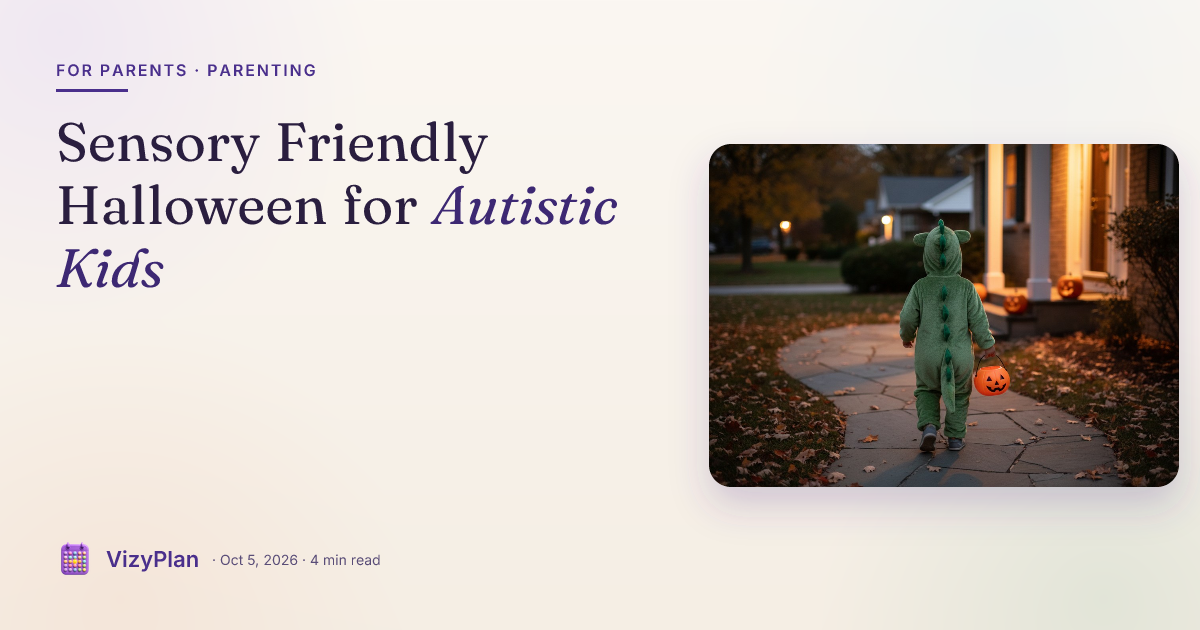
If the night itself is the harder part, our sensory friendly Halloween plan covers the route and the costume.
VizyPlan was built by an autism dad and an autism mom who is a licensed speech-language pathologist so the sorting, the trade and the bedtime after can be a routine your child already knows the shape of.
Download VizyPlan and start your 7-day free trial today. Make the plan visible before the candy arrives. If it helps, keep going for $6.99/month or $59.99/year.
VizyPlan was built by an autism dad and an autism mom who is a licensed speech-language pathologist who needed something that did not exist. Start your free trial.