The gains that disappear over winter break were never fragile. They were unsupported for three weeks, which is a different problem with a different fix. Holiday break regression shows up on your January data sheets, but the work that prevents it belongs to October, while there is still runway.
Every clinician who has run a caseload through a December knows the pattern. The kids come back louder, less tolerant of transitions, sleeping badly, and a few steps behind where they left off. Then six weeks of session time goes to rebuilding instead of building.
What holiday break regression actually costs
Routine disruption during school breaks produces increased agitation, changes in sleep, and reduced tolerance for transitions, and previously stable skills weaken when they are not practiced. The reason the winter break hits harder than its length suggests is that several supports drop out at once. School-based services stop. Private sessions pause or get rescheduled around travel. The visual schedule on the classroom wall is two miles away behind a locked door. Research on summer learning loss finds students can lose roughly a month of academic progress across one break, and while winter is shorter, it is stacked on top of visitors, travel, and a calendar nobody recognizes.
The encouraging half of that research is equally consistent: maintenance beats recovery. Even a few hours a week of continued structure meaningfully reduces how far anything slides.
A six step October protocol
- Name the break in session now, not in December. Put the actual dates in front of the family in October. A parent who hears "three weeks with no school" in week one plans differently than a parent who hears it on the last Friday.
- Pick two skills, not ten. Choose the one closest to generalizing and the one that costs the family most when it slips. A maintenance plan with ten targets is a plan nobody runs past day three.
- Convert those two into something that survives a kitchen. A goal written for a therapy room does not transfer to a house with relatives in it. Ask what the morning actually looks like over break, then attach the skill to something that happens anyway. The approach in putting IEP goals to work at home applies directly.
- Build the handoff artifact before Thanksgiving. Whatever the family carries out of your last session is what they will use. One page, pictures over paragraphs, and the two targets visible without reading.
- Pre-plan the re-entry, not just the break. The first session back is predictable: lower demands, rebuild the routine, expect the collapse to arrive at home rather than with you. Our guide to returning to school after a break covers the family side of that week.
- Book the January session before the break starts. A family that leaves with a date on the calendar comes back. A family that leaves with "call us in January" often returns in February.
Enjoying this article?
Get practical tips and insights delivered to your inbox — no spam, ever.
What to tell families who feel guilty about pausing
Plenty of families will skip sessions over the holidays, and most of them feel bad about it. The honest answer is that the break itself is not the threat. An unstructured break is. A family that keeps one visible routine through the chaos, even a thin one, protects more than a family that cancels everything and promises to make it up.
Say that out loud. The kids on your caseload do not need their December to look like their October. They need two things to stay recognizable inside it.
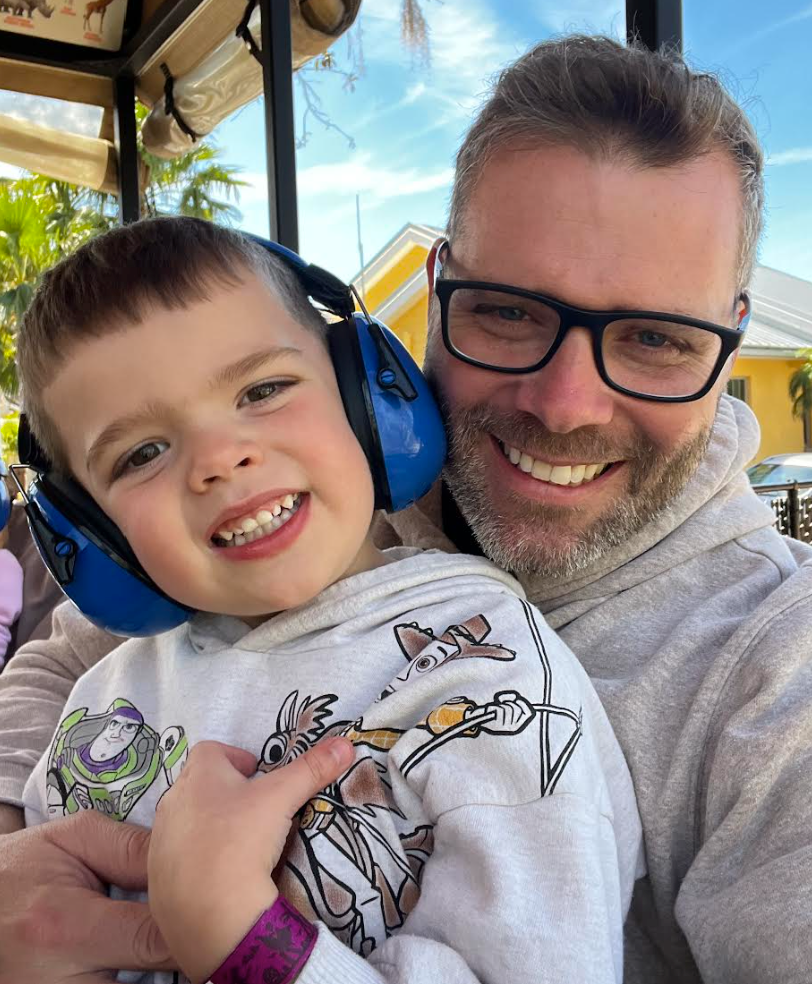
VizyPlan was built by an autism dad and an autism mom who is a licensed speech-language pathologist so the two targets you choose this month stay visible in the house through the whole break.
Share VizyPlan with your families so the skills you protect in October are still there in January. The 7-day free trial lets a family try it first. If it helps, keep going for $6.99/month or $59.99/year.
VizyPlan was built by an autism dad and an autism mom who is a licensed speech-language pathologist who needed something that did not exist. Explore VizyPlan.