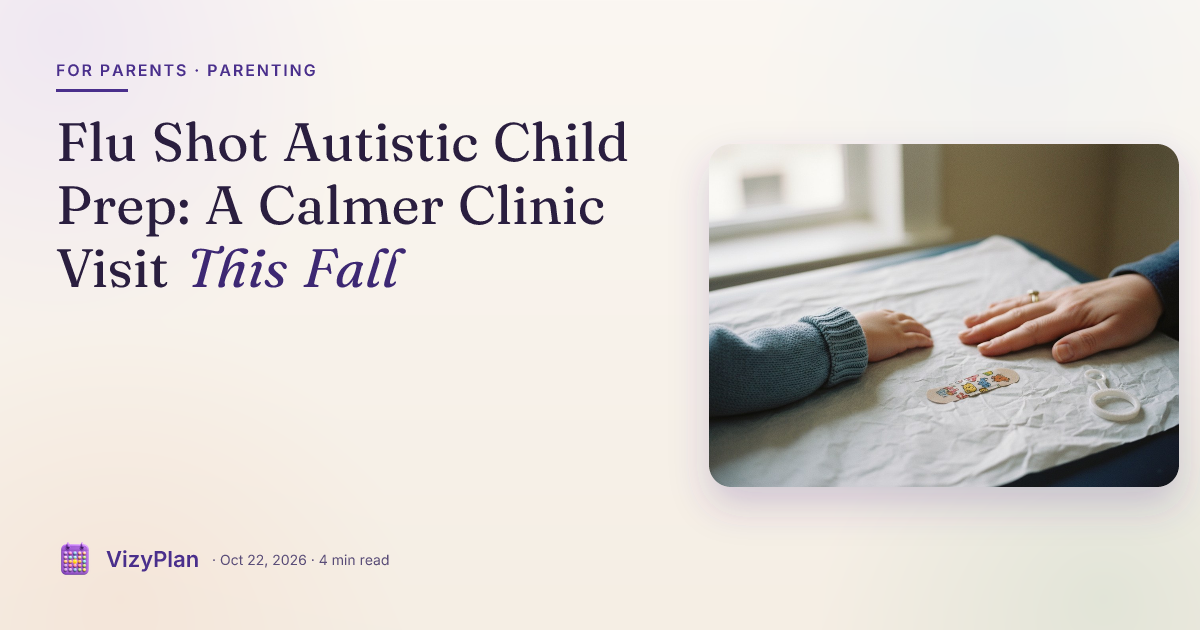
For a lot of families, the hardest five seconds of fall happen in a pediatrician's exam room. The poke itself is quick. The waiting room, the paper on the table, the smell, the stranger with the tray and the not knowing are what build the fear. This guide is a flu shot autistic child plan for families who have already decided to vaccinate and want the visit to feel smaller, calmer and more predictable.
What the CDC and AAP recommend this season
The CDC says everyone 6 months and older should get a flu vaccine every season, with rare exceptions, and that ideally everyone should be vaccinated by the end of October. Some children need two doses, given at least four weeks apart, depending on age and vaccine history. The American Academy of Pediatrics 2026 to 2027 recommendations also call for vaccinating children 6 months and older without medical contraindications, and the AAP does not prefer one licensed product over another.
About the nasal spray. According to the CDC, the nasal spray flu vaccine is approved for people 2 through 49 years old, but some people should not get it, including people with weakened immune systems, and young children with asthma or recent wheezing. CDC also notes that the FDA approved the nasal spray for caregiver administration to children 2 through 17. Whether a spray is a good fit for your child is a question for your pediatrician, so bring it up when you book.
Why needles can feel so big
Autistic kids are not imagining the hard parts. In a University of Guelph study, researchers interviewed 20 caregivers of autistic children aged 4 to 18, and 18 of the 20 reported that their child had high needle fear. Caregivers described the clinic environment, unfamiliar people and the fear of the unknown as major parts of the experience, not only the poke. Their suggestions included visual resources, preparing well in advance, accommodating sensory needs, distracting with a child's specific interests, offering choices and giving honest information. Those caregiver ideas shape every step of the flu shot autistic child plan below.
Seven steps for a calmer flu shot autistic child visit
- Make a picture sequence of the visit. Car, waiting room, check-in, exam room, sleeve up, quick poke, bandage, reward. Read it together for several days before the appointment so every step is familiar. Our guide to writing a social story walks through the wording.
- Practice at home. Roll up a sleeve, wipe the arm with a cool cloth, press a capped marker for a count of three, then put on a bandage. Rehearsal turns an unknown into a routine your child has already done.
- Use honest, neutral words. The AAP's guide to needle fear suggests words like "pressure," "pinch" or "poke," and warns that saying "don't worry" can make kids feel unheard. Name the feeling, then share the plan.
- Ask about numbing options. The same AAP guide suggests asking your doctor about over-the-counter or prescription numbing creams, patches or cooling sprays, and notes that some take about 30 minutes to work. A vibration tool placed just above the injection site is another option to ask about.
- Plan a comfort position. Many kids do better sitting on a parent's lap in a hug, held close and secure. The AAP is clear that kids should never be held down against their will for medical procedures, so tell the nurse which position your child practiced.
- Book the first or last appointment of the day. Ask the front desk for the slot with the shortest wait and the quietest waiting room, and ask whether your child can wait in the car until the room is ready.
- Let your child choose the distraction. A favorite show, a song, a book about their special interest, or blowing bubbles to slow breathing. A child who picks the plan has a little more control over the moment.
Enjoying this article?
Get practical tips and insights delivered to your inbox — no spam, ever.
Call the office before you go
Caregivers in the Guelph study said it helped to talk with the clinic ahead of time. A short call before the flu shot autistic child appointment lets you share what works: dim lights if possible, one person speaking, no surprises, and the comfort position your child practiced. Some families write the flu shot autistic child plan on one page and hand it to the nurse at check-in. If needle fear is severe, the AAP suggests support from a mental health professional or a child life specialist.
After the poke
End the visit the way the picture sequence promised: bandage, praise, the chosen reward, home. If the visit goes sideways, that is useful information for next year, not a failure. Our post on preparing for doctor and dentist visits covers checkups in general, and our guide to dentist meltdowns explains what is happening when a medical visit becomes too much. Each calm flu shot autistic child visit makes the next one a little more predictable.
VizyPlan was built by an autism dad and an autism mom who is a licensed speech-language pathologist so the waiting room, the poke and the bandage can be a picture sequence your child sees long before the appointment.
Download VizyPlan and show the visit before the visit. Try it free for a week. If it helps, keep going for $6.99/month or $59.99/year.
VizyPlan was built by an autism dad and an autism mom who is a licensed speech-language pathologist who needed something that did not exist. Start your free trial.