The last time you took your child to the dentist, it took three adults to hold them in the chair. The time before that, you left the pediatrician's office in tears, yours and theirs, after a blood draw that felt more like a wrestling match. Now you have another appointment coming up and your stomach is already in knots.
You are not failing at this. Medical appointments combine every challenge neurodivergent children face into one high-stakes experience: unfamiliar environments, unexpected sensations, unpredictable timing, and strangers touching their body. The good news is that with the right preparation, these visits can become manageable and even routine.
Why Medical Visits Are Challenging
Understanding the specific difficulties helps target your preparation efforts.
Sensory overload is common. Medical offices assault multiple senses simultaneously, bright fluorescent lights, chemical smells, strange sounds, and uncomfortable physical sensations during examinations.
Unpredictability creates anxiety. Children may not know what will happen, how long it will take, or whether something will hurt. This uncertainty is particularly difficult for children who rely on predictability to feel safe.
Loss of control is inherent. Being examined requires allowing someone to touch your body, open your mouth, or hold you in certain positions. For children who struggle with autonomy and control, this feels threatening.
Past negative experiences compound fear. One difficult appointment can create lasting anxiety about all future medical visits. The anticipatory fear becomes as problematic as the visit itself.
Communication challenges make it hard for some children to express their discomfort, ask questions, or understand explanations from medical professionals.
The Power of Preparation
Research consistently shows that preparation reduces anxiety and improves medical visit outcomes for children with autism and ADHD.
Familiarity reduces fear. When children know what to expect, the unknown becomes known. Anxiety decreases when uncertainty decreases.
Practice builds skills. Children who have rehearsed opening their mouth or holding still have those skills available when needed, reducing the difficulty of the actual appointment.
Emotional preparation is possible. Children can process their feelings about upcoming visits in advance rather than being flooded with emotions during the appointment.
Parents feel more confident. When you have prepared your child, you feel more equipped to support them, which children sense and respond to.
Creating Social Stories for Medical Visits
Social stories are particularly effective for medical appointment preparation.
Be specific to your child's actual experience. A story about visiting Dr. Smith at the building with the blue door is more useful than a generic doctor visit story.
Include sensory information. Describe what the child will see, hear, smell, and feel. This prepares their sensory system for the experience.
Explain the sequence of events. What happens first? What comes next? Knowing the order provides predictability.
Acknowledge that things might be uncomfortable. Honest stories that say "The dentist will count your teeth. It might feel strange but it will not hurt" build trust better than pretending everything will be easy.
Include coping strategies. "If I feel scared, I can squeeze my stress ball" gives children tools to use in the moment.
Show the positive outcome. The story ends with the visit being over and the child feeling proud of themselves.
Visual Schedules for Appointments
Visual schedules for medical visits function like any other visual schedule but require some specific considerations.
Start from leaving home. The schedule might begin with getting in the car, driving to the office, walking inside, and sitting in the waiting room before any medical procedures.
Include waiting time. Medical offices often involve unpredictable waits. Acknowledging this in the schedule, and having strategies for waiting, prevents surprises.
Show each step of the examination. For a dental visit, this might include: sit in the special chair, wear the special glasses, open mouth, dentist counts teeth, dentist cleans teeth, rinse and spit, get a prize.
Use photos when possible. Pictures of the actual waiting room, the actual exam room, and even the actual doctor or dentist create maximum familiarity.
Make it portable. Bring the visual schedule to the appointment so your child can reference it and mark completed steps.
Practice and Role Play
Hands-on practice at home reduces anxiety about unfamiliar medical procedures.
Practice opening mouth wide. For dental visits, practice at home with a mirror. How long can they hold their mouth open? Make it a game.
Enjoying this article?
Get practical tips and insights delivered to your inbox — no spam, ever.
Practice the examination position. Whether lying on an exam table or sitting in a dental chair, practice the physical positions at home where it feels safe.
Use play medical kits. Let your child examine stuffed animals or family members. Being the "doctor" helps demystify the experience.
Practice specific procedures. If your child needs blood drawn, practice holding their arm still and looking away. If they need to wear a blood pressure cuff, try one at home first if possible.
Rehearse coping strategies. Practice deep breathing, using fidgets, or whatever calming techniques your child will use during the appointment.
.png)
Sensory Preparation and Accommodation
Addressing sensory needs improves appointment tolerance.
Visit the office beforehand if possible. A brief trip to see the waiting room and meet the receptionist reduces unfamiliarity on appointment day.
Bring sensory supports. Headphones or earplugs for noise sensitivity. Sunglasses for bright lights. A comfort object or fidget tool. Whatever helps your child regulate.
Request accommodations in advance. Call ahead to ask about dimming lights, scheduling first appointments of the day to avoid waiting, or using a quieter exam room.
Prepare for specific sensory experiences. If your child hates the taste of fluoride at the dentist, ask if alternatives are available. If they cannot tolerate the paper gown, ask if they can keep their own shirt on.
Plan sensory recovery time. After a challenging appointment, schedule quiet time rather than going straight to another activity.
Communicating with Medical Providers
Partnering with providers improves outcomes.
Call ahead to explain your child's needs. Let the office know your child has autism or ADHD and what accommodations help.
Provide written information if helpful. Some families create a one-page summary of their child's communication style, sensory sensitivities, and what helps them cope.
Ask about the provider's experience. Some doctors and dentists have training in working with neurodivergent children. Seeking these providers makes a significant difference.
Request modifications to standard procedures. Can the exam be done in parts with breaks? Can explanations be given in simpler language? Can the child stay in a parent's lap?
Advocate for your child. If something is not working, speak up. If the provider is not accommodating, it may be time to find a different provider.
Managing the Appointment Day
Even with preparation, appointment day requires careful management.
Time the appointment strategically. Early morning often works better before children are tired or overstimulated. Avoid scheduling after school when reserves are depleted.
Build in transition time. Arrive early enough that you are not rushed, but not so early that waiting becomes excessive.
Bring support tools. Visual schedule, comfort items, fidgets, headphones, preferred snacks for after, whatever your child needs.
Stay calm yourself. Children pick up on parent anxiety. If you are nervous, they will be too. Your regulated presence helps them regulate.
Use the coping strategies you practiced. Remind your child of their tools. "Remember, you can squeeze your ball if you feel nervous."
Celebrate completion. Acknowledge the accomplishment, regardless of how smoothly it went. Every completed appointment builds tolerance for the next one.
Building Long-Term Medical Comfort
The goal is not just surviving one appointment but building comfort with medical care over time.
Maintain regular appointments. Avoiding doctors and dentists increases fear. Regular visits build familiarity.
Process each experience. After appointments, talk about what happened, what was hard, and what helped. This processing supports future visits.
Track progress over time. Note what worked and what did not. Share this information with providers at future appointments.
Adjust preparation as children grow. What works at age five differs from what works at age ten. Update your strategies as your child develops.
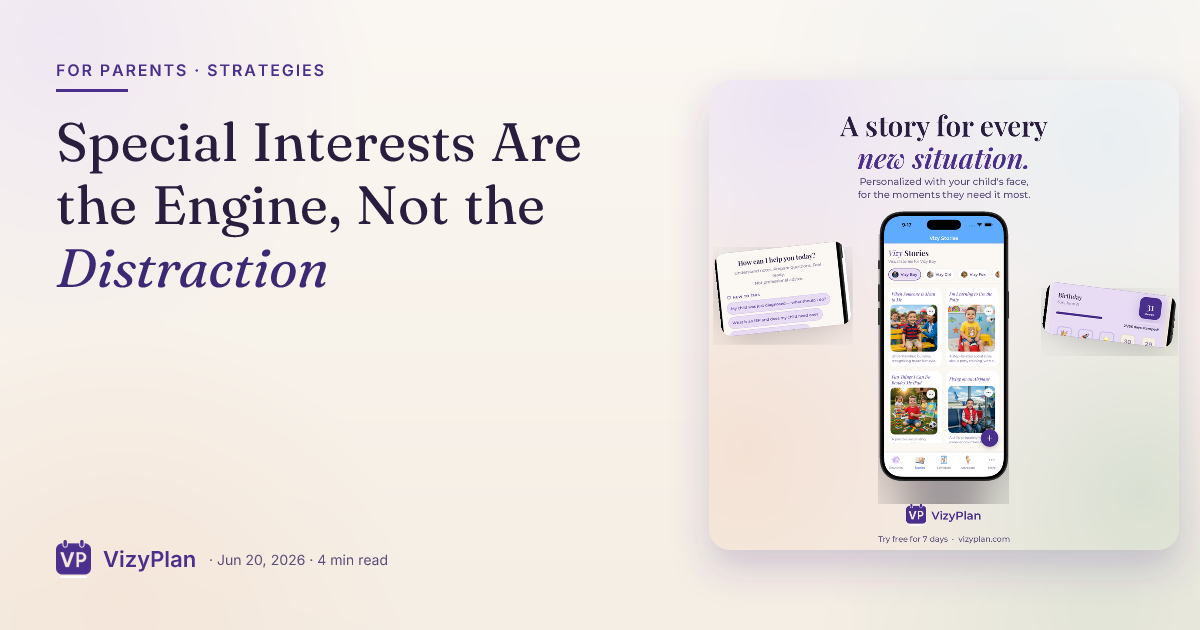
VizyPlan helps you create social stories and visual schedules that prepare your child for medical appointments. Start your free trial and reduce anxiety around doctor and dentist visits.