
Vizy Timer

Getting Off the Swing when the swing is the whole point.

The swing is not one activity among many. For a lot of autistic children it is the reason the playground exists, and asking for it back is asking for something regulating to stop.

Free 7-day trial · No email or credit card to start · Built by an autism dad and a licensed SLP

Why it works here

Why a visual timer helps with getting off the swing

Swinging provides vestibular input that many children genuinely need rather than simply enjoy. A timer respects that by making the amount predictable instead of arbitrary, so your child can settle into the input rather than bracing for it to be taken away.

You will recognize this if

  • Your child heads straight for the swing and would stay there the entire visit.
  • Getting off the swing is harder than leaving the park itself.
  • Your child seems calmer and more organized after swinging, not more wound up.
The setup

How to set it up for getting off the swing

Takes about five minutes. Use it as written, or keep only the steps your family needs. A short setup that gets used beats a complete one that gets abandoned in week two.

  1. 1 Decide the swing length separately from the total park time
  2. 2 Show the timer before the first push, while your child is still on the ground
  3. 3 Count the last ten pushes out loud so the ending is audible as well as visible
  4. 4 Offer a second regulating option for after, like a climb or a heavy push
  5. 5 Keep the swing amount the same across visits so it stops being negotiable
  6. 6 Let your child restart the timer for a second turn if the schedule allows it
The mistake most families make

Treating the swing as a reward to be withdrawn turns a regulating activity into leverage. If swinging helps your child organize, protect it rather than trading it.

In the app

Built into the routine, not bolted onto it.

The Vizy Timer lives inside the same routine your child already follows, so getting off the swing is a step with a visible length rather than a separate tool somebody has to remember to open.
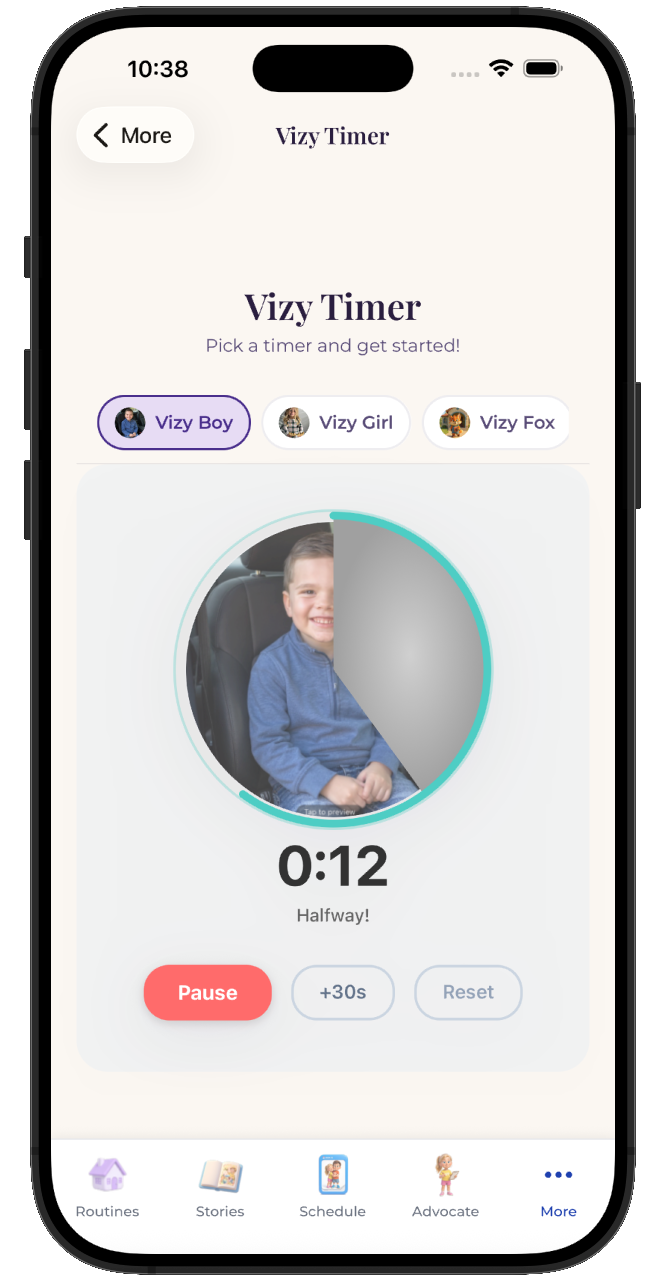
  • Attach it to any step in any routine
  • Works for pre-readers, gestalt language processors, and AAC users
  • Same setup at home, at school, and in therapy
See the step-by-step guide →
The VizyPlan Vizy Timer set up for getting off the swing

Set this up for your child.

Five minutes to build, and your child sees it every time getting off the swing comes around.

$6.99/month after the free trial · Cancel anytime · Also at app.vizyplan.com

Common questions

About getting off the swing

Why does my child want to swing for so long?
Swinging delivers vestibular input, which many autistic children seek because it helps them feel organized in their bodies. Wanting a lot of it is a sensory preference rather than a behavior problem.
Is it bad to limit swinging?
Limiting is fine, and predictable limiting is better than arbitrary limiting. What tends to cause distress is not the limit but the fact that the child cannot tell when it will arrive.
Can we use the timer for turn-taking on a busy swing set?
Yes, and a visible timer often defuses conflict with other children too, because the rule is being enforced by something neutral rather than by two sets of parents.

VizyPlan supports routines and communication at home and school. It is not a medical device and does not diagnose or treat any condition. Talk to your child's care team about clinical questions.