
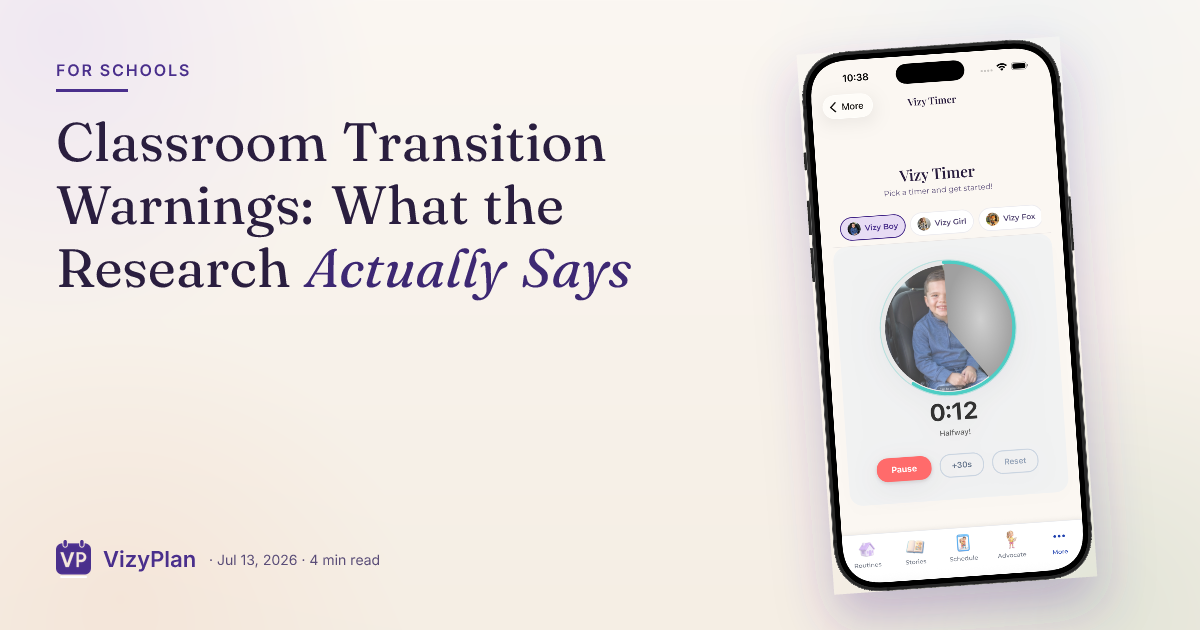
Classroom Transition Warnings: What the Research Actually Says
4 min read
Your child was fine, and then you said it was time to move on to the next thing, and now they are not fine. The activity was not the problem. The edge between two activities was.
Free 7-day trial · No email or credit card to start · Built by an autism dad and an autism mom SLP
Switching tasks has a genuine cognitive cost, and for many neurodivergent children the cost lands all at once at the boundary. A timer builds a runway into the transition so the switch begins before the moment of change rather than at it.
What the research saysWhen visual supports signalled an upcoming transition, the delay between the instruction and the student beginning the next activity fell substantially compared with verbal cues alone.
Dettmer, Simpson, Myles and Ganz, Focus on Autism and Other Developmental Disabilities, 2000
Takes about five minutes. Use it as written, or keep only the steps your family needs. A short setup that gets used beats a complete one that gets abandoned in week two.
Giving the warning and then changing the plan is worse than giving no warning at all, because it teaches your child that the runway is unreliable.
The Vizy Timer lives inside the same routine your child already follows, so transitioning between activities is a step with a visible length rather than a separate tool somebody has to remember to open.
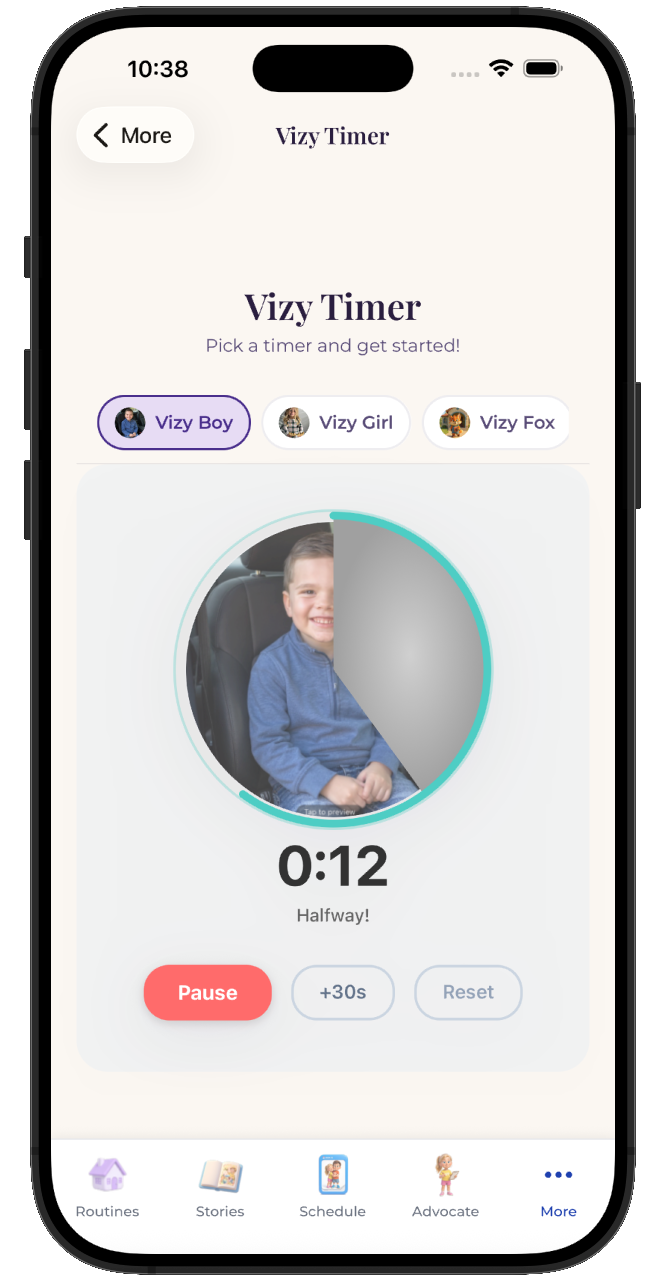
Five minutes to build, and your child sees it every time transitioning between activities comes around.
$6.99/month after the free trial · Cancel anytime · Also at app.vizyplan.com
VizyPlan supports routines and communication at home and school. It is not a medical device and does not diagnose or treat any condition. Talk to your child's care team about clinical questions.