
Monotropism: The Attention Theory That Explains Your Child
4 min read
Your child is deep in the thing they love most, and you need them to stop for dinner. What looks like ignoring you is usually a genuine difficulty pulling attention out of something absorbing.
Free 7-day trial · No email or credit card to start · Built by an autism dad and an autism mom SLP
Deep, narrow attention is a real cognitive style rather than stubbornness, and switching out of it has a cost. A timer gives that switch a runway, so your child can begin closing down the activity before they are asked to leave it.
What the research saysMonotropism describes attention that flows strongly into a small number of interests at once, which makes switching between them genuinely effortful rather than simply unwanted.
VizyPlan, Monotropism and transitions
Takes about five minutes. Use it as written, or keep only the steps your family needs. A short setup that gets used beats a complete one that gets abandoned in week two.
Treating deep focus as defiance and escalating the demand tends to turn a manageable transition into a shutdown, and it damages trust in the interest itself.
The Vizy Timer lives inside the same routine your child already follows, so stopping a special interest is a step with a visible length rather than a separate tool somebody has to remember to open.
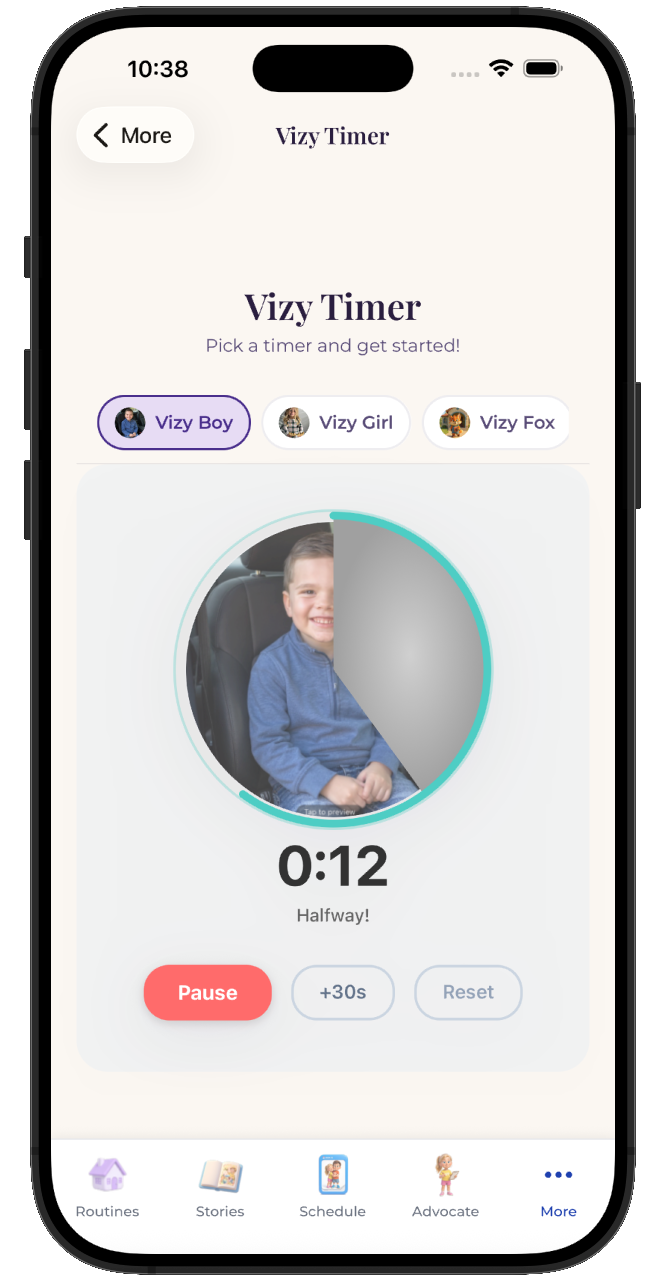
Five minutes to build, and your child sees it every time stopping a special interest comes around.
$6.99/month after the free trial · Cancel anytime · Also at app.vizyplan.com
VizyPlan supports routines and communication at home and school. It is not a medical device and does not diagnose or treat any condition. Talk to your child's care team about clinical questions.