

Monotropism: The Attention Theory That Explains Your Child
4 min read
You gave a ten-minute warning and it landed on a child who was three minutes into a twenty-minute match. From inside the game, your timing was arbitrary and unfair, and the reaction reflects that.
Free 7-day trial · No email or credit card to start · Built by an autism dad and an autism mom SLP
Games are built without natural stopping points, and quitting mid-match can mean losing genuine progress. Setting the timer to the game's own structure rather than the clock respects that, which removes the sense of injustice that drives most of the conflict.
Takes about five minutes. Use it as written, or keep only the steps your family needs. A short setup that gets used beats a complete one that gets abandoned in week two.
Enforcing a clock that cuts across the game's own structure creates a fight about fairness rather than about time, and your child is not entirely wrong.
The Vizy Timer lives inside the same routine your child already follows, so shutting down a video game is a step with a visible length rather than a separate tool somebody has to remember to open.
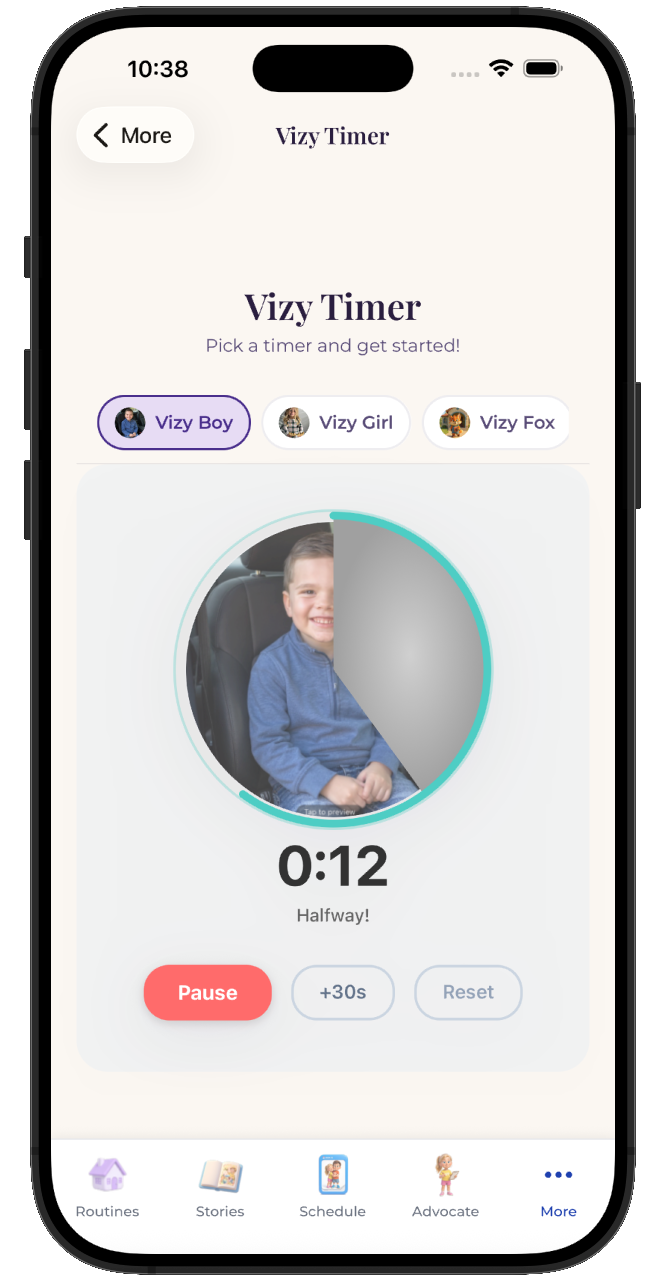
Five minutes to build, and your child sees it every time shutting down a video game comes around.
$6.99/month after the free trial · Cancel anytime · Also at app.vizyplan.com
VizyPlan supports routines and communication at home and school. It is not a medical device and does not diagnose or treat any condition. Talk to your child's care team about clinical questions.