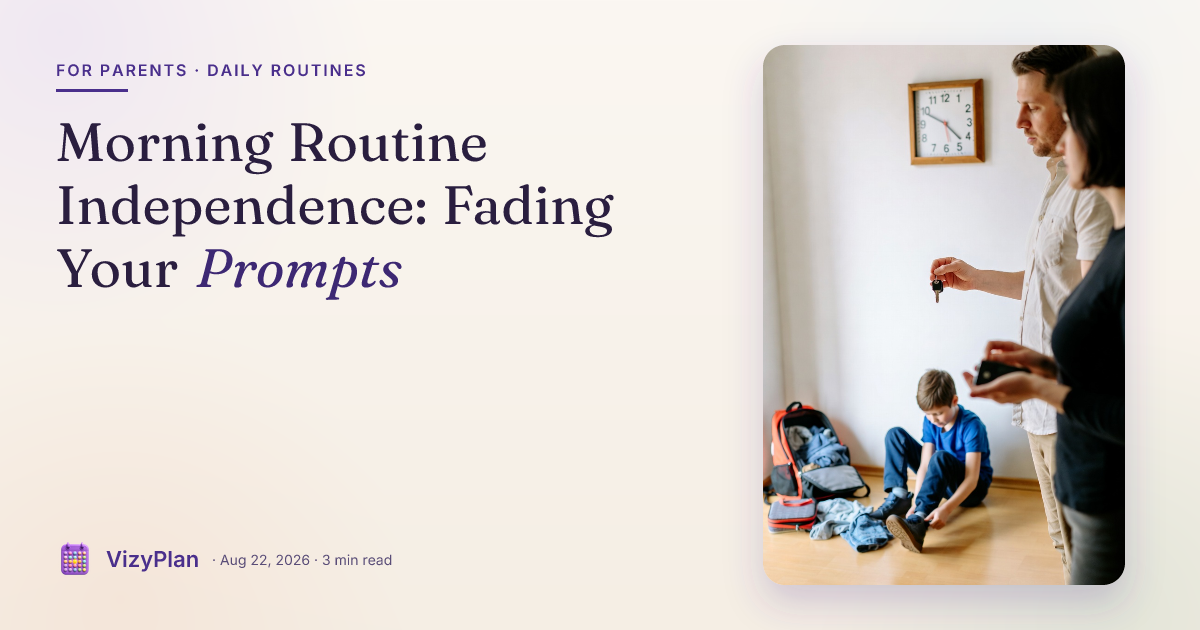


The calendar still says summer, but a back to school routine is the kindest gift you can give your neurodivergent child before the first bell. Summer loosens everything: later bedtimes, slow mornings, no schedule to speak of. For a child who leans on predictability to feel safe, being dropped back into a rigid school day cold can trigger weeks of anxiety, meltdowns, and lost sleep. Starting the reset early, and gently, changes how the whole first month goes.
Why the summer-to-school jump is so hard
Predictability is not a preference for many autistic and ADHD kids; it is how their nervous system finds safety. Summer quietly dismantles the scaffolding, and the sudden return to a structured day can feel like a shock. Sleep is often the first casualty. A review in Pediatrics reports that 50 to 80 percent of autistic children experience sleep difficulties, compared with about 25 percent of their peers, so a summer of drifting bedtimes leaves less margin than most families realize. If your child struggled at the start of last summer too, our post on the summer routine cliff explains why the transition cuts both directions.
Start the back to school routine reset two weeks out
The single biggest lever is time. Autism Speaks recommends shifting to the school-night sleep schedule about two weeks before day one, noting the first couple of nights are hard and then get easier.
- Move bedtime earlier in small steps. Pull bedtime back fifteen minutes every few nights rather than lurching to the school time overnight.
- Rebuild the morning sequence. Practice the real order of the school-day morning, wake, dress, eat, shoes, out the door, so it is muscle memory before it counts.
- Tour the school on the real schedule. Visit at the time of day your child will actually be there, and walk the route from drop-off to the classroom.
- Use a countdown calendar. Mark the days to the first day so the change arrives as an expectation, not an ambush.
- Preview with a social story. The Child Mind Institute notes that previews, countdowns, and social stories all ease transitions for kids who struggle with change.
Keep your own anxiety in check
Your calm is part of the plan. As Autism Speaks puts it, "All children can pick up on their parents' anxiety. If you can keep yours in check, it will help your child stay more calm." That is not a guilt trip; it is a reminder that the reset works better when you model the steadiness you are asking your child to find.
Enjoying this article?
Get practical tips and insights delivered to your inbox — no spam, ever.
Let the schedule carry the change
The families who transition most smoothly rarely rely on reminders alone. They hand the routine to something the child can see. When the morning sequence lives in pictures your child can follow, you spend less of the first week narrating and negotiating, and more of it connecting. Our guides to first day of school anxiety and visual schedules walk through how to build that structure.
VizyPlan was built by an autism dad whose son did better when the day showed itself instead of being rushed through. The routine carries the next step, so the reset feels less like a fight.
Download VizyPlan and start your 7-day free trial today. Rebuild the school routine before day one, one visible step at a time. If it helps, keep going for $6.99/month or $59.99/year.
VizyPlan was built by an autism dad who needed something that did not exist. Start your free trial.