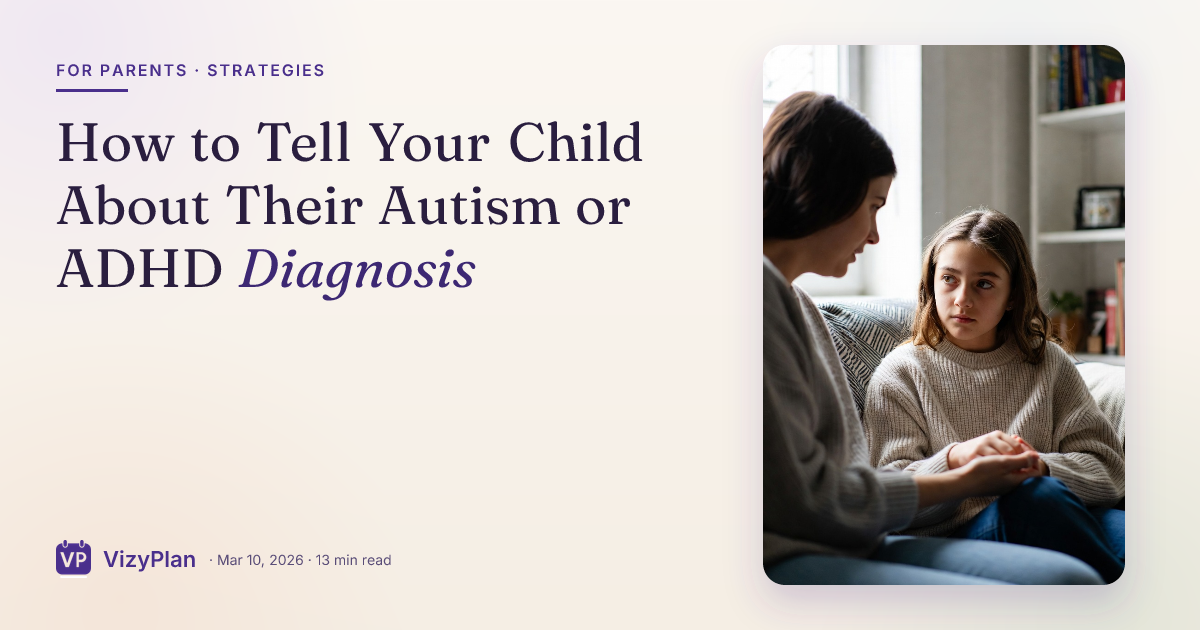
How to Tell Your Child About Their Autism or ADHD Diagnosis
13 min read
Your child has started asking why they are different, or worse, has started saying something is wrong with them. You have been putting this conversation off and it has arrived anyway.
Free 7-day trial · No email or credit card to start · Built by an autism dad and an autism mom SLP
A child who knows they are different without knowing why fills the gap with an explanation of their own, and that explanation is almost always worse than the truth. A story gives them accurate language before they invent something harmful.
What the research saysAutistic children who internalize a deficit-based view of themselves describe genuine distress about their own identity, which is why the framing of this explanation matters as much as its timing.
VizyPlan, My autistic child hates being autistic
Takes about five minutes. Use it as written, or keep only the steps your family needs. A short setup that gets used beats a complete one that gets abandoned in week two.
Waiting until your child is old enough usually means waiting until they have already built a negative explanation. Earlier and simpler beats later and thorough.
The Social Stories lives inside the same routine your child already follows, so explaining autism to your child is a step with a visible length rather than a separate tool somebody has to remember to open.
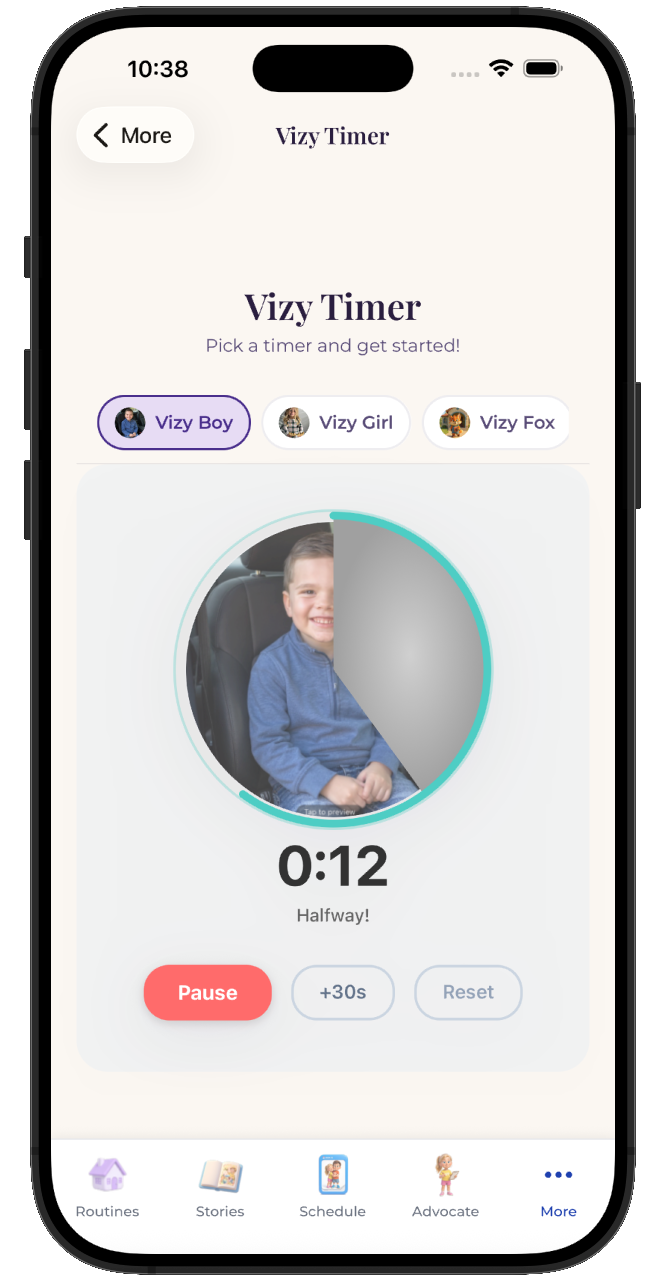
Five minutes to build, and your child sees it every time explaining autism to your child comes around.
$6.99/month after the free trial · Cancel anytime · Also at app.vizyplan.com
VizyPlan supports routines and communication at home and school. It is not a medical device and does not diagnose or treat any condition. Talk to your child's care team about clinical questions.