Social Stories

Writing a Social Story That Works in about ten minutes.

You have read that social stories help and every example you have found is either forty pages of theory or a template that does not match anything happening in your house.

Free 7-day trial · No email or credit card to start · Built by an autism dad and a licensed SLP

Why it works here

Why a social story helps with writing a social story that works

A social story works when it describes far more than it instructs. Most homemade stories fail because they are rules with pictures attached, and a child who was already refusing the rule has no new information to work with.

You will recognize this if

  • Your story is mostly sentences telling your child what to do.
  • It has not changed anything after two weeks.
  • Your child stops listening partway through.
What the research says

A meta-analysis of 21 studies found a moderate overall effect for social stories, with no significant difference by who delivered them, meaning a parent-written story is as viable as a clinician-written one.

Guo et al., Frontiers in Psychology, 2026
The setup

How to set it up for writing a social story that works

Takes about five minutes. Use it as written, or keep only the steps your family needs. A short setup that gets used beats a complete one that gets abandoned in week two.

  1. 1 Write mostly descriptive sentences about what happens and why people do it
  2. 2 Include far fewer directive sentences than descriptive ones
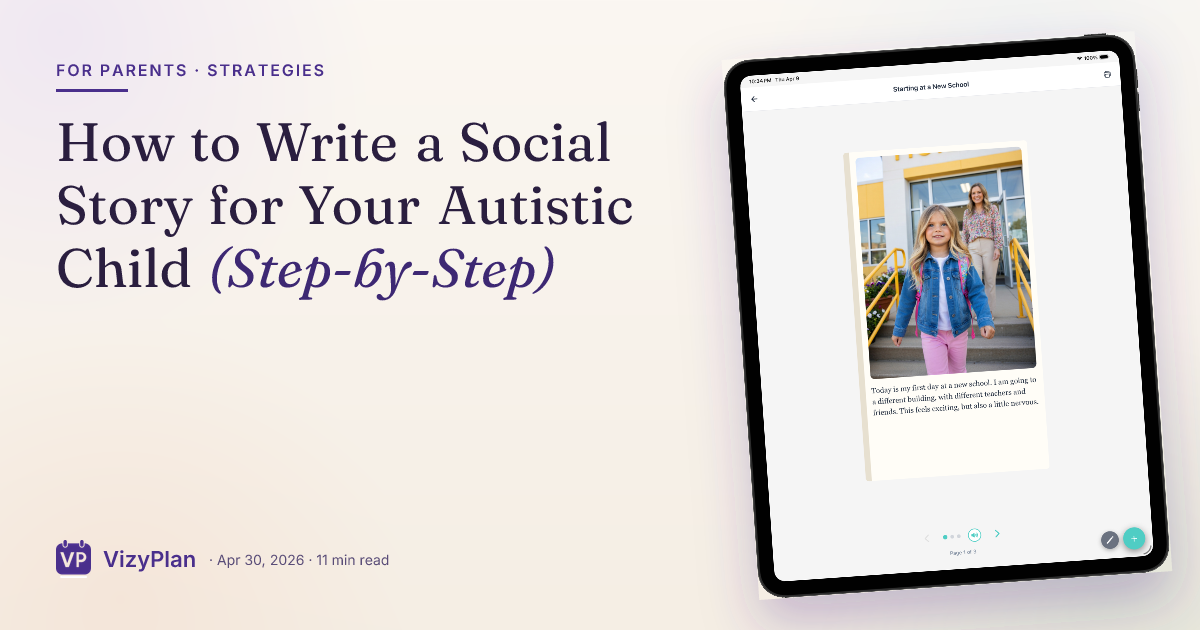
  3. 3 Write in the first person, in your child's own words and reading level
  4. 4 Use photos of your child and your actual setting on every page
  5. 5 Keep it under about ten pages, and shorter for younger children
  6. 6 End with something your child can actually do, not with a rule
The mistake most families make

A story that is mostly instructions is a rule sheet with pictures. The descriptive part, explaining what happens and why other people behave as they do, is where the useful information lives.

In the app

Built into the routine, not bolted onto it.

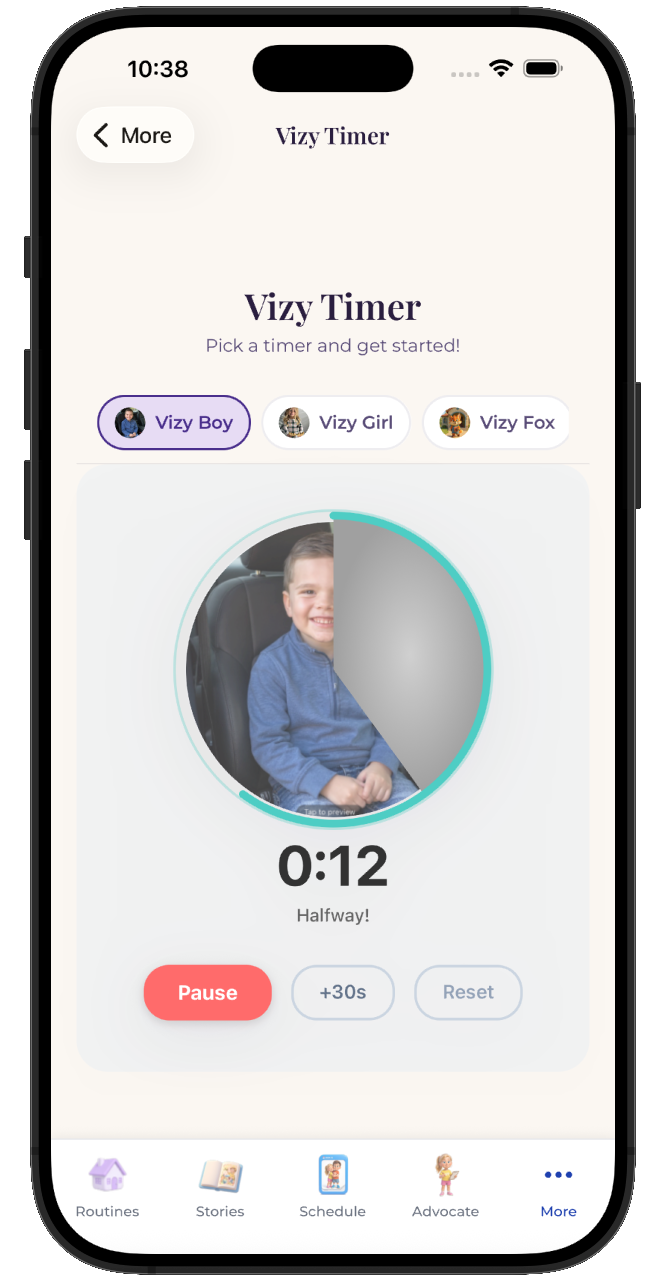
The Social Stories lives inside the same routine your child already follows, so writing a social story that works is a step with a visible length rather than a separate tool somebody has to remember to open.
  • Attach it to any step in any routine
  • Works for pre-readers, gestalt language processors, and AAC users
  • Same setup at home, at school, and in therapy
See the step-by-step guide →
The VizyPlan Social Stories set up for writing a social story that works

Set this up for your child.

Five minutes to build, and your child sees it every time writing a social story that works comes around.

$6.99/month after the free trial · Cancel anytime · Also at app.vizyplan.com

Common questions

About writing a social story that works

How long should a social story be?
Short enough that your child listens to all of it. Under ten pages for most children, and considerably shorter for younger ones or anyone with limited attention for reading.
Do I need to be trained to write one?
No. The meta-analytic evidence found no significant difference by implementer, including parents. Being specific about your child's actual situation matters more than credentials.
Digital or printed?
Either. The same meta-analysis found no significant difference between digital and paper delivery, so use whichever your child engages with and you will actually keep updated.

VizyPlan supports routines and communication at home and school. It is not a medical device and does not diagnose or treat any condition. Talk to your child's care team about clinical questions.