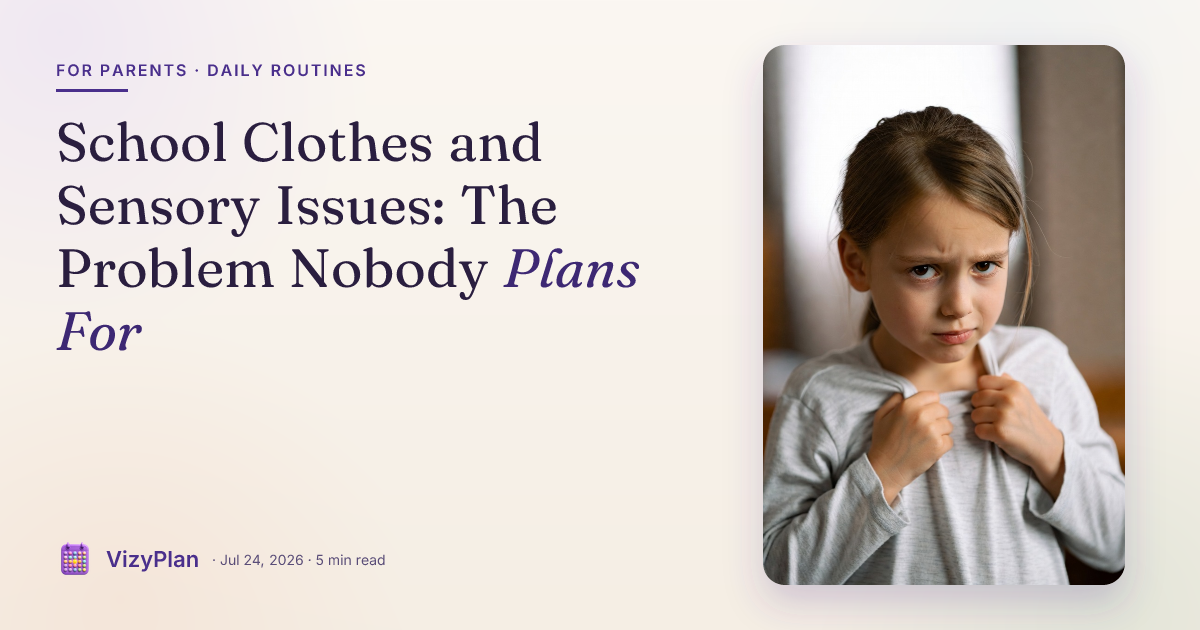
You bought the shoes in July. On the first Monday of school, your child is on the floor in the hallway, one sock on, twenty-two minutes behind, and the whole morning is gone. School clothes and sensory issues cause more ruined first weeks than almost anything else on the back to school list, and almost nobody plans for them, because clothing does not feel like it should be a problem.
It is a problem. And the research is unusually clear about how common it is.
What the research says about school clothes and sensory issues
A 2025 mixed-methods study of 86 autistic adults published in Autism asked directly about clothing. The numbers are striking. 73.2 percent regularly avoided certain types of clothing. 55.8 percent cut labels out of garments. 48.8 percent found it difficult to adapt to new clothing items. 48.8 percent avoided constricting clothes or shoes. 46.5 percent avoided items with seams that touched their skin.
Read that fourth one again. Difficulty adapting to *new* clothing is its own category. Which means the standard back to school move, a fresh wardrobe presented on the last weekend of summer, is close to a worst-case design.
The broader sensory picture backs it up. Between 56 and 70 percent of autistic youth meet criteria for sensory over-responsivity, and a 2023 study of 1,121 families found the tactile system affected in more than 80 percent of children struggling with school.
A shirt is not a preference problem
The most useful reframe here is a simple one. When a child says a seam hurts, the seam hurts. Tactile over-responsivity is a difference in how the nervous system weights incoming touch information, not a story a child is telling to get out of getting dressed. A waistband that you would not notice can register the way a pebble in your shoe registers, except it is on for seven hours and nobody will let you take it off.
That distinction changes what you do next. You stop negotiating and start problem-solving.
How to get ahead of it before the first Monday
- Start three weeks out, not the night before. New clothes need wear-in time. A shirt worn twice around the house in July is not a new shirt in August.
- Wash everything twice before it counts. Sizing chemicals and stiff finishes are a real part of why new clothes feel wrong. Two wash cycles change the hand of most fabrics noticeably.
- Let your child audit the current favorites first. Whatever they already wear willingly is your specification sheet. Same fabric, same cut, same neckline, different color. Buy the thing that works, in multiples.
- Remove tags and check seams at purchase, not at 7am. Cut tags, turn socks inside out, and try flat-seam or seamless options. Small changes, large returns.
- Do a full dress rehearsal, shoes included. One hour, whole outfit, in the house, a week before school. You want to find the problem on a Tuesday afternoon, not on the first morning.
- Buy two of whatever wins. A child who has one acceptable pair of pants is one laundry day away from a crisis.
Enjoying this article?
Get practical tips and insights delivered to your inbox — no spam, ever.
When there is a uniform
Uniforms remove the choice, which is the hardest version of this problem. A few things still work. Ask the school in writing what flexibility exists, because most uniform policies have more room than the handbook suggests: an undershirt beneath a scratchy polo, a different sock, softer shoes in the approved color, a cardigan instead of a blazer.
If a specific fabric is genuinely unwearable, it belongs in the accommodations conversation, not in a daily fight. A sensory-based clothing accommodation is a reasonable ask, and our post on 504 plans versus IEPs covers which document is the right home for it.
Give the getting-dressed sequence somewhere to live besides your voice
Once the clothes work, the other half of the morning is the sequence. Socks, then shoes, then jacket, then backpack. Most children who melt down at 7:12 are not refusing, they are stuck holding a five-step order in working memory while somebody narrates at them.
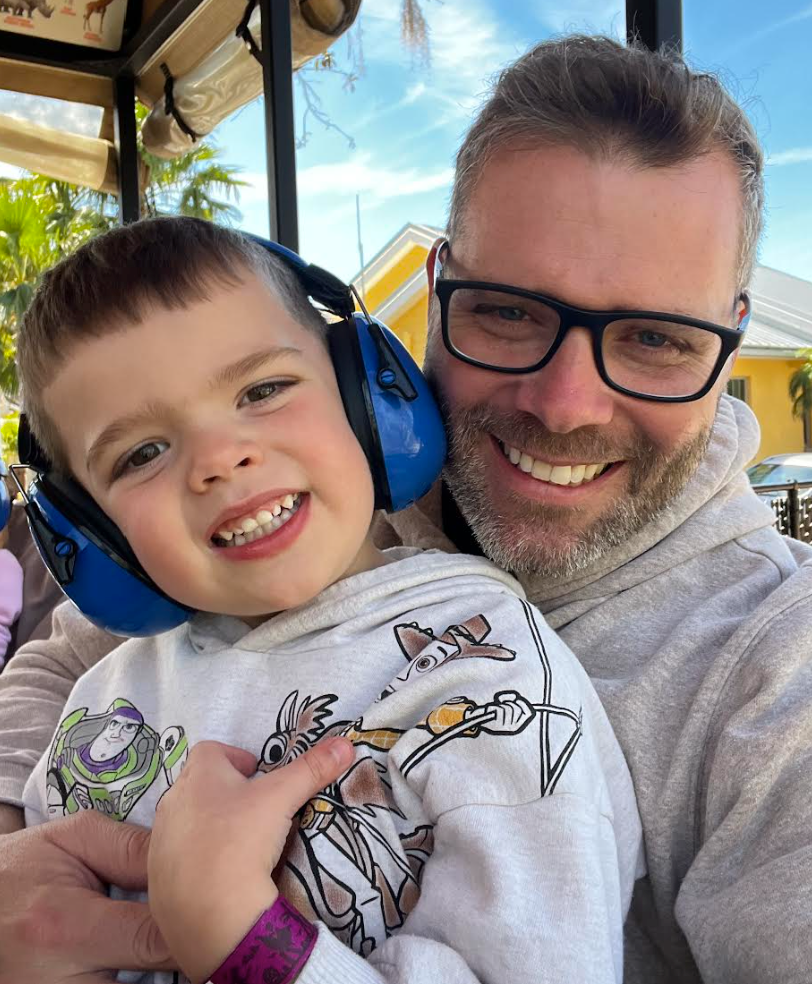
A visual sequence takes the order out of your mouth and puts it somewhere your child can look. VizyPlan was built by an autism dad and an autism mom who is a licensed speech-language pathologist so the getting-ready steps live in photos of your child's actual clothes and your actual hallway. Our post on morning routine independence covers how to hand the sequence over without hovering.
Do the clothes work in July. It is the cheapest thing on the entire back to school list, and it buys you the first Monday.
Download VizyPlan and start your 7-day free trial today. Give the morning a sequence your child can follow without a countdown from the kitchen. Just $6.99/month after your trial, no credit card required upfront.
VizyPlan was built by an autism dad and an autism mom who is a licensed speech-language pathologist who needed something that did not exist. Start your free trial.