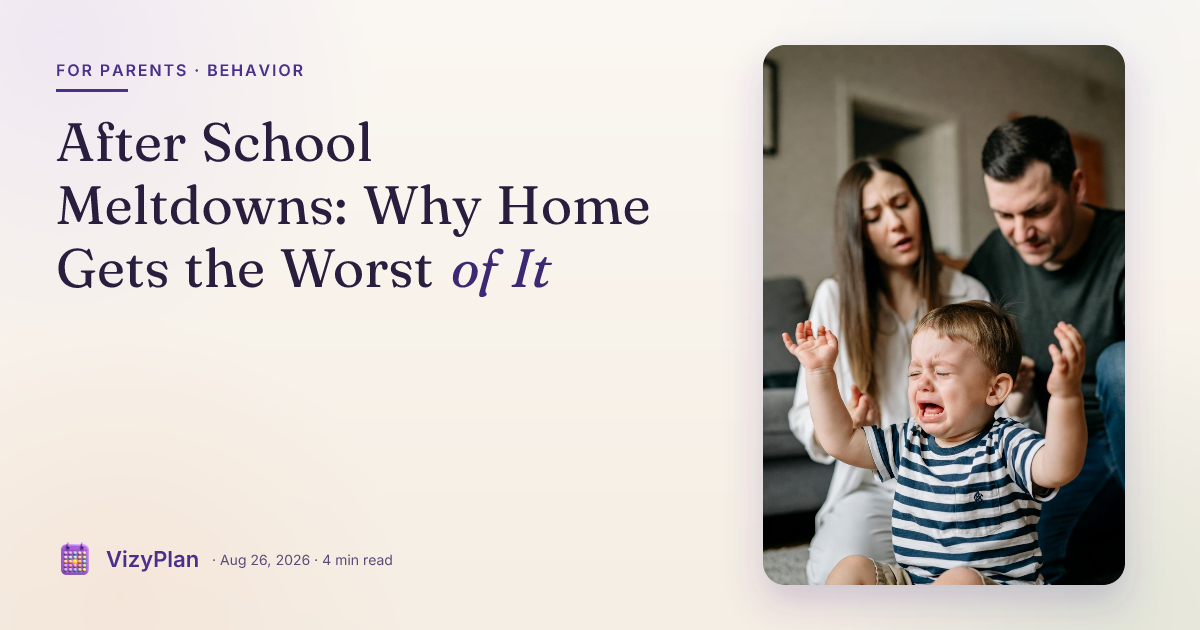
After School Meltdowns: Why Home Gets the Worst of It
4 min read
Game night ends the same way every time. Your child is winning and delightful, then they are losing and the board is on the floor, and everybody feels awful.
Free 7-day trial · No email or credit card to start · Built by an autism dad and an autism mom SLP
Losing involves a sudden emotional shift with no preparation and no script for what to do next. A story that names the feeling in advance and supplies something concrete to do with it gives your child an option other than the board.
What the research saysSocial story interventions showed positive effects for social skills and for reducing problem behavior in a meta-analysis of 21 single-case studies.
Guo et al., Frontiers in Psychology, 2026
Takes about five minutes. Use it as written, or keep only the steps your family needs. A short setup that gets used beats a complete one that gets abandoned in week two.
Letting your child win to avoid the reaction removes every opportunity to practice, and makes the eventual real loss, at school or with peers, considerably worse.
The Social Stories lives inside the same routine your child already follows, so a story about losing a game is a step with a visible length rather than a separate tool somebody has to remember to open.
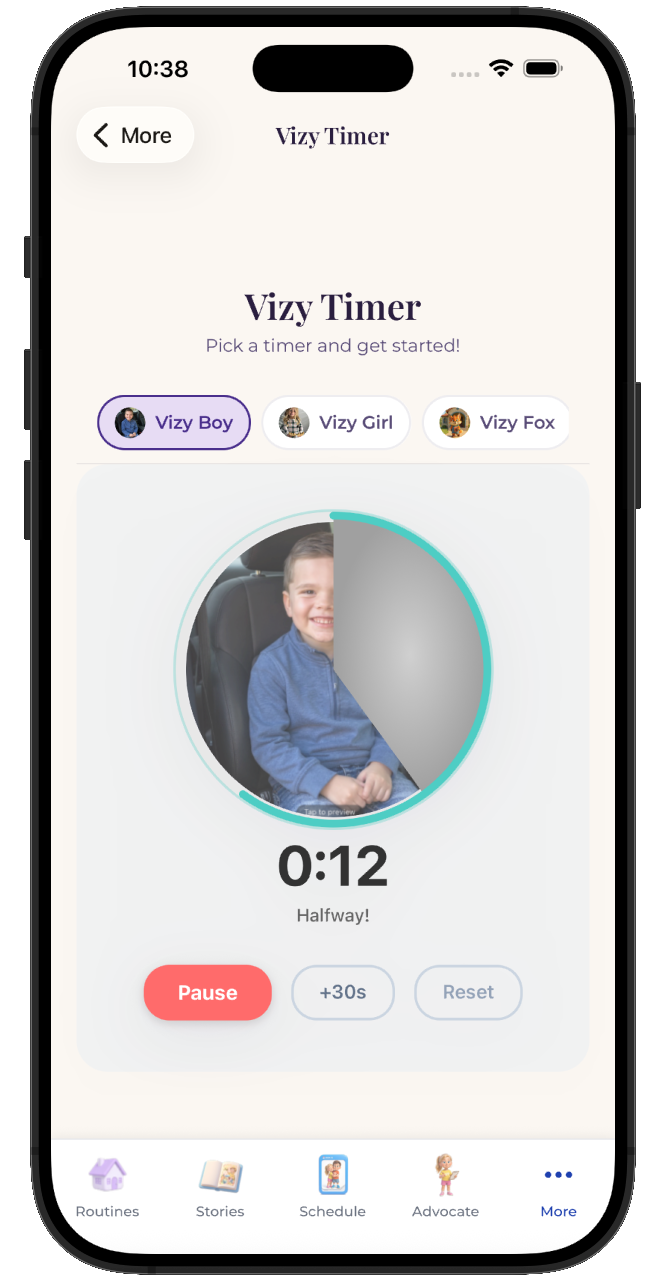
Five minutes to build, and your child sees it every time a story about losing a game comes around.
$6.99/month after the free trial · Cancel anytime · Also at app.vizyplan.com
VizyPlan supports routines and communication at home and school. It is not a medical device and does not diagnose or treat any condition. Talk to your child's care team about clinical questions.