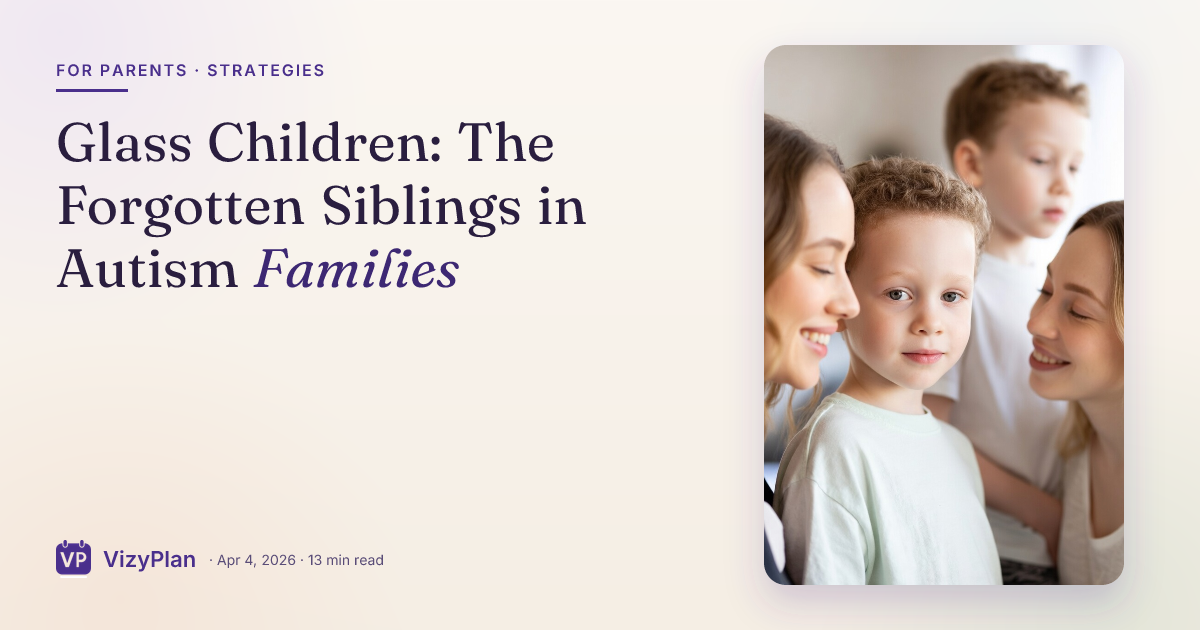
Glass Children: The Forgotten Siblings in Autism Families
13 min read
Your other child has noticed that the rules are different, that more attention goes one way, and they have not asked about it because they can tell it is a big thing.
Free 7-day trial · No email or credit card to start · Built by an autism dad and an autism mom SLP
Siblings construct their own explanation from what they observe, and unexplained difference tends to get read as unfairness. A story gives them accurate information and, just as importantly, gives them permission to have their own feelings about it.
What the research saysSiblings of disabled children can become the child whose needs are quietly deprioritized, a pattern common enough to have its own name in the literature and in family accounts.
VizyPlan, Glass children and forgotten siblings
Takes about five minutes. Use it as written, or keep only the steps your family needs. A short setup that gets used beats a complete one that gets abandoned in week two.
Casting a sibling as a helper feels positive and quietly makes them responsible for an outcome they cannot control, which is a heavy thing to hand a child.
The Social Stories lives inside the same routine your child already follows, so explaining autism to a sibling is a step with a visible length rather than a separate tool somebody has to remember to open.
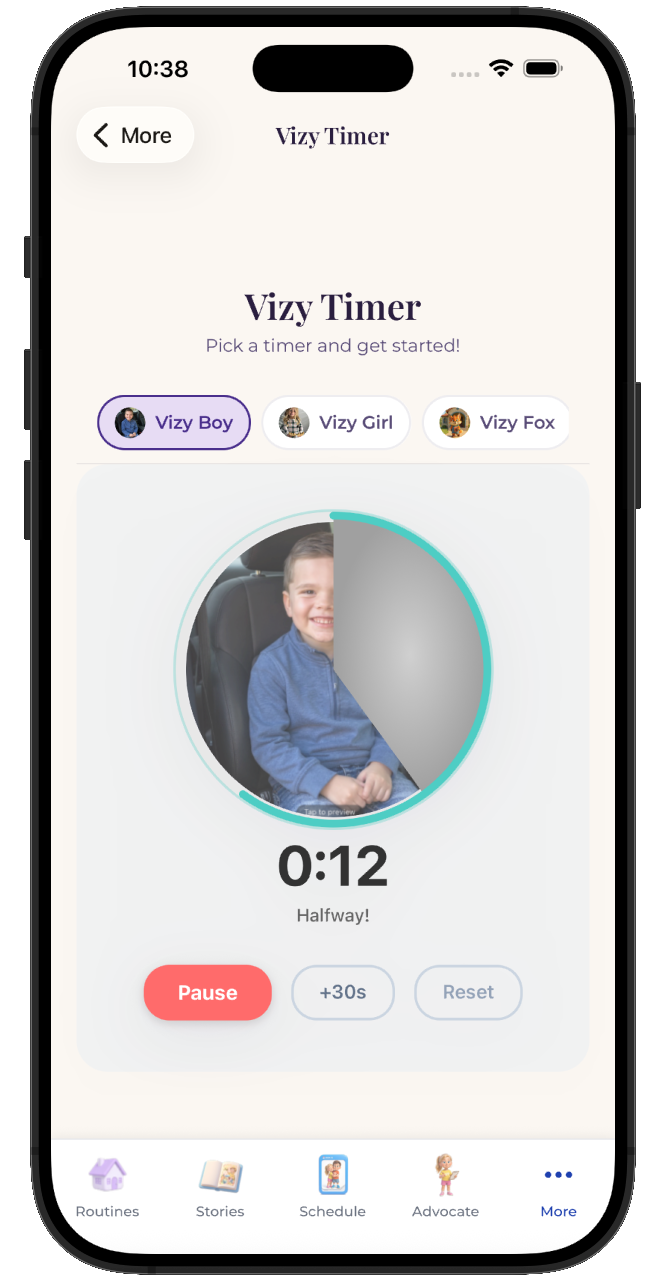
Five minutes to build, and your child sees it every time explaining autism to a sibling comes around.
$6.99/month after the free trial · Cancel anytime · Also at app.vizyplan.com
VizyPlan supports routines and communication at home and school. It is not a medical device and does not diagnose or treat any condition. Talk to your child's care team about clinical questions.