Social Stories

A Story About Telling an Adult when something is wrong.

Something happened at school weeks ago and you have only just found out, because your child did not know that it was the kind of thing you tell someone about.

Free 7-day trial · No email or credit card to start · Built by an autism dad and a licensed SLP

Why it works here

Why a social story helps with a story about telling an adult

Children who do not reliably extract social rules often cannot tell which events are reportable, and they frequently assume they will be in trouble. A story that names specific categories and specific people removes both barriers.

You will recognize this if

  • Your child has withheld something significant.
  • They cannot tell which problems are worth reporting.
  • They worry about getting themselves or others in trouble.
The setup

How to set it up for a story about telling an adult

Takes about five minutes. Use it as written, or keep only the steps your family needs. A short setup that gets used beats a complete one that gets abandoned in week two.

  1. 1 Name specific categories rather than saying if something is wrong
  2. 2 List the actual people they can tell, by name, at home and at school
  3. 3 Say explicitly that telling never gets them in trouble
  4. 4 Include what to do if the first adult does not help
  5. 5 Explain the difference between telling and tattling, concretely
  6. 6 Practice with small real examples so it has been rehearsed
The mistake most families make

Telling a child to speak up if something is wrong assumes they can categorize wrong, which is exactly the judgment the story needs to supply.

In the app

Built into the routine, not bolted onto it.

The Social Stories lives inside the same routine your child already follows, so a story about telling an adult is a step with a visible length rather than a separate tool somebody has to remember to open.
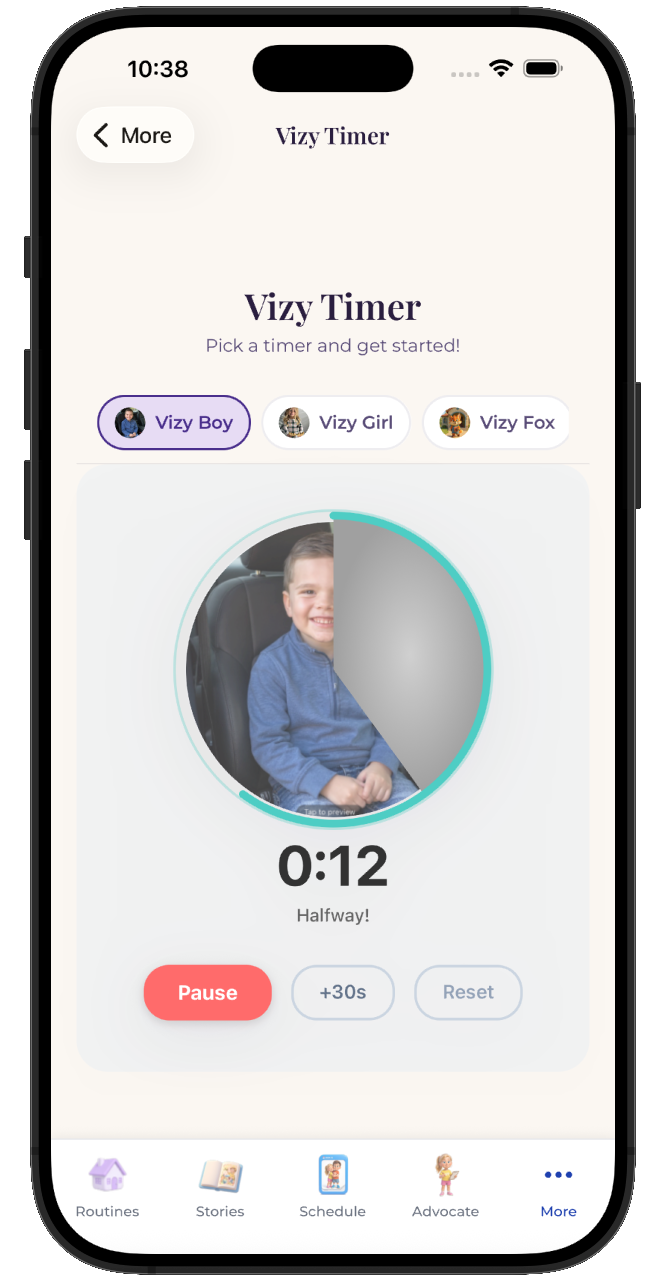
  • Attach it to any step in any routine
  • Works for pre-readers, gestalt language processors, and AAC users
  • Same setup at home, at school, and in therapy
See the step-by-step guide →
The VizyPlan Social Stories set up for a story about telling an adult

Set this up for your child.

Five minutes to build, and your child sees it every time a story about telling an adult comes around.

$6.99/month after the free trial · Cancel anytime · Also at app.vizyplan.com

Common questions

About a story about telling an adult

How do I explain the difference from tattling?
Use concrete categories rather than intent. Anything about safety, hurting, or being scared always gets told, and that is a rule a child can apply.
What if my child worries about getting someone in trouble?
Address it directly in the story. Many children stay silent for exactly this reason, and naming it removes a major barrier.
How many named adults?
At least two at school and two at home. A single named adult fails the moment that person is absent.

VizyPlan supports routines and communication at home and school. It is not a medical device and does not diagnose or treat any condition. Talk to your child's care team about clinical questions.