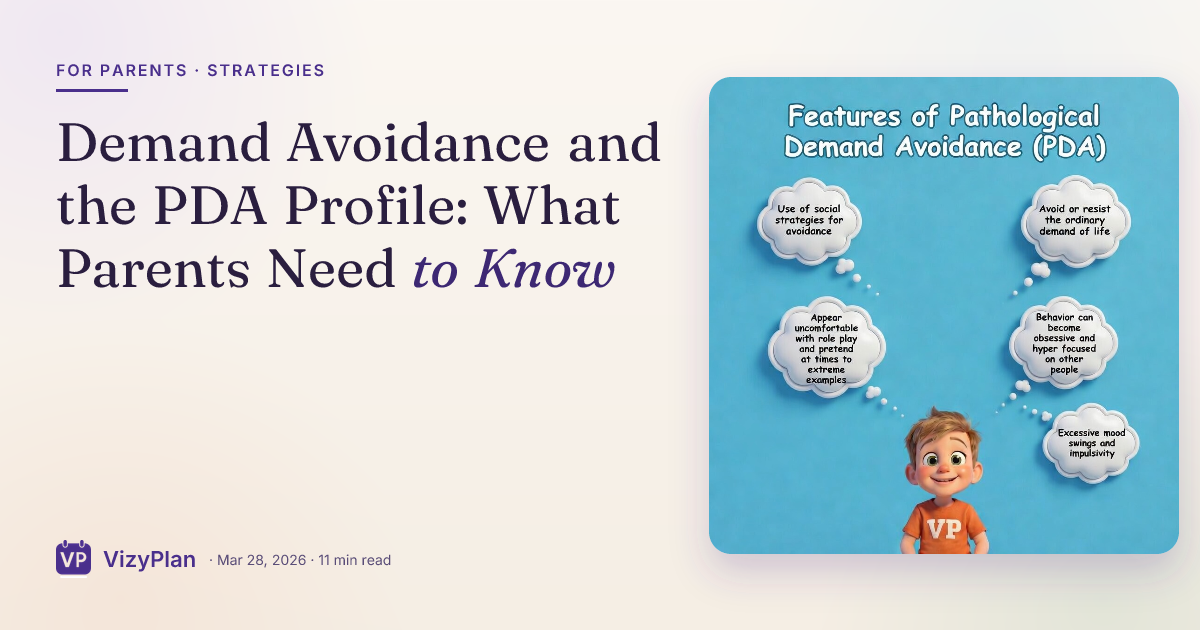
Demand Avoidance and the PDA Profile: What Parents Need to Know
11 min read
You have built four routines and your child has refused all four. At this point adding a fifth feels less like a plan and more like a habit.
Free 7-day trial · No email or credit card to start · Built by an autism dad and an autism mom SLP
Consistent refusal across every routine usually means the format is being experienced as a demand rather than a support. The way through is to shrink until something succeeds, then grow from there, rather than to keep presenting new versions of the same size.
Takes about five minutes. Use it as written, or keep only the steps your family needs. A short setup that gets used beats a complete one that gets abandoned in week two.
Building a fifth routine after four refusals repeats the same experiment. Shrinking below the point of refusal is the only variable that has not been tried.
The Visual Routines lives inside the same routine your child already follows, so building routines for a child who resists all of them is a step with a visible length rather than a separate tool somebody has to remember to open.
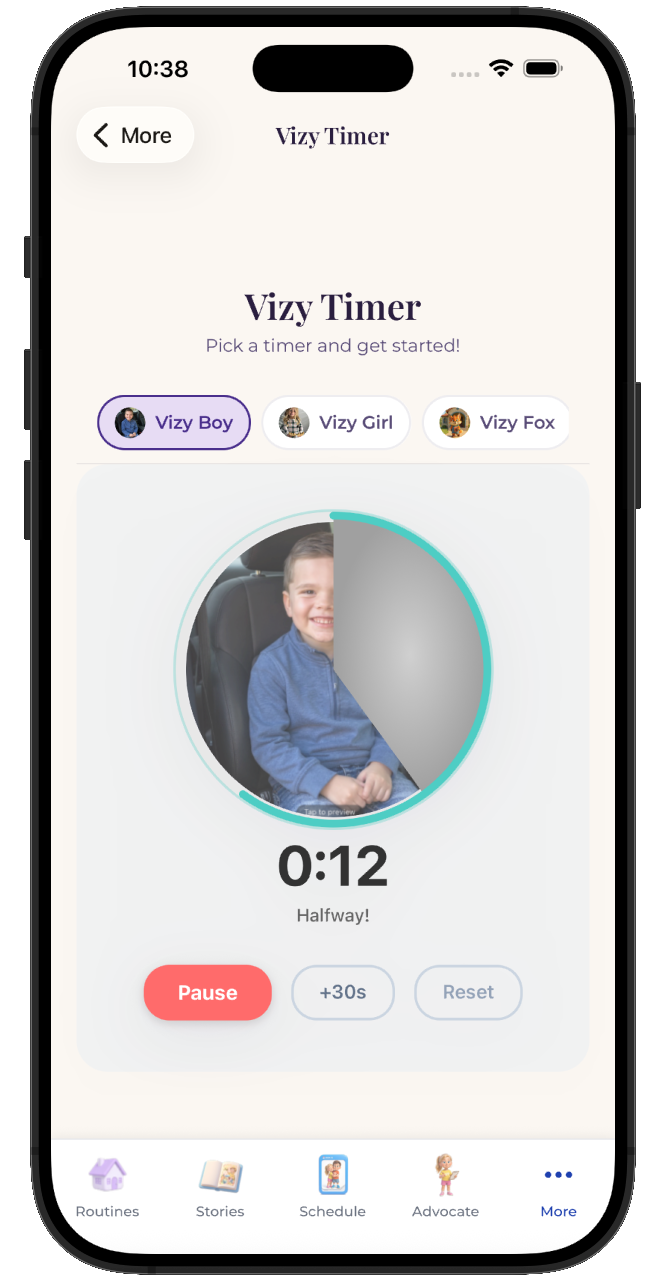
Five minutes to build, and your child sees it every time building routines for a child who resists all of them comes around.
$6.99/month after the free trial · Cancel anytime · Also at app.vizyplan.com
VizyPlan supports routines and communication at home and school. It is not a medical device and does not diagnose or treat any condition. Talk to your child's care team about clinical questions.